Nigeria’s national treasury is experiencing a massive “revenue pulse” as the escalating conflict in the Middle East reshapes the global energy map. With the Strait of Hormuz effectively shuttered by Iranian forces, Nigeria has emerged as a critical “safe haven” for oil, driving daily gross revenues to a staggering $131.8 million.
As of Wednesday afternoon, Brent crude is trading at $83.42, well above the $64.85 benchmark set in President Tinubu’s 2026 budget. Based on current production levels of 1.58 million barrels per day (bpd), the Federation is now netting an unplanned “windfall” that is breathing new life into the national budget.
According to data from the Ministry of Finance, Nigeria is currently generating an estimated $24 million in daily windfall revenue above budget projections.
To ensure this cash reaches the front lines of governance, the Presidency has fast-tracked the implementation of Executive Order 9 of 2026, which mandates the immediate and direct remittance of all oil revenues to the Federation Account Allocation Committee (FAAC).
Despite the surge in revenue the “Hormuz Windfall” is proving to be a nightmare for the downstream sector. Because Nigeria’s fuel prices are now fully deregulated and tied to international market rates, the price of crude is pushing petrol prices to high levels in the country.
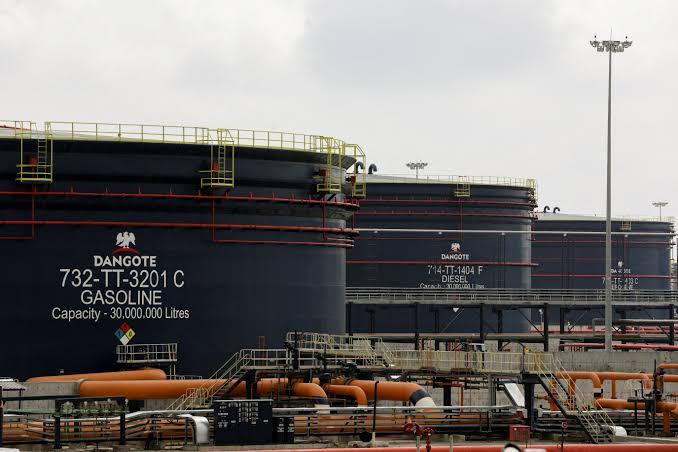
On Monday, the Dangote Petroleum Refinery adjusted its ex-depot price for Premium Motor Spirit (PMS) from N774 to N874 per litre, citing “replacement costs” and global volatility.
In Lagos and Abuja, retail stations have already adjusted their meters to between N975 and N1,050 per litre.
The closure of the world’s most vital maritime chokepoint—triggered by the U.S.-Israeli campaign against Iran that began on February 28—has removed nearly 20 million bpd from the market. As tankers flee the Persian Gulf, international refiners are turning their eyes toward the Atlantic, placing a massive premium on Nigeria’s “sweet” crude grades like Bonny Light and Qua Iboe.
Analysts warn that Nigeria is “bleeding” potential gains. While the price is high, the country is only producing 1.58 bpd—far short of its 1.84 million bpd target. This production gap is costing the nation roughly $21 million in “lost” windfall every 24 hours.