
By: ThinkBusiness Africa
Nigeria is pivoting away from its heavy reliance on foreign debt, signaling a “consolidation phase” for Africa’s largest economy.
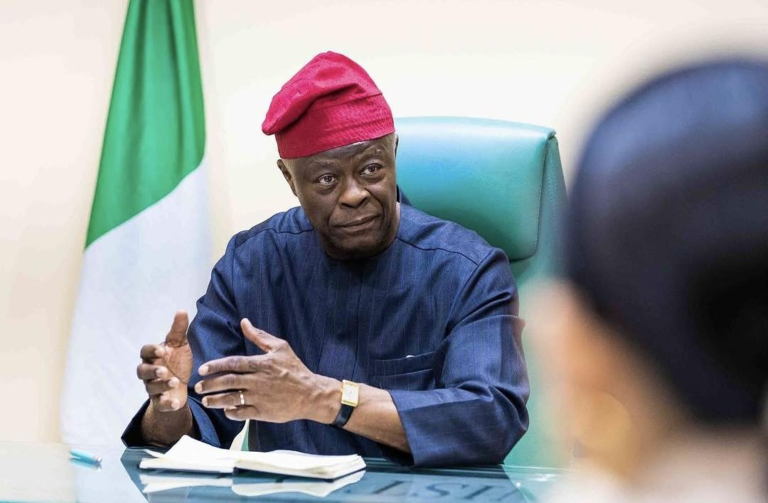
Speaking on Tuesday at the 2026 World Economic Forum (WEF), Wale Edun, Nigeria’s Minister of Finance and Coordinating Minister of the Economy, told global leaders and investors that the country is now focused on “domestic resource mobilization” rather than fresh borrowing.
In an interview with Bloomberg TV on the sidelines of the summit, Edun emphasized that while Nigeria retains the “latitude” to access international bond markets—evidenced by the 400% oversubscription of its $2.3 billion Eurobond last year —the government’s priority has shifted.
“The issue now is to focus on revenue, focus on domestic resource mobilization,” Edun stated. “We’re hoping to rely less on borrowing.” He said.
The Minister explained that after two years of “politically difficult” reforms—including the removal of fuel subsidies and the unification of exchange rates—Nigeria has achieved a level of macroeconomic stability that makes it “investible” without the need for constant credit.
Last year, President Bola Tinubu’s administration presented an ambitious N58.18 trillion ($40 billion) budget for 2026 to the Nigerian House of Assembly. While the budget carries a projected deficit of roughly N23.85 trillion (4.28% of GDP), the strategy to fund it is changing:
The government aims to raise tax revenue to 18% of GDP within two years by sealing leakages and digitizing collection systems.
Non-oil revenue now accounts for nearly 96% of GDP, with sectors like services and agriculture driving a projected 4.68% growth for 2026.
With the opening of the first-ever “Nigeria House” at Davos, Vice President Kashim Shettima and Minister Edun are actively courting “cash-rich” investors from the Middle East and beyond.
Turning the Corner on Debt
The shift is partly a response to a global environment where multilateral and concessional financing is “retreating,” according to Edun. By focusing on internal revenue and private investment, Nigeria hopes to reduce its debt-servicing burden, which is projected at ₦15.52 trillion for the 2026 fiscal year.
The International Monetary Fund (IMF) has already responded positively to these measures, projecting that Nigeria’s debt-to-GDP ratio could drop to 35% by the end of 2026 if the current reform momentum is sustained.
“Nigeria is Open for Collaboration”
The Nigerian delegation’s message at Davos 2026 is clear: the era of “fragile stabilization” is over, and the era of “robust consolidation” has begun. “Government can open doors and de-risk environments; only enterprise can animate growth,” Vice President Shettima noted during the commissioning of the Nigeria House pavilion.
As the summit continues, the focus remains on whether these fiscal promises can translate into lower inflation—which fell to 14.45% in late 2025—and a more stable cost of living for the Nigerian public.
Would you like me to provide a more detailed breakdown of the ₦58.18 trillion 2026 budget allocations for sectors like education and health?