
By: ThinkBusiness Africa
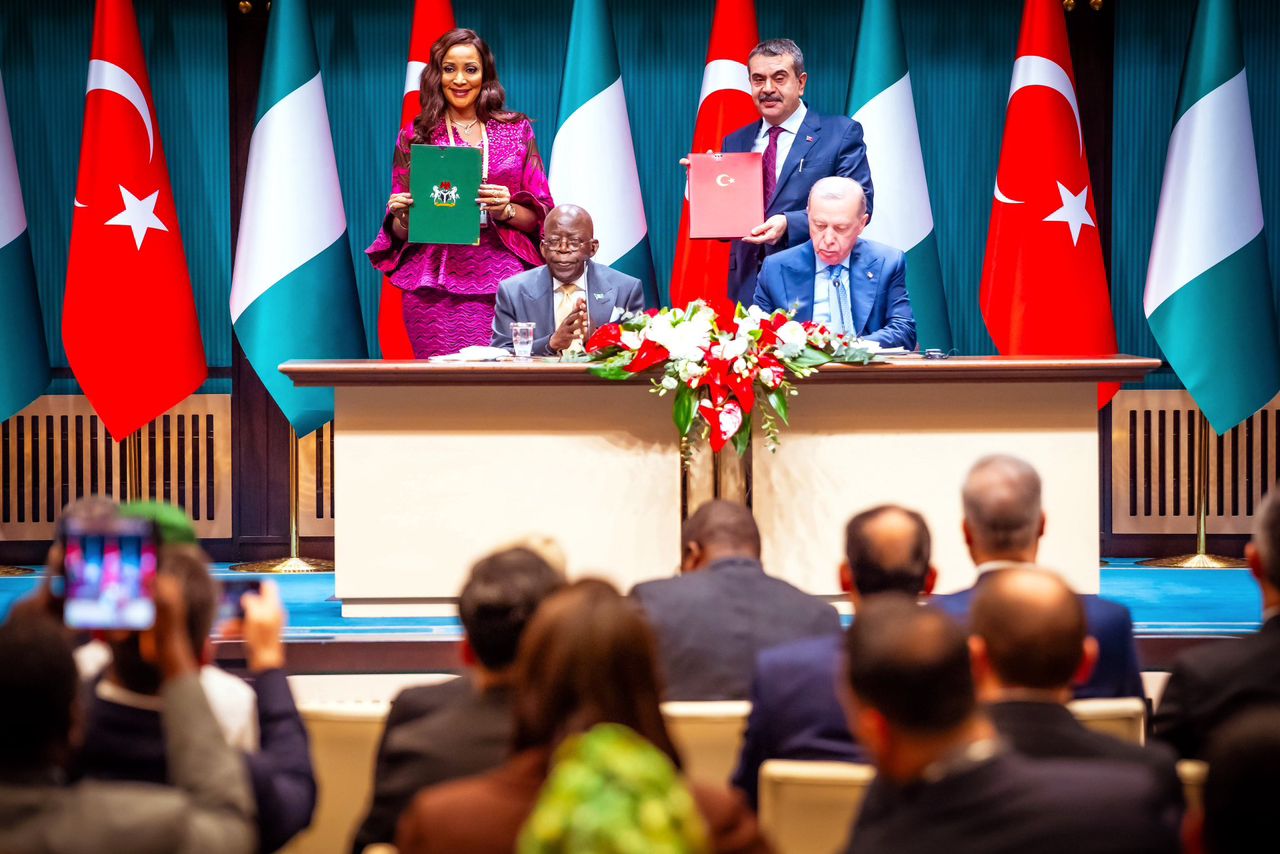
following an official state visit to Turkey by the Nigerian president this week. Turkey’s President Tayyip Erdoğan and Nigerian President Bola Tinubu announced a bold plan to more than double bilateral trade from its current $2 billion to $5 billion.
The move signals a strategic pivot for both nations: Turkey seeks to solidify its “Africa Partnership Policy,” while Nigeria continues its aggressive drive for foreign direct investment under the Tinubu administration.
To bridge the gap between current trade levels and the ambitious new target, the two leaders established a Joint Economy and Trade Committee (JETCO). This body is designed to dismantle bureaucratic bottlenecks and provide a structured platform for Turkish investors.
While Nigeria remains Turkey’s largest trading partner in Sub-Saharan Africa—primarily through crude oil and agricultural exports—the new agreements focus on expanding into textiles, manufacturing, and infrastructure.
Over 50 Turkish companies currently operate in Nigeria with investments totaling approximately $400 million. Erdoğan expressed confidence that new reforms in Nigeria’s energy sector would unlock further opportunities for the Turkish Petroleum Corporation and private ventures.
“We see significant potential in the fields of trade and investment. In today’s meetings, our commitment is to the $5 billion trade volume target, and we discussed the steps needed,” Erdoğan said.
Security remained a cornerstone of the discussions, as president Tinubu seeks help to tackle persistent terrorism ravaging his west African country. President Erdoğan pledged Turkey’s “significant experience” in counter-terrorism to assist Nigeria in its battle against insurgency in the Sahel and the Lake Chad Basin.
The partnership is already yielding hardware results. Nigeria recently took delivery of Turkish-manufactured T129 ATAK helicopters and is awaiting offshore patrol vessels to secure its maritime borders in the Gulf of Guinea.
President Tinubu, joined by a high-powered delegation including the Ministers of Defence and Foreign Affairs, emphasized that Nigeria is “open for business without restrictions.”
However, The visit was not without a minor incident; a brief “stumble” by President Tinubu on Tuesday during the official reception was quickly downplayed by the Nigerian presidency as a “fleeting incident” caused by a metal object on the floor, with aides confirming the 73-year-old leader remains in “great shape” to continue his diplomatic mission.