
• Bank Recapitalization: 30 banks met new capital targets for a $1 trillion economy.
• Foreign Reserves: Buffers hit 13-year high of $50 billion to shield the Naira.
• Inflation Control: Orthodox policies successfully cooled inflation down toward the 15% range.
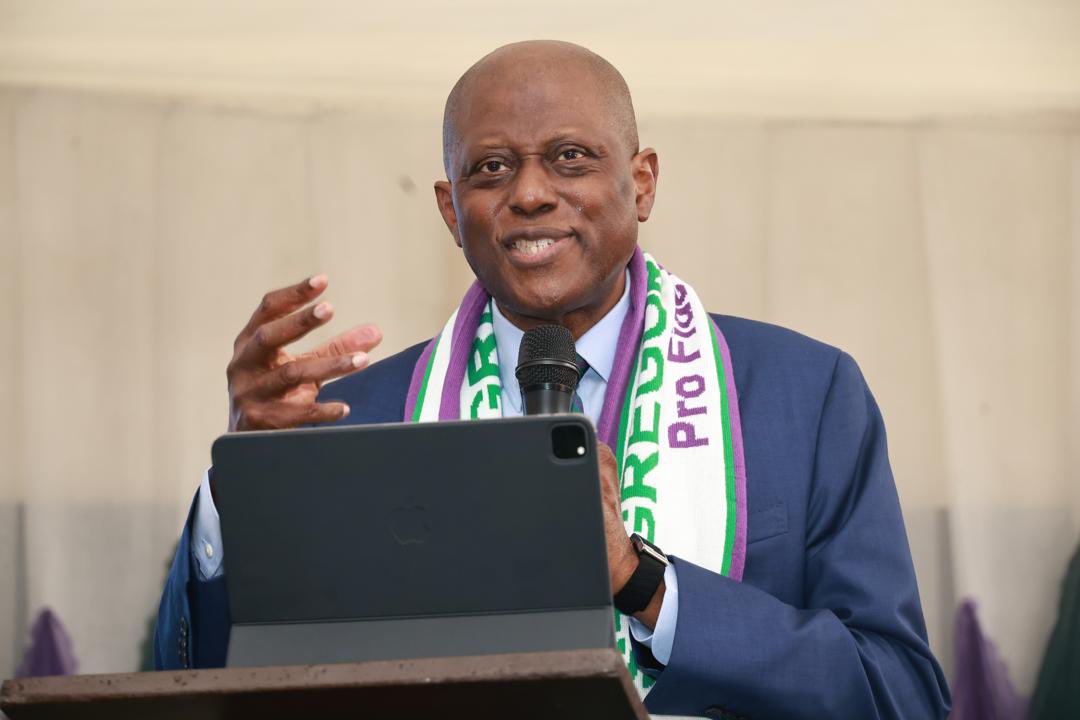
LAGOS, Building on a platform of “pain for gain,” Central Bank of Nigeria (CBN) Governor Olayemi Cardoso declared on Thursday that the nation’s economy has finally moved past its most vulnerable era, asserting that the aggressive reforms of the last two years have built a “house” capable of weathering any global financial storm.
Speaking at the 2026 Distinguished Alumni Lecture at St. Gregory’s College in Lagos, Cardoso used the backdrop of his alma mater to deliver a high-stakes assessment of Nigeria’s macroeconomic health.
“The House Will Stand Firm”
Addressing an audience of policymakers, financial experts, and students, Cardoso argued that the controversial “orthodox” shift in monetary policy—which saw interest rates climb to historic highs in 2024 and 2025—has successfully anchored the economy.
“The macroeconomic reforms and policy buffers we have built over the past two years have placed Nigeria in a far stronger position to navigate challenges,” Cardoso stated. “The storms may come, but our house will stand firm. Strong foundations matter: whether for individuals, institutions, or nations.” He said.
The “storms” referenced by the Governor include a volatile global oil market and heightened geopolitical tensions in the Middle East, which have historically sent the Naira into a tailspin.
A Fortress Built on $50 Billion
The Governor pointed to several “structural pillars” that he believes distinguish the current economy from the fragility of the early 2020s:
- Foreign Reserve Surge: Nigeria’s external reserves recently hit a 13-year high of $50 billion, providing a massive shield against currency volatility.
- Banking Recapitalization: With the March 31, 2026, deadline looming, Cardoso confirmed that 30 major banks have already met the new capital requirements, ensuring the financial sector is robust enough to support a $1 trillion economy.
- Inflationary Deceleration: After a grueling period of price hikes, headline inflation has continued its steady descent toward 15%, a move Cardoso attributed to “staying the course” despite immense public pressure to pivot.
Earlier this week, the Nigerian minister of finance, Wale Edun said the authorities are closely monitoring the US-Israeli conflict with Iran; asserting that Nigeria enters this period of global instability from a position of strength.