
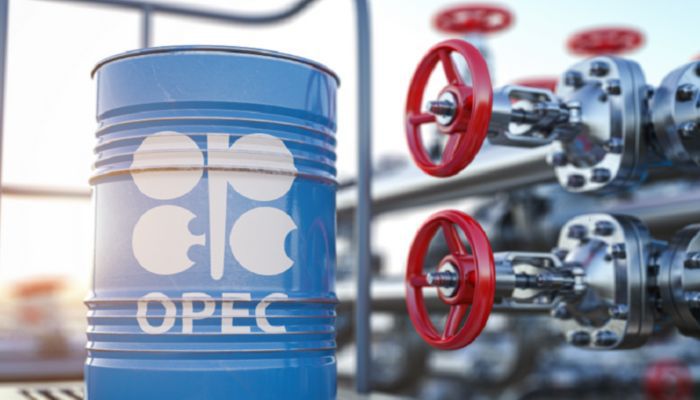
LAGOS — Eight key members of the OPEC+ alliance, led by Saudi Arabia and Russia, announced Sunday they will extend their additional voluntary crude oil production cuts through the end of the second quarter of 2026.
The decision by Saudi Arabia, Russia, Iraq, the United Arab Emirates, Kuwait, Kazakhstan, Algeria, and Oman aims to maintain market stability amid shifting global demand forecasts and ongoing geopolitical tensions.
Oil update
As of Monday morning, global benchmarks reflected a market grappling with significant geopolitical risk premiums despite the OPEC+ announcement. Brent crude was trading at approximately $111.43 per barrel, up 2.2%, while U.S. West Texas Intermediate (WTI) climbed to $114.57 per barrel, gaining 2.7%.
The unusual inversion—where WTI trades higher than Brent—underscores intense market concern regarding the deliverability of barrels amid ongoing disruptions in the Strait of Hormuz.
OPEC+ confirmed that the voluntary reductions, which total approximately 2.2 million barrels per day (bpd), will now remain in place until June 30, 2026.
The extension marks a shift from earlier signals that the group might begin unwinding the cuts. Under the revised schedule, the 2.2 million bpd in curbs will be maintained in full before being gradually phased out on a monthly basis starting in July 2026.
The “pro-activeness and pre-emptiveness” of the move was emphasized in a statement following the virtual meeting of the Joint Ministerial Monitoring Committee (JMMC). The group noted that the extension is intended to support the “stability and balance of oil markets” as global economic indicators remain mixed.
A central focus of Sunday’s announcement was the commitment to strict adherence to production quotas. Several members, including Iraq and Kazakhstan, reaffirmed their pledges to achieve full conformity and submitted updated schedules to compensate for previous overproduction recorded since the start of 2024.
The JMMC stated it will continue to monitor market conditions closely. The committee has the authority to request further meetings or technical adjustments should rapid changes in global crude prices or inventory levels occur.
Energy analysts suggest the move is a direct response to rising non-OPEC+ supply and concerns over high interest rates dampening industrial demand. By holding supply off the market for an additional quarter, the alliance seeks to prevent a seasonal surplus.
The next full ministerial meeting of the Organization of the Petroleum Exporting Countries (OPEC) and its allies is scheduled for June 1, 2026, where the group will re-evaluate the scheduled phase-out based on mid-year economic data.