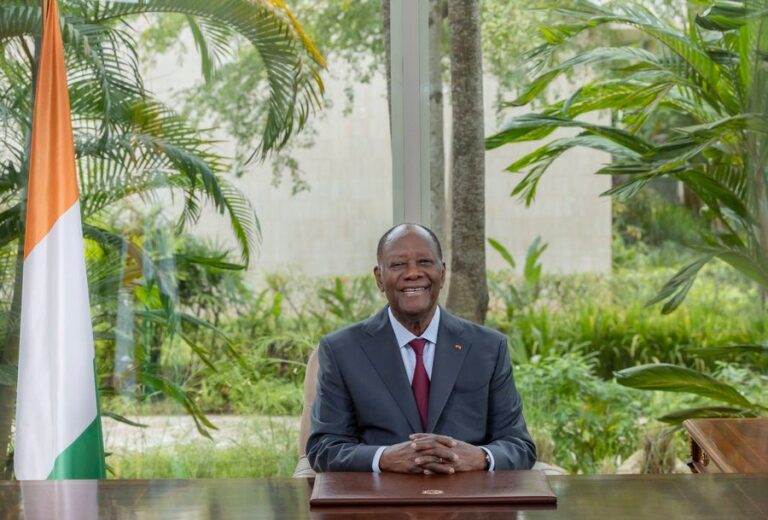

LAGOS— Nigerian billionaire Aliko Dangote has increased his conglomerate’s investment in a landmark Ethiopian fertilizer plant to more than $4 billion, up from an initial $2.5 billion commitment announced last year.
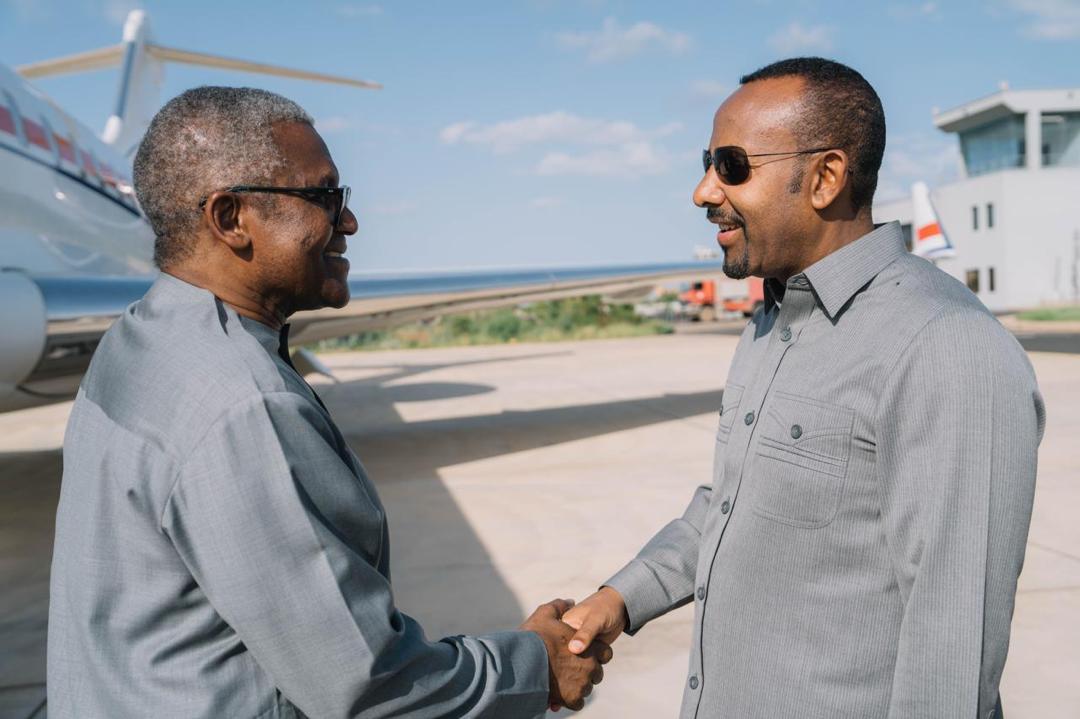
The capital bump follows a site visit by Dangote and Ethiopian Prime Minister Abiy Ahmed to Gode in the southeastern Somali region to review construction progress on the massive industrial agriculture facility.
“Our declared and signed investments in Ethiopia now exceed $4 billion,” Dangote stated. “This makes Ethiopia the second-largest recipient of our investments in Africa, accounting for nearly nine per cent of our continental outlay through 2030.”
The expanded budget covers a broadened infrastructure scope, including a 110-kilometer natural gas pipeline, an on-site 120-megawatt power plant, a polypropylene packaging facility, and a 2-million-ton NPK blending plant.
The core urea plant will maintain a production capacity of 3 million metric tons annually, positioned to fully substitute Ethiopia’s foreign imports and supply neighboring agricultural corridors across the Horn of Africa.
“Africa has the capacity to feed itself and even export to the rest of the world,” Dangote added. “Our fertilizer investments across the continent are designed to unlock that potential.”
Under the joint venture framework signed last August, the anchor investor Dangote Group retains a 60% equity stake in the project, while state-backed Ethiopian Investment Holdings controls the remaining 40%.
Prime Minister Abiy Ahmed welcomed the expansion, noting, “This initiative represents far more than infrastructure. It is a strategic investment in Ethiopia’s agricultural transformation, food security, industrial growth, and economic self-reliance.”
The development follows a critical $4.2 billion, 25-year upstream gas supply agreement secured by Dangote Group in March with China’s GCL Group to tap regional reserves from the nearby Calub field.
Ethiopia remains heavily exposed to global market shocks, having imported roughly 2.32 million tons of fertilizer in recent cycles without any domestic primary production capabilities of inorganic inputs.
Construction on the Gode complex officially commenced in October 2025, with full operational commissioning targeted to hit milestones ahead of the 2027 and 2029 regional trade rollouts.