

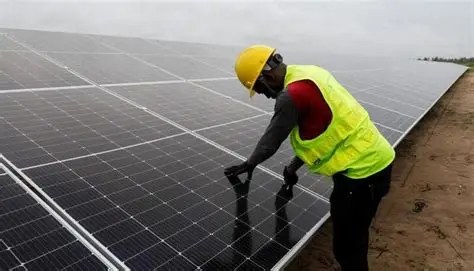
LAGOS – China’s exports of solar cells and panels to Africa surged 83% year-on-year in April, driven by accelerating global demand for renewable energy and worsening grid unreliability across major African economic hubs.
According to official China customs data released on Wednesday, shipments of green energy hardware to African nations reached 123,787 metric tons, rising from 67,552 tons recorded during the same period last year.
Despite the strong annual growth, the April volume fell month-on-month from March’s historic high of 209,474 tons, which analysts attribute to front-loaded procurement ahead of China terminating its export tax refund policy.
The Democratic Republic of Congo (DRC) led continental growth with an annual import spike of 482% to 17,953 tons, while South Africa maintained its market dominance, registering an 81.4% increase in procurement.
This clean-tech expansion aligns with broader trade trends across emerging economies, with similar volume accelerations observed in Southeast Asian energy markets, which recorded a parallel 75% year-on-year increase in Chinese photovoltaic imports.
The trade data also reveals a broader qualitative shift toward localized assembly, with the export of unassembled solar cells and silicon wafers continuously outstripping fully completed modules across developing economies.
The structural resilience of the market comes despite Beijing officially abolishing its 9% value-added tax (VAT) export rebate on solar components on April 1, a fiscal cushion that historically enabled intense global price undercutting.
While the elimination of the rebate has driven international component wholesale costs up by an estimated 5% to 10%, African enterprise and residential demand has steadily absorbed the near-term price adjustments.
Industry experts note that persistent power supply deficits and soaring fossil fuel operational costs across sub-Saharan Africa continue to make solar hardware investments financially viable, irrespective of the fading era of ultra-low Chinese subsidies.