The Road to February: #ABC2026 and the 3.8% growth challenge
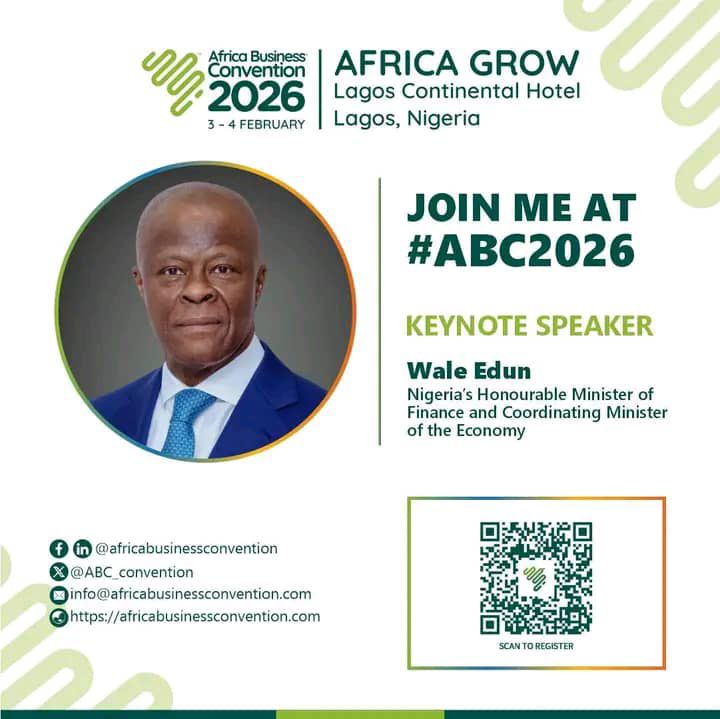
3.8%, to a casual observer, looks like steady progress. But to the entrepreneurs and investors descending on the Lagos Continental Hotel in 20 days time, it represents a “growth floor” that Africa must not only reach but break through. As the Africa Business Convention (ABC) 2026 enters its final weeks of preparation, the theme “Africa Grow” has moved from a slogan to a mandate. Against the backdrop of the IMF’s latest projection of 3.7–3.8% economic expansion for the continent, the convention is being framed as a theater room where that math will be turned into reality. The Keynote Speaker: Wale Edun and the Single Budget Year The biggest news heading into the summit is the confirmation of Nigeria’s Finance Minister and Coordinating Minister of the Economy, Wale Edun, as a keynote speaker. His timing couldn’t be more critical. Having recently pushed for a 2026 fiscal cycle that avoids the “budget extensions” of the past, Edun is expected to address how Nigeria — the continent’s largest economy — plans to lead the 3.8% charge. For the delegates, Edun’s presence is a signal. It’s an opportunity to hear directly about the 2026 – 2028 Fiscal Strategy Paper and how the federal government plans to de-risk the Nigerian market for foreign and domestic investors alike. “At #ABC2026, we’re asking the critical questions: how can we accelerate growth, build the right foundations, and pursue the reforms needed for it to be both sustainable and inclusive?” says Ogho Okiti, Founder and Convener of the ABC. From Policy to the Deal-Room While Edun handles the macro, the convention floor will be focused on the micro. The “Road to February” is paved with specific thematic streams: The second day features intensive Masterclasses designed for professionals seeking practical, immediately applicable insights. These sessions on Capital Raising and Tax Optimization are where the “3.8% growth” actually happens, one business at a time. As we count down to February 3rd, the message from Lagos is clear: 3.8% is a challenge, not a guarantee. With the Finance Minister at the podium and the continent’s brightest minds in the audience, the blueprint for 2026 is about to be drawn. Convention Intelligence:
Caledonia mining greenlights $132m surge for Zimbabwe’s largest gold mine

By: Chidozie Nwali Caledonia Mining Corporation has officially launched its 2026 expansion strategy on Wednesday, headlined by a $132 million investment to begin construction on the Bilboes Gold Project. Once fully operational, Bilboes is projected to become the largest gold mine in Zimbabwe, effectively tripling Caledonia’s current production capacity and cementing the country’s status as a top-tier gold producer. The $132 million allocation is the centerpiece of a broader $162.5 million capital expenditure program for 2026. This aggressive spending comes at a time when gold prices are hovering near historic highs, providing the financial tailwinds necessary for high-stakes development. Gold prices hit another peak high of over $4,630 an ounce early on Wednesday, fuelled by escalating tensions in Iran, concern over the Federal Reserve’s autonomy and softer inflation readings that boosted rate cut bets. “Our 2026 budget reflects our commitment to sustained investment in both our core operations and future growth,” stated Mark Learmonth, CEO of Caledonia Mining. “The planned capital expenditure will advance the development of the Bilboes project where we see long-term, value-enhancing synergies,” Learmonth noted. The Bilboes project, located approximately 75km north of Bulawayo, is not just another mine; it is a high-tech industrial undertaking designed to tackle “refractory” ore—gold that is chemically locked within sulfide minerals. The project will utilize BIOX technology, which uses naturally occurring bacteria to “eat” the sulfide minerals, releasing the gold for traditional extraction. This method is essential for the Bilboes site, which holds proven and probable reserves of 1.75 million ounces. The decision to move forward was bolstered by a critical policy reversal in late 2025. The Zimbabwean government scrapped a plan to double gold royalties, opting instead to keep rates stable unless gold prices breach the $5,000 per ounce mark. This regulatory reprieve has given Caledonia and its lenders the “fiscal certainty” required for such a massive capital outlay. Construction is expected to hit full stride through 2027, with the first gold pour scheduled for late 2028. If successful, Caledonia will not only dominate the local market but also provide a blueprint for modernizing Zimbabwe’s aging mining infrastructure through advanced biotechnology and transparent financing. The mine is designed for longevity and high output, with a projected lifespan of 10.8 years and a target to produce 200,000 ounces of gold annually once it reaches full capacity in 2029.
World Trade Organization Warns of sharp Decline in Foreign Investment to Developing Nations
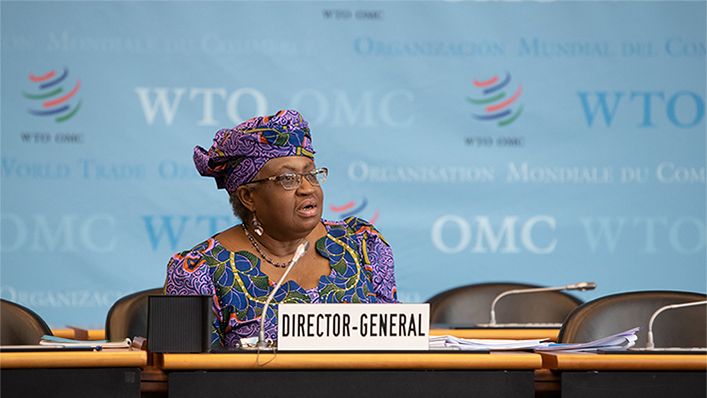
BY: Chidozie Nwali World Trade Organization (WTO) Director-General Ngozi Okonjo-Iweala has issued a stark warning regarding the global economic landscape, revealing that foreign direct investment (FDI) into developing economies is experiencing a significant and troubling downturn. Speaking at the 2025 Africa Growth and Opportunity-Research in Action (AGORA) Conference, Dr. Okonjo-Iweala highlighted that this retreat in capital poses a severe risk to global resilience and the economic prospects of emerging markets. The Director-General noted that In 2023, FDI inflows to developing economies fell to just 2.3 percent of GDP. A 50% drop from peak 4.6% recorded in 2008. In 2024, Egypt attracted the highest foreign investment in Africa, over $46 billion. largely driven by a $35 billion Ras El-Hekma megaproject, a coastal city development partnership with the United Arab Emirate (UAE). While in the first quarter of 2025, FDI to Nigeria fell by over 70% as investors shifted toward “hot money”—short-term, high-yield instruments like government bonds and treasury bills—rather than long-term infrastructure or manufacturing projects. Dr. Okonjo-Iweala emphasized that FDI is not just capital; it is “a key driver of growth and job creation and a vital mechanism for the spread of new ideas and technology,” She said. Despite the sobering FDI figures, she argued that the solution lies in “re-globalization”—bringing regions like Africa from the “margins to the mainstream” of global supply chains. “Building the right partnerships now, making the right investments, and cultivating the important African stakeholders is the way to go,” she stated, citing the World Bank and Italy’s Mattei Plan as critical partners in this effort. She called for a shift from commodity dependence to value-added production to attract “efficiency-seeking” investment in manufacturing and services.
Paystack evolves into full-service bank with acquisition of ladder microfinance bank
By: ThinkBusiness Africa Nigeria fintech startup, Paystack, has officially entered the regulated banking sector, following the company’s successful acquisition of Ladder Microfinance Bank on Wednesday, marking its transition from a third-party payment processor to a licensed financial institution. According to a statement from the Stripe-owned payment giant, the newly formed entity, rebranded as Paystack Microfinance Bank (Paystack MFB), will operate as a subsidiary of Paystack. This strategic pivot allows the company to move beyond simply “moving money” and gives it the legal authority to hold customer deposits and, crucially, issue loans directly from its own balance sheet. “Businesses don’t just need to get paid. They need a financial operating system. One that helps them store money safely, move it easily, understand it clearly, and grow with confidence.” Paystack noted in its statement. Previously, Paystack functioned primarily as a Payment Service Provider (PSP). In this model, they acted as a high-tech intermediary, collecting payments for businesses but ultimately having to settle those funds into third-party commercial bank accounts. This meant they were legally restricted from holding customer deposits and were subject to the processing speeds and settlement timelines of partner banks. With the acquisition of Ladder Microfinance Bank, the company has transitioned into a Licensed Financial Institution. Under the new Paystack MFB identity, they can now offer direct deposit holding, allowing businesses to keep their earnings within the Paystack ecosystem. Beyond just holding money, the banking license unlocks the ability for direct balance sheet lending. While the old model required Paystack to refer merchants to third-party lenders, Paystack MFB can now use its decade of transaction data to issue loans directly. This includes innovative products like revenue-linked lending, where repayments are automatically deducted as a small percentage of a merchant’s daily sales, and working capital overdrafts to help businesses manage inventory. This transformation also fuels Zap, Paystack’s consumer-facing app. Originally a tool for fast transfers, Zap can now function as a full digital wallet, offering users the ability to receive salaries, earn interest on savings, and access personal credit—all powered by the internal microfinance infrastructure. The acquisition is seen as a direct challenge to “mobile banking services” like Moniepoint and OPay, who have aggressively captured the market by bundling business banking with point-of-sale (POS) hardware. Last November, paystack was involved in a controversy that led to the sack of its Nigerian Co-founder, Ezra Olubi. Olubi was called out for inappropriate sexual posts from 2010-2013 on his X (formally Twitter account), after a sexual scandal involving him and a colleague were made public. The posts made by Ezra during those periods involved grossly inappropriate sexual comments on women and animals. Paystack cited “significant negative reputational damage” after an investigation into the matter.
Zero tariffs: 7,000+ Nigerian products gains duty-free access to UAE markets
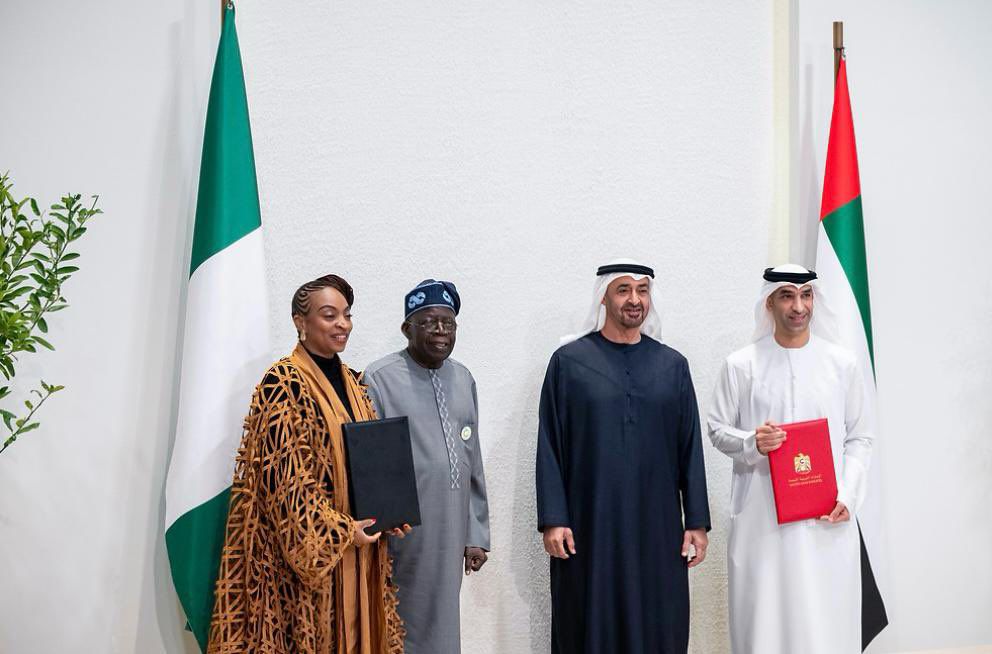
By: Chidozie Nwali Nigeria and the United Arab Emirates (UAE) have entered a new era of economic cooperation, signing a landmark Comprehensive Economic Partnership Agreement (CEPA) that effectively dismantles trade barriers on over 13,000 products between both countries. The deal, signed on Tuesday, on the sidelines of the Abu Dhabi Sustainability Week, promises to transform the two nations into a unified trade corridor, eliminating tariffs on everything from Nigerian agricultural exports to UAE-manufactured industrial machinery. Under the agreement, both nations have committed to a systematic removal of customs duties designed to protect local industries while encouraging rapid trade growth. Nigerian minister of Industry, Trade and Investment, Dr. Jumoke Oduwole, said the UAE will immediately eliminate tariffs on 7,315 Nigerian exports. Roughly 38% of these—including fish, seafood, cereals, oil seeds, cotton, and pharmaceuticals—are now duty-free, said in a statement. Tariffs on high-value manufactured goods like machinery, vehicles, electrical equipment, apparel, and furniture will be phased out gradually, reaching zero by 2031. The trade minister also noted that Nigeria will eliminate tariffs on 6,243 UAE products; immediately scrapping import tariffs on 63% of these items (3,949 products), focusing on industrial inputs, capital goods, and machinery to bolster local manufacturing. The remaining 37% of products, largely consumer goods, will see duties removed over the next five years. “The Federal Ministry of Industry, Trade and Investment, working with key MDAs such as the Nigeria Customs Service (NCS), alongside FMITI agencies such as the Nigerian Export Promotion Council (NEPC), and the Nigerian Investment Promotion Commission (NIPC) and the Standards Organization of Nigeria (SON) will ensure that Nigerian businesses, and the investors we host, have the information, support, and facilitation they need to take swift and full advantage of this Agreement,” She said. The minister highlighted that the agreement goes beyond duty free exports, it also includes a 90-day entry visa: Nigerian business travelers can now enter the UAE for up to 90 days a year to explore trade opportunities. Also, the deal introduces a three-year renewable “intra-corporate transfer” arrangement, allowing Nigerian managers and specialists to relocate and operate their businesses within the UAE. The agreement is expected to unlock a pipeline of over $10 billion in investments across Nigeria’s energy, digital banking, and infrastructure sectors. Safeguarding National Interests Despite the sweeping liberalization, Nigeria has maintained its Import Prohibition List to protect sensitive domestic sectors. Similarly, the UAE has excluded or prohibited 593 products—including pork and used tires—from the deal. A dedicated Rules of Origin chapter has been established to ensure that only goods genuinely produced in either Nigeria or the UAE benefit from the duty-free status, preventing third-party countries from “dumping” goods through the corridor. With non-oil trade between the two nations already hitting $4.3 billion in 2024, this agreement will likely double that figure by the end of the decade. For Nigeria, the CEPA serves as a strategic gateway into Middle Eastern and Asian markets, while for the UAE, it solidifies Nigeria’s position as the primary hub for its expansion into the African Continental Free Trade Area (AfCFTA).
South Africa hails U.S.house vote to extend AGOA trade deal
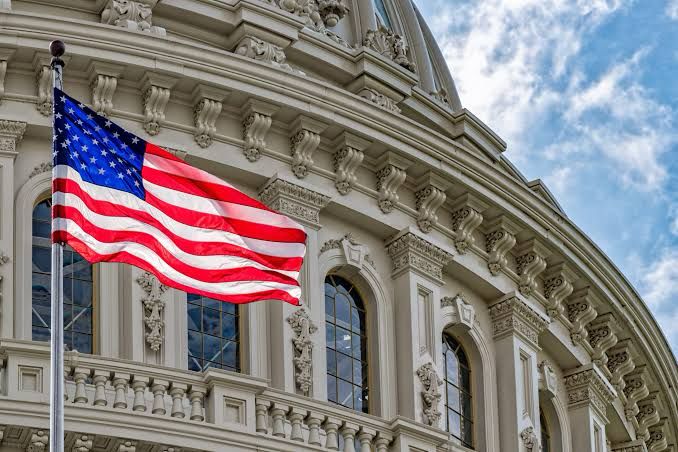
By: ThinkBusiness Africa The South African government has officially welcomed a decisive vote by the U.S. House of Representatives to renew the African Growth and Opportunity Act (AGOA), a move that provides a temporary lifeline to thousands of local businesses following months of trade uncertainty. On Tuesday, the House passed the AGOA Extension Act with a significant bipartisan majority of 340 to 54. The bill proposes extending the duty-free trade program—which expired in September 2025—for an additional three years, through December 31, 2028. South African Minister of Trade, Industry, and Competition, Parks Tau, expressed relief at the news, noting that the renewal would restore “certainty and predictability” for exporters who have been operating in a vacuum since the program lapsed. “While we have consistently advocated for a long-term, 10-year renewal to encourage capital investment, this three-year ‘bridge’ provides the necessary immediate relief from the punitive tariffs currently affecting our industries,” Tau said in a statement. A critical feature of the House bill is its retroactive benefit clause. This allows South African companies that have been paying standard “Most Favoured Nation” (MFN) duties—and in some cases, additional 30% “Liberation Day” tariffs—since October 2025 to apply for refunds once the bill is signed into law. The stakes for South Africa are higher than for any other beneficiary. The country accounts for roughly 54% of all exports to the U.S. under AGOA. According to recent trade data, the impact of the program’s lapse was immediate and severe. South Africa’s exports of vehicles and parts to the U.S. plummeted by 55% in late 2025 due to the sudden imposition of tariffs. Trade unions estimate that approximately 93,000 South African jobs rely directly on AGOA, with over 420,000 linked to U.S.-SA trade more broadly. Agriculture, chemicals, and high-value manufactured goods remain the primary beneficiaries of the tariff-free access. Despite the House victory, the bill faces a more treacherous path in the U.S. Senate. Unlike the House version, a competing Senate bill introduced by Senator John Kennedy (R-La.) includes a mandate for a “full review” of the U.S.–South Africa bilateral relationship. U.S. lawmakers have grown increasingly critical of Pretoria’s foreign policy, citing: Joint exercises with the Russian and Chinese navies. Some Senate Republicans have suggested that the renewal should proceed without South Africa’s inclusion unless Pretoria shifts its geopolitical stance. The legislation now moves to the Senate floor. If passed, it will head to the desk of President Donald Trump. While the administration has generally favored protectionist trade policies, President Trump has indicated a willingness to support a short-term AGOA extension while his trade team evaluates the program’s long-term future and South Africa’s eligibility.
U.S. supports Nigeria’s counter-terrorism efforts with delivery of ‘critical’ military supplies
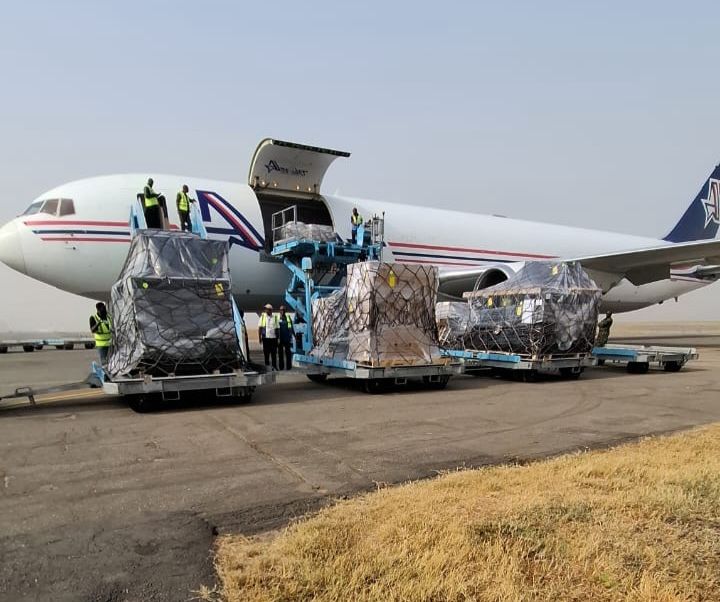
By: Chidozie Nwali The United States Africa Command (AFRICOM) said on Tuesday that U.S. forces have delivered a new batch of critical military supplies to the Nigerian government. The delivery, which arrived in the capital city of Abuja, is the latest move in a rapidly evolving security partnership between Washington and Abuja as Nigeria intensifies its fight against Islamist insurgents and criminal bandits. “U.S. forces delivered critical military supplies to our Nigerian partners in Abuja. This delivery supports Nigeria’s ongoing operations and emphasizes our shared security partnership.” AFRICOM said in a statement posted on X (formerly Twitter). Meanwhile, the delivery follows a dramatic series of events that began in late 2025. Last Christmas, U.S. forces conducted “symbolic” but deadly airstrikes against an ISIS-linked base in Sokoto State. President Donald Trump described the operation as a “Christmas present” to terrorists, marking the first time in years the U.S. has taken such direct military action on Nigerian soil. The hardware delivery is the direct result of last November’s mission to Washington led by Nigeria’s National Security Adviser, Nuhu Ribadu. The delegation, which included the Chief of Defence Staff and the Inspector General of Police, met with White House and State Department officials to repair a relationship strained by human rights designations. The aid comes despite the U.S. recently redesignating Nigeria as a “Country of Particular Concern” over religious freedom. While President Trump has been vocal about the “mass slaughter” of Christians in Nigeria—a claim the Tinubu administration has strongly disputed as a misrepresentation of a complex conflict—the U.S. administration has simultaneously signaled its intent to use “maximum force” against the extremists responsible. Nigeria has been battling a 15-year insurgency by Boko Haram and ISWAP in the Northeast, as well as a surge in “banditry” and mass kidnappings in the Northwest. A Joint Working Group between the two nations is expected to meet in the coming weeks to oversee the deployment of these new assets. However, the influx of equipment may signal a larger U.S.-backed offensive planned for the 2026 dry season.
Nigeria set to lead Africa’s $3bn carbon finance market
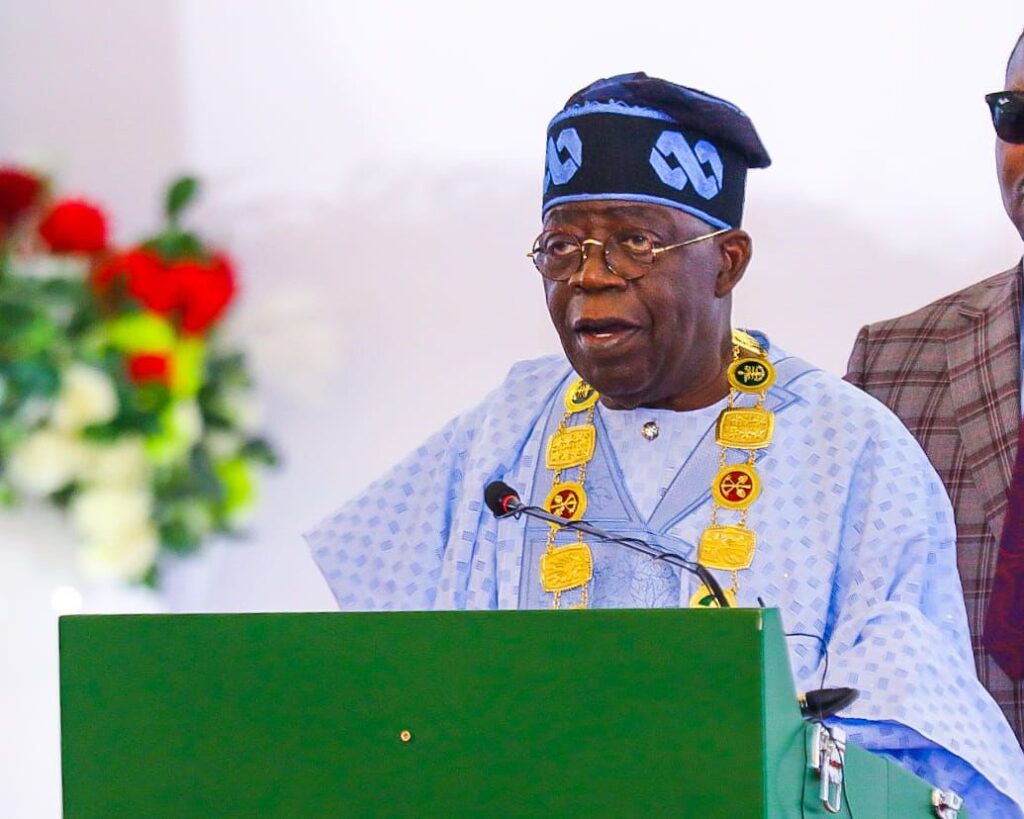
By:ThinkBusiness Africa Nigerian President, Bola Tinubu has officially approved the implementation and operationalization of Nigeria’s National Carbon Market Framework (NCMF). The landmark policy aims to generate $3 billion in annual revenue by 2030, positioning Nigeria as the premier destination for carbon finance in Africa. The framework marks a shift from experimental green projects to a market-regulated industry designed to monetize verified emissions reductions across the energy, industrial, and agricultural sectors. Tenioye Majekodunmi, Director-General of the National Council on Climate Change (NCCC), outlines a strategy to harness Nigeria’s vast potential for carbon credit generation. By trading emission allowances on the global stage, Nigeria plans to create a “green wall of finance” to support its transition to a low-carbon economy. “Operationalizing this framework is a signal that carbon markets are no longer peripheral to our economy; they are central to our strategy for attracting foreign capital and supporting the energy transition,” Majekodunmi told reporters. Majekodunmi, outlined the key mechanisms that will now go into effect: The timing is strategic. With COP30 approaching in Brazil, Nigeria is signaling to the world that it is “investment-ready.” The country already has over 57 registered voluntary carbon projects, but the new framework provides the legal and regulatory “teeth” needed to scale these from pilot programs to national-level industries. Nigeria is currently facing a 350,000-hectare annual loss of land to desertification in the North and rising sea levels in Lagos. The government is essentially trying to “monetize” the solution to these crises—using carbon credits to fund the very projects that prevent this environmental decay. In the continent, the African Carbon Market Initiative (ACMI), aims to produce 300 million carbon credits annually across the continent by 2030. By having a fully operational framework by early 2026, Nigeria is setting the pace for other African nations, effectively transforming the “threat” of climate change into a multi-billion dollar opportunity for job creation and infrastructure development. Experts suggest that if successfully implemented, this could create up to 2.3 million green jobs by the end of the decade, particularly in rural areas where reforestation and sustainable farming projects are most viable.
Why Somalia bumps security and port partnership with the UAE
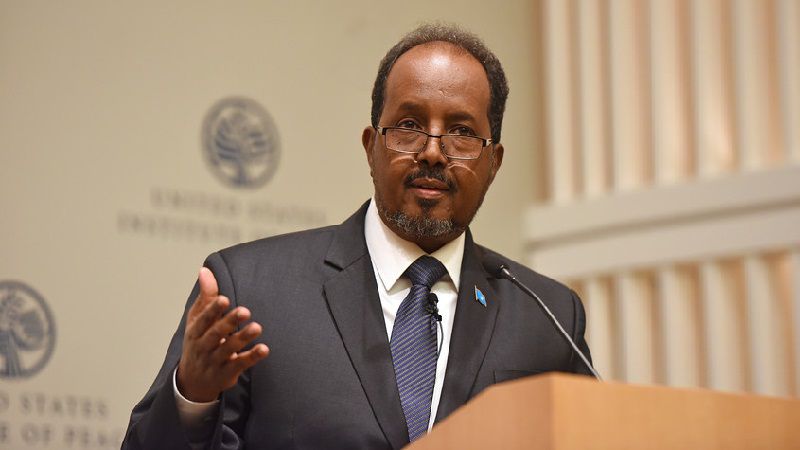
By: ThinkBusiness Africa The Federal Government of Somalia officially annulled all security, defense, and port-related agreements with the United Arab Emirates (UAE) on Monday,saying its sovereignty was undermined by the Emirate. The Somali Cabinet issued a strongly worded statement citing “compelling evidence” of hostile actions by the UAE designed to “undermine the sovereignty, national unity, and political independence” of the country. The decision, finalized during an emergency session of the Council of Ministers, orders the immediate termination of all partnerships involving the strategic ports of Berbera, Bosaso, and Kismayo, as well as all bilateral military cooperation. Last week, Mogadishu accused the UAE of violating Somali airspace and territory to transport Aidarous al-Zubaidi, the leader of Yemen’s UAE-backed Southern Transitional Council (STC). Somali officials described the unauthorized movement as a “hostile activity” that bypassed federal oversight. Tensions have been simmering since late 2025, following reports that the UAE facilitated Israel’s official recognition of Somaliland. Mogadishu views any international recognition of the breakaway region as an existential threat to its territorial integrity. “The Somali Republic will no longer tolerate parallel arrangements that bypass state institutions and violate our constitutional order,” stated Defense Minister Ahmed Moalim Fiqi. The annulment targets the heart of Emirati influence in the region, the decree effectively voids the $442 million deals held by Dubai-based DP World in Berbera and Bosaso. The move puts years of infrastructure investment into legal limbo. Following an earlier ban on UAE military flights, reports indicate that the UAE has already begun withdrawing senior military personnel and hardware from bases in Puntland. The move has created immediate domestic friction. Authorities in Somaliland and Jubaland have reportedly rejected the federal decree, with Somaliland officials labeling the cancellation “legally invalid.” This rupture signals a major geopolitical realignment. As Somalia distances itself from Abu Dhabi, it is rapidly strengthening ties with Saudi Arabia and Turkey. In a symbolic gesture just hours before the announcement, a Saudi delegation landed in Mogadishu to discuss deepened maritime cooperation. Analysts warn that the vacuum left by the UAE could impact local security operations against Al-Shabaab, as Emirati-trained units have been a cornerstone of the regional security architecture.
Nigeria’s debt to hit N175.5 trillion by 2026, but analysts see a ‘silver lining’ in GDP growth
By: ThinkBusiness Africa Nigeria’s total public debt is projected to hit a staggering N175.5 trillion by the end of 2026, down from N159.1 trillion in 2025, according to the latest Macroeconomic Outlook from investment powerhouse CardinalStone. While the figure is likely to trigger alarm bells across the country’s financial circles, the report—titled “Pathway to Sustainable Growth”—argues that the nominal “debt explosion” doesn’t tell the full story. In a surprising twist, analysts at the firm project that Nigeria’s debt-to-GDP ratio will actually settle at 34.5% by 2026. This indicates that while the debt is growing, the economy is expected to expand even faster, effectively “diluting” the burden of the borrowing. The projected climb to N175.5 trillion represents a significant leap from previous years, driven by a combination of persistent budget deficits and the high cost of servicing existing loans. According to CardinalStone, several factors are pushing the needle: The government’s 2026 appropriation is expected to maintain heavy capital expenditure to address the country’s infrastructure deficit. Although the report predicts a more stable Naira—projecting a range of N1,350 to N1,450 per dollar—the impact of previous devaluations has already permanently inflated the Naira value of Nigeria’s external debt. “The increase in debt level reflects an organic increase, as the FX outlook remains largely positive.” CardinalStone noted. With a 2026 budget deficit estimated at over N15 trillion, the government will remain heavily reliant on both domestic and international debt markets. CardinalStone’s projection of a 34.5% debt-to-GDP ratio suggests that Nigeria is moving toward a more sustainable fiscal position. This improvement is largely credited to a projected surge in Nominal GDP, which is expected to cross the N500 trillion mark by 2026. This growth is anticipated to be fueled by a recovery in oil production (projected at 1.75 million barrels per day) and a resilient services sector. “After nearly a decade of growth averaging about 2.0%, we expect the economy to find a new level of 4.4% in 2026,” the report stated, suggesting that the era of stagnation may finally be ending. Despite the optimistic GDP ratio, the “elephant in the room” remains revenue. Debt servicing is still expected to gulp a significant portion of the federation’s income. Last December, the government budgeted N15.52 trillion for debt servicing in the 2026 budget appropriation, representing over 25% of its total revenue for the fiscal year. To mitigate this, CardinalStone highlights the importance of the 2025 Tax Act and ongoing fiscal reforms. The firm notes that for the 34.5% projection to hold, the government must succeed in broadening the tax base without stifling the private sector—a delicate balancing act as the country approaches a pre-election year. Looking ahead on monetary policy support, CardinalStone predicts a 300 to 400 basis point cut in interest rates by the Central Bank of Nigeria (CBN) as inflation begins to cool toward a year-end target of 13.9%. This move could potentially lower the cost of domestic borrowing for the government, further easing the debt pressure.