
African development bank Seeks $25 Billion for poorest nations, London pledging round opens
By: ThinkBusiness Africa The African Development Bank (AfDB) Group opened a critical two-day pledging session in London on Monday, seeking an ambitious $25 billion for its concessional lending arm, the African Development Fund (ADF). This 17th Replenishment (ADF-17) is deemed essential to boost climate resilience, combat poverty, and accelerate economic growth across 37 low-income and fragile African countries over the next 2 years (2026–2028) circle. Co-hosted by the governments of the United Kingdom and Ghana, the meeting brings together senior leaders from the AfDB, ADF recipient countries, and key development partners to finalize the funding package. The $25 billion target set by former AfDB President Dr. Akinwumi Adesina is a significant escalation, aiming to nearly triple the $8.9 billion raised during the last replenishment (ADF-16) in 2022. The increased ambition is driven by a confluence of crises, including escalating climate impacts, a persistent infrastructure deficit, and heavy debt burdens that have severely limited the fiscal space of Africa’s poorest countries. The AfDB is betting on financial innovation, specifically the ADF’s new ability to leverage its equity in the capital markets—known as the Market Borrowing Option—to multiply donor contributions. This instrument is projected to generate up to an additional $27 billion in resources, significantly expanding the Fund’s impact beyond direct donor pledges. Despite the high target and the Fund’s vital importance, the pledging session is taking place amid a globally challenging economic environment, with many traditional donors — including the United States (U.S) facing domestic aid budget constraints. Earlier this year, the US withheld a $197 million tranche pledged in the previous replenishment round for the African Development Fund (ADF), this is raising doubts about Washington’s contribution ahead of the two-day meeting. The U.S. accounted for nearly 7% of the last ADF replenishment of $8.9 billion, ranking among the top five donors alongside Germany, France, Britain and Japan. As of late 2025, total pledges publicly announced stand at an estimated $1.4 billion, representing only about 5% of the $25 billion target. Denmark announced a planned 40% increase over its previous contribution, providing $171 million. Norway has announced approximately 296.2 million in funding for the 2026–2028 period. A number of African nations—including Kenya ($20M), Ghana ($5M), Zambia ($5M), and Benin ($2M)—have stepped up their own pledges, demonstrating a strong, unified commitment to the Fund. The ADF is Replenished every three years, it has provided $45 billion to 37 low-income African countries since 1972, financing irrigation, roads, electricity projects, and green energy projects. Unlike the AfDB’s main lending window, which carries higher interest rates and stricter conditions, the ADF offers grants and concessional loans with repayment periods exceeding 20 years. Over the last decade ADF has provided over 18 million people with electricity and improved access to water and sanitation for over 48 million people.
ECOWAS rejects Guinea-Bissau military’s transition plan, demands immediate civilian rule
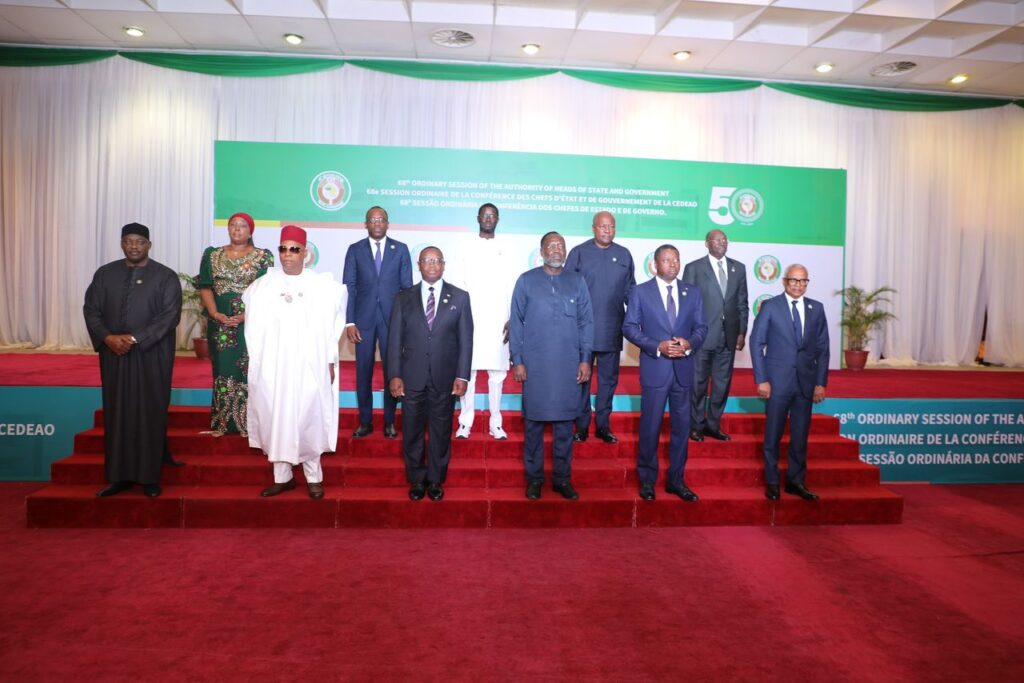
By: Chidozie Nwali The Economic Community of West African States (ECOWAS) delivered a decisive blow to the military junta in Guinea-Bissau, unequivocally rejecting its proposed one-year transition plan and demanding an immediate return to constitutional order under a civilian-led government. ECOWAS said on Sunday. The strong condemnation came in the wake of the November 26 military coup that overthrew President Umaro Sissoco Embaló, plunging the fragile nation into renewed political instability. Meeting in an emergency summit in Abuja, ECOWAS leaders reiterated their “zero tolerance” policy for unconstitutional changes of government, declaring the military’s seizure of power a blatant subversion of democratic principles. The coup, which saw Major-General Horta Inta-a installed as interim president and the establishment of a National Transitional Council, halted the official announcement of results from the November 23 general election, widely praised by international observers as free and fair. The bloc firmly rejected the military’s proposed one-year transition led by a military figure, insisting instead on a significantly shorter period managed by an inclusive civilian government. This demand underscores ECOWAS’s commitment to democratic governance and its unwillingness to legitimize military rule. ECOWAS called for the immediate and unconditional release of all political detainees, most notably deposed President Umaro Sissoco Embaló and key electoral officials. Their continued detention is seen as a serious violation of human rights and an impediment to any legitimate political dialogue. ECOWAS said that it would impose “targeted sanctions” on individuals and groups identified as obstructing the restoration of constitutional rule. This move signals the regional body’s readiness to exert economic and political pressure to ensure compliance. “What ECOWAS leaders have resolved to do, is to ensure that there is zero tolerance for unconstitutional change of government.” Omar Touray, president of the ECOWAS Commission said. Guinea-Bissau’s coup is the ninth in West and Central Africa in five years, deepening concerns over democratic backsliding in Africa already grappling with high insecurity and political instability. Guinea-Bissau has a turbulent history marked by frequent coups and political instability since gaining independence from Portugal in 1974. The recent coup is the latest in a series of setbacks for the West African nation, which has struggled to establish stable democratic institutions. The November 23 election was seen as a crucial step towards consolidating democracy, making the military intervention particularly frustrating for regional and international partners.
Oil rises after 4% loss; JP Morgan predicts oversupply for next year

By: ThinkBusiness Africa Crude oil prices rose sharply on Monday, rebounding from a steep 4% loss in the prior week. The rebound was primarily driven by an immediate spike in the U.S-Venezuela escalating tension, which temporarily eclipsed mounting concerns over a long-term structural oversupply predicted by a deeply bearish new research note from J.P. Morgan. Both global oil benchmarks West Texas Intermediate (WTI) and Brent crude futures climbed on Monday morning, Brent crude futures were up 34 cents, or 0.54%, at $61.45 a barrel, and U.S. West Texas Intermediate crude was at $57.75 a barrel, up 31 cents, or 0.54%. This bounce came as the U.S continues to pressure Venezuela president Nicolas Madura. Last week Washington seized a tanker off Venezuela’s coast, accusing it of transporting sanctioned oil. And dozens of people have been killed in attacks on boats alleged to have been carrying drugs. Venezuela’s oil exports have fallen sharply since the United States seized the tanker earlier last week, and imposed fresh sanctions on shipping companies and vessels doing business with the Latin American oil producer, leaving tankers loaded with over 11 million barrels of oil stuck in the water. This, and the ongoing drone strikes by Ukraine on Russian oil infrastructure, keeping short-term supply anxiety high, contradicting JP Morgan’s oversupply predictions. Traders were quick to price in the risk to immediate global supply chains, pushing prices up despite the shadow cast by one of the most bearish institutional forecasts in recent memory. Reports released on Saturday from J.P. Morgan Commodities Research warned that the global oil surplus is not only expected to widen in 2026 but could extend further, driven by non-OPEC+ supply expanding at an estimated three times the rate of demand growth through 2026. A potential supply surplus of nearly 3 million barrels per day (bpd) by 2026-2027 if the OPEC+ alliance maintains its current production stance. JP Morgan warned. The firm forecasted that this persistent glut could drive Brent crude prices down to an average of $58 per barrel in 2026 and potentially plunge into the $30 range by the end of FY27 without significant, coordinated production cuts. The supply growth is overwhelmingly driven by non-OPEC+ producers, particularly the United States (shale), Brazil, and Guyana, with robust offshore projects providing exceptional clarity on future output. The J.P. Morgan forecast places intense pressure on the Organization of the Petroleum Exporting Countries and its allies (OPEC+). The group has implemented deep production cuts to stabilize the market in previous years, but the speed and scale of non-OPEC+ expansion are now challenging its market control.
Eswatini joins Kenya, Rwanda signs similar multi-million US five-years health deal
By: Chidozie Nwali The Kingdom of Eswatini has become the latest African nation to sign a multi-million dollar, five-year bilateral health agreement with the United States, following similar recent landmark deals with Kenya and Rwanda. The U.S. state department said eswatini signed the agreement on Friday. According to the state department, The $242 million agreement with Eswatini focuses heavily on sustaining gains in the HIV/AIDS fight. During the five year period Eswatini will increase domestic health spending by $37 million. Critically, the deal includes the provision of lenacapavir, a cutting-edge, U.S.-developed drug for HIV prevention, placing Eswatini at the forefront of the global treatment landscape. Eswatini is a country with a high HIV prevalence rate, roughly one in four adults is affected with the virus. These agreements signal a significant shift in U.S. foreign aid, moving towards a model of shared investment, national ownership, and increased self-reliance for partner countries under the “America First Global Health Strategy.” Displacing the older traditionally U.S. Agency for International Development (USAID)-led funding models, this new framework emphasizing a direct government-to-government partnership with explicit financial and operational commitments from both sides. Pillars of the new health strategy The multi-year Memorandums of Understanding (MOUs) signed by Eswatini, Kenya, and Rwanda—with other nations like Uganda and Liberia also entering similar pacts—are designed around three core principles: Kenya the first with the deal Signed first, Kenya’s massive $2.5 billion framework demonstrates the scale of the new strategy. A major component is the commitment to transition health workers currently funded by U.S. aid onto the Kenyan government’s payroll, aiming to stabilize the workforce. Rwanda with tech-enabled model Rwanda’s $228 million agreement highlights investments in technology and innovation. It includes support for American companies like Zipline (drone delivery of medical products) and Ginkgo Bioworks (biothreat radar systems), emphasizing a private-sector component that also supports U.S. commercial interests. During the five-years period Rwanda will increase domestic health spending by $70 million. Piracy concerns delays the pact While widely praised for promoting accountability and local ownership, the new bilateral model has also drawn scrutiny. Concerns raised, particularly in Kenya. Earlier this week, a high court in Kenya, halted any transfer or sharing of sensitive medical and epidemiological data under the with the pact pending the hearing of a motion filed by the Kenya consumer protect agency. Consumers Federation of Kenya (COFEK), argued that the bilateral pact poses a significant threat to the personal health information of millions of Kenyans. The hearing is expected to commence at the high court by February 2026. Meanwhile, Certain clauses from the pact require partner countries to adopt U.S. Food and Drug Administration (FDA) approvals as sufficient for emergency medical products, which critics suggest could weaken the authority of local regulatory bodies. Despite these debates, the signings with Eswatini, Rwanda, and Kenya firmly establish the new blueprint for U.S. global health assistance. U.S. officials have indicated that dozens more of these MOUs are planned for other partner countries in the coming weeks, accelerating the shift away from decades-old aid structures toward a framework built on mutual investment and national self-reliance.
Morocco secures $316 Million AfDB loan to upgrade airports ahead of 2030 FIFA World Cup
By: ThinkBusiness Africa The African Development Bank (AfDB) announced the approval of a significant €270 million (approximately $316 million) loan to Morocco, earmarking the funds for a major overhaul of the country’s airport infrastructure in anticipation of the 2030 FIFA World Cup. AfDB said on Friday. The financing package is dedicated to the Airport Infrastructure Expansion and Modernization Program (PEMIA), an ambitious project designed to dramatically boost the North African nation’s air transport capacity and solidify its position as a regional aviation hub connecting Africa, Europe, and the Americas. Morocco, which will co-host the centenary World Cup alongside Spain and Portugal, is embarking on a comprehensive $4 billion (38 billion dirhams) investment plan for its aviation sector. The primary goal is to more than double the nation’s overall airport passenger capacity from the current 38 million to an estimated 80 million passengers annually by 2030. The AfDB loan will be strategically deployed to modernize and expand airports in four of the country’s key tourist and economic powerhouses: Marrakech, Agadir, Tangier, and Fez. “This initiative will modernize airport infrastructure to offer a safe and efficient travel experience aligned with international standards”. “The investments are vital for meeting the projected growth in passenger and freight traffic, particularly as Morocco prepares for the World Cup.” AfDB said. The AfDB financing underscores Morocco’s strategic vision to leverage the World Cup as a catalyst for long-term socio-economic development. This investment is part of a much broader national infrastructure drive, which has an estimated total cost of over $20 billion across sports, rail, and road networks. In addition to improving travel logistics for the influx of football fans and tourists, the airport program is projected to deliver immediate and medium-term benefits like job creation, and aviation sector growth. This latest injection of funds brings the AfDB’s total commitments to Morocco this year to €1.3 billion, reinforcing the Kingdom’s position as one of the bank’s largest and most strategic clients.
Dangote refinery to list 10% stake on the Nigerian exchange, pays dollar dividend
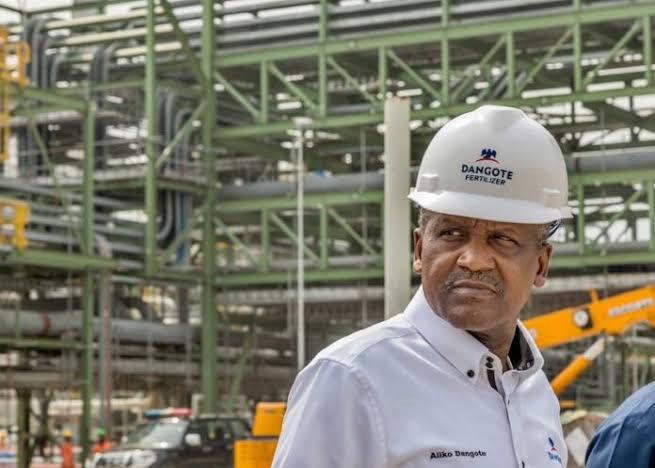
By: ThinkBusiness Africa The Dangote Group president and founder Aliko Dangote, has announced a landmark plan to list a 10% equity stake in its multi-billion dollar refinery and petrochemicals complex on the Nigerian Exchange (NGX), tentatively scheduled for 2026, and comes with an unprecedented payment of dividends in US Dollars. Dangote said on Thursday. While speaking at the unveiling of Dangote Group long-term vision 2030, the group president noted that stocks will be traded in Nigeria’s local currency Naira but dividends will be paid in US dollars. “You buy in naira, but you get dividends in dollars,” Dangote stated, outlining a strategy explicitly designed to offer Nigerian investors a crucial hedge against the persistent volatility and depreciation of the local currency, the Naira. This structure is a major deviation from the standard practice for companies listed solely on the NGX. The company expects the dollar payouts to be fully funded by its substantial foreign currency earnings. Dangote stated that the export-oriented nature of the refinery’s operations, particularly the fertilizer and petrochemical businesses, is projected to generate over $6.4 billion in annual revenue inflows for the country, assuring investors that the funds for the dollar dividends will not rely on the Central Bank of Nigeria (CBN). The initial public offering (IPO) is planned for 2026, following the model of successful previous listings of other Dangote subsidiaries, such as Dangote Cement and Dangote Sugar. Dangote Group is currently working closely with both the Nigerian Exchange (NGX) and the Securities and Exchange Commission (SEC) to establish the necessary regulatory framework for the dollar-denominated dividend payment. The refinery listing is a pivotal component of the Dangote Group’s ambitious “Vision 2030,” which aims to transform the conglomerate into a $100 billion revenue enterprise with a market capitalization exceeding $200 billion. The refinery itself, which is the world’s largest single-train facility with a production capacity of 650,000 barrels per day (bpd) and plans to expand to 1.4 million bpd, is considered key to achieving Nigeria’s energy self-sufficiency and becoming a net exporter of refined petroleum products. In November, the refinery announced that it’s going to meet all Nigeria’s domestic premium motor spirit (PMS) demands in December, by supplying 1.5 billion liters monthly into the Nigerian petroleum market. This figure, which is equivalent to approximately 50 million litres per day, is widely considered sufficient to meet the nation’s entire daily consumption requirement, which typically hovers between 50 and 60 million litres. Financial analysts and capital market observers anticipate that the refinery listing will be transformative for the Nigerian capital market The listing of such a large and valuable entity (the refinery is valued at over $20 billion) will significantly deepen the market, providing a massive boost to the NGX’s overall market capitalization and liquidity. Should the plan receive full regulatory approval, it could set a new standard for Nigerian companies, particularly those with significant foreign currency earnings, encouraging similar dividend structures to enhance investor appeal. The Nigerian capital market now awaits the final regulatory approvals from the NGX and SEC to see how this groundbreaking financial model will be implemented, a move that could redefine the landscape of domestic equity investment.
Nigeria’s foreign trade hits $26.22 billion in Q3 2025, maintains surplus
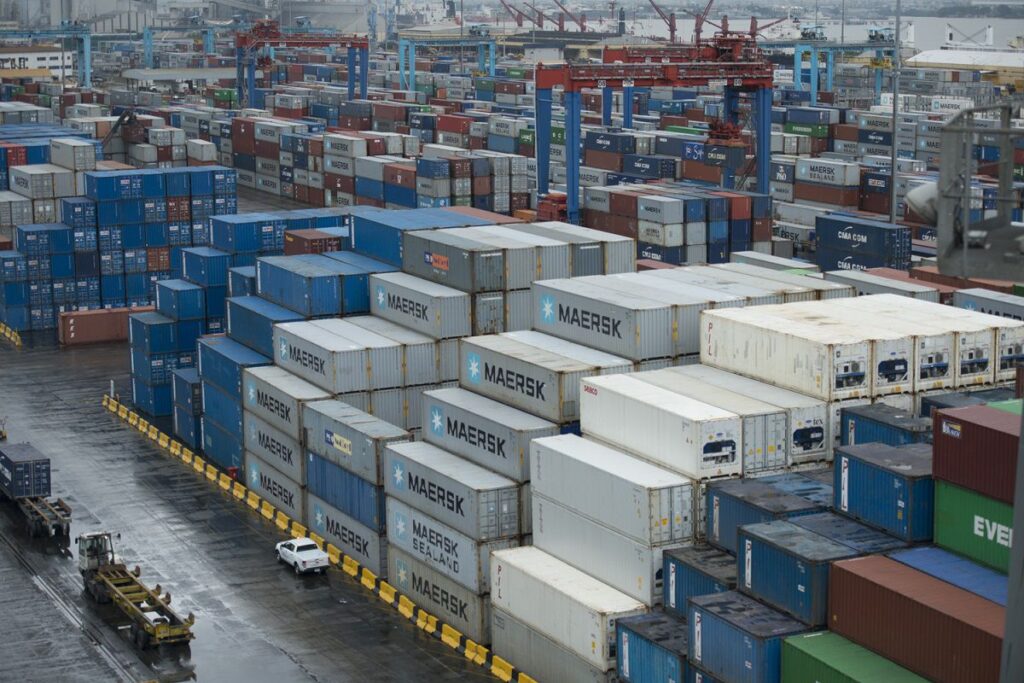
By: ThinkBusiness Africa Nigeria’s external merchandise trade recorded a steady growth in the third quarter of 2025 (Q3 2025), reaching a total value of N38.936 trillion ($26.22 billion), according to the latest data released by the National Bureau of Statistics (NBS) on Thursday. This represents an 8.71% increase compared to the N35.818 trillion recorded in the corresponding quarter of 2024. Nigeria successfully maintained a positive trade balance in Q3 2025, which stood at N6.690 trillion ($4.51 billion). However, this figure marks a 10.36% decrease when compared to the value recorded in Q2 2025. According to NBS total exports for the quarter were valued at N22.813 trillion ($15.36 billion), accounting for 58.59% of the total trade. This export value shows an 11.08% rise from Q3 2024 and a marginal 0.28% increase from Q2 2025. Crude oil remained Nigeria’s dominant export commodity, valued at N12.806 trillion ($8.62 billion), which made up 56.14% of the total exports. The value of non-crude oil exports stood at N10.006 trillion ($6.74 billion) making 43.86% of total exports, with non-oil products contributing N2.996 trillion (US$2.02 billion) (13.14% of total exports). Raw Material Exports witnessed a significant surge, rising by a remarkable 136.38% year-on-year to reach N1.039 trillion ($0.70 billion). Solid Mineral Exports also saw robust growth, increasing by 29.75% year-on-year to N100.81 billion ($ 70 million ). In contrast, Agricultural Goods Exports declined by 11.69% compared to Q3 2024, amounting to N786.62 billion (US$0.53 billion). Total imports in Q3 2025 were valued at N16.122 trillion (US$10.86 billion), constituting 41.41% of total trade. The import value saw a 5.51% increase year-on-year. India is Nigeria’s top export partner during the Quarter with 9.90%. share of total exports for the top five destinations. On the import side, China dominated imports with 29.68% share of total imports for the top five countries of origin. Nigeria’s foreign exchange reserves has seen significant increases over the past five years. This December the FX reserve grossed $45 billion from $34 billion recorded in 2020 according to the central bank of Nigeria, providing the West African nation with over 10 months of import covers; far above the minimum 3 months import covers recommended by word bank.
Kenya court halts $1.6 billion US health deal over data privacy fears

By: ThinkBusiness Africa The High Court of Kenya has issued a temporary injunction suspending a key provision of a landmark $1.6 billion (approximately Ksh 208 billion) Health Cooperation Framework signed last week between the Government of Kenya and the United States. The suspension targets the core issue of data privacy, halting any transfer or sharing of sensitive medical and epidemiological data under the agreement until a constitutional challenge is heard. High Court Judge Bahati Mwamuye granted the interim orders following a petition filed by the Consumers Federation of Kenya (COFEK), which argued that the bilateral pact poses a significant threat to the personal health information of millions of Kenyans. This ruling effectively pauses the operational aspects of the deal that rely on the exchange of health data, a foundational component of the framework intended to strengthen Kenya’s disease surveillance and digital health systems. COFEK argues that the pact, due to its massive financial implications and direct impact on citizens’ rights, required robust public participation and parliamentary scrutiny before its signing, which was allegedly bypassed. “Decision-making informed by Kenyan health data must be public, auditable and jointly supervised, with consumer representatives involved in data processing, and monitoring,” COFEK noted in a statement. The Health Cooperation Framework, signed by President William Ruto and US officials, was hailed as a “game-changer” that would channel $1.6 billion in U.S. aid directly through Kenyan government systems over five years, moving away from reliance on third-party NGOs. Up to $1.6 billion in direct funding for programs like HIV/AIDS, malaria, and maternal health. The pact will also see that Kenya increases domestic health expenditures by an estimated $850 million over the same period, with the goal of achieving self-reliance in funding health programs by 2030. Rwanda signed a similar deal last week, formalizing a five-year, $228 million health cooperation agreement with the U.S, which will see the country increase its domestic health spending by over $70 million during the 5 years period. The court has given the respondents until January 16, 2026, to file their official responses to the petition. The case will be mentioned again on February 12, 2026, to set directions for the full hearing.
Nigeria’s central bank governor calls for technology-driven approach to boost agricultural lending
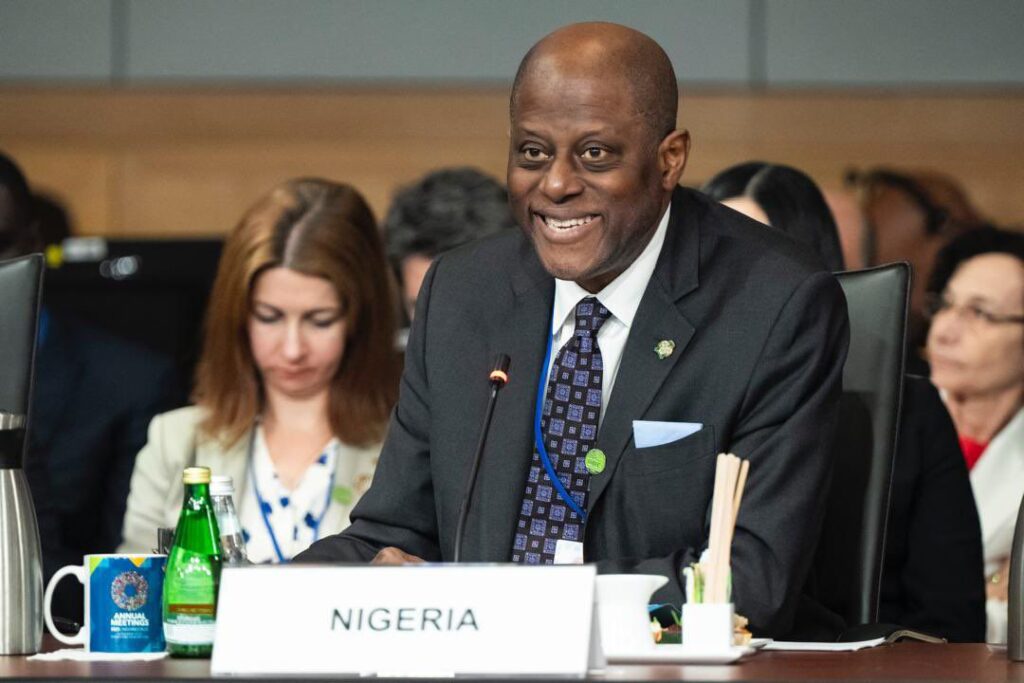
By: ThinkBusiness Africa The Governor of the Central Bank of Nigeria (CBN), Mr. Olayemi Cardoso, has inaugurated the new Board of the Agricultural Credit Guarantee Scheme Fund (ACGSF), challenging the leadership to adopt a radically modern and technology-driven approach to unlock credit for Nigerian farmers. CBN said in a statement on Wednesday. The inauguration underscored the CBN’s renewed commitment to leveraging agriculture as a key driver of economic diversification, poverty reduction, and national food security. Nigeria’s agricultural sector is filled with small holder farmers who constitute 80% of all farmers and produce 90% of the country’s food. Yet these farmers have zero or very little access to formal credit, often due to technical, and long paperwork barriers. Governor Cardoso strongly affirmed the enduring strategic role of the ACGSF, established in 1977, in de-risking agricultural lending. However, he stressed the urgent need for the 47-year-old scheme to evolve into a more innovative, inclusive, and technology-driven instrument to address modern agricultural challenges, including climate risks, complex value chains, and low bank lending. “The strengthened scheme, whose share capital increased from ₦3 billion to a substantial ₦50 billion under the amended 2019 Act, must shift from simply guaranteeing loans to actively helping farmers, cooperatives and agribusinesses secure affordable credit,” the Governor stated. Agriculture contributes more than one-fifth (over 20%) of Nigeria’s Gross Domestic Product (GDP). The sector showed strong growth potential posting a real GDP growth rate of 3.79% in third quarter 2025. Meanwhile, less than 5% of commercial bank’s total lending goes to the agricultural sector. In September the CBN slashed its key lending rate by 50 basis point (27% from 27.5%), this move the apex bank aims to support borrowing across key sectors including agriculture. Following the inauguration of the ACGSF board, the apex bank aims to use technological approaches like collaboration with fintech, and cooperative to boost credit among rural small-holder farmers who are left out of formal credit. With repayment rates of 90–98%, the Scheme continues to show strong impact. The new Board, led by Dr. Olusegun Oshin, is set to enhance collaboration, monitoring and real-time tracking to boost productivity and rural livelihoods.
Retaliation: Ghana deports three Israelis, after unjust deportation of Ghanaians
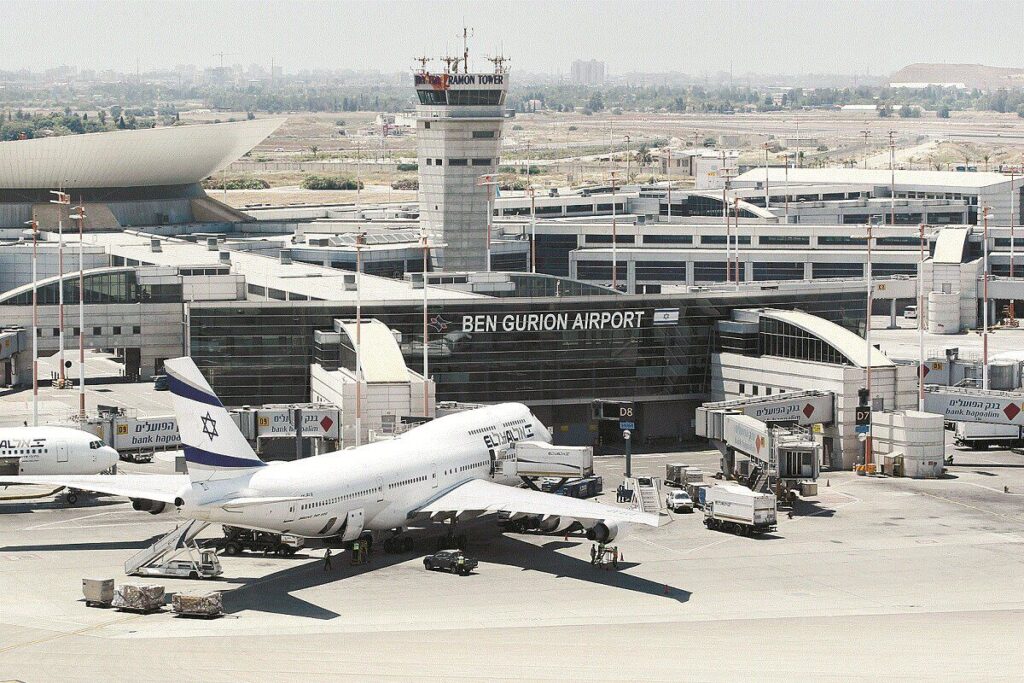
By: Chidozie Nwali The Republic of Ghana has swiftly deported three Israeli nationals who arrived the West African nation on Wednesday. This move is an act of direct retaliation for what its Ministry of Foreign Affairs describes as the “ill-treatment and unjustified deportation” of three Ghanaian citizens by Israeli authorities. Earlier on Sunday, Ghana foreign ministry said Ghanaian travelers were “deliberately targeted and subjected to inhumane and traumatic treatment”. at Ben Gurion Airport in isreal. Accusing the Israeli authorities of detaining seven Ghanaian—among them four members of a parliamentary delegation attending an international cybersecurity conference in Tel Aviv—with three ultimately being deported back to Ghana. In protest of the ill-treatment, authorities at the Israeli Embassy in Accra were immediately summoned to the Ghanaian Ministry of Foreign Affairs to address the dispute. “Following the ill-treatment and unjustified deportation of three Ghanaian nationals by Israeli authorities,the Government of Ghana has been compelled to retaliate by deporting three Israelis who arrived in Ghana earlier today.” Ghana foreign ministry said. “The Chargé d’ Affaires ad Interim of the Embassy of the State of Israel was promptly summoned to the Ministry of Foreign Affairs, considering that the Israeli Ambassador to Ghana is currently out of the jurisdiction. Both Govemments have agreed to resolve the matter amicably.” Ghana foreign ministry said. The Ghanaian government is asserting a zero-tolerance policy for perceived mistreatment of its citizens, signaling to international partners that the dignity and respect afforded to foreign nationals in Ghana must be reciprocated abroad. In 1957 after Ghana independence, Israel and Ghana established diplomatic relationship; however, following the 1973 Arab-Israeli War, Ghana, along with other African countries, cut ties with Tel Aviv. The relationship was restored in 1994 and have since included torrism, business travels and mutual cooperation.