
Nigeria pushes for permanent UN security council seat at AU-EU summit
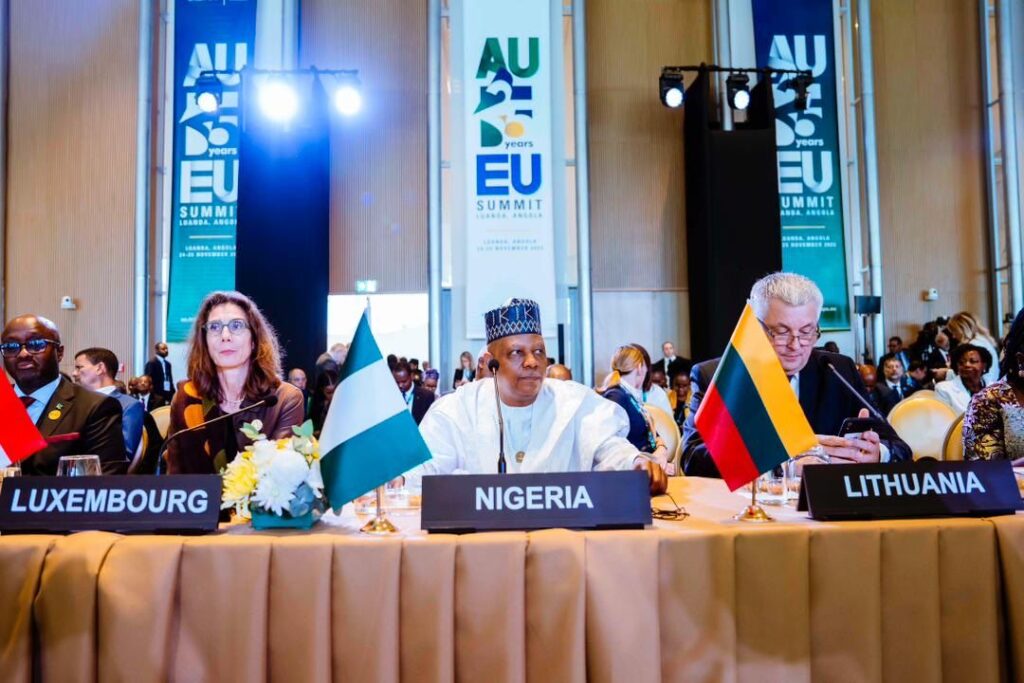
By: ThinkBusiness Africa Nigeria has decisively intensified its push for Africa to secure permanent seats with veto power on the United Nations (UN) Security Council, simultaneously calling for a fundamental shift to African-led frameworks for peace and security across the continent. The demands were presented by President Bola Ahmed Tinubu, represented by Vice President Kashim Shettima, during the first plenary session on Peace, Security, Governance, and Multilateralism at the 7th African Union–European Union (AU-EU) Summit in Luanda, Angola, on Monday. President Tinubu insisted that a comprehensive reform of the global governance system is long overdue, highlighting the lack of permanent African representation on the UN Security Council as a historical injustice. He had made the same call at the 80th UN general assembly in September, stating that the demand for a permanent seat at the UN Security Council isn’t a privilege but a right the continent had earned. “It is time for Africa to occupy permanent seats on the UN Security Council, with all attendant privileges, including the veto,” the President stated. He called for the immediate commencement of “Genuine text-based negotiations under the Intergovernmental Negotiations (IGN) framework,” and urged EU Member States to support Africa’s “long-standing and legitimate call for reform of the United Nations.” Addressing the persistent challenges of armed conflict, illicit weapons, climate pressures, irregular migration, and political instability, President Tinubu tasked the European Union (EU) with co-creating peace and security initiatives that are anchored on African-led frameworks. He firmly rejected the use of private military and security companies (PMCs) in African conflicts, warning that their presence often complicates resolution efforts and undermines state sovereignty. “Externally driven initiatives, however well-intentioned, cannot succeed at pace without strong regional ownership and a grounded understanding of local dynamics,” the President cautioned, emphasizing that stability requires genuine partnership rooted in regional priorities. The Nigerian leader reaffirmed the country’s commitment to advancing peace, security, and democratic governance across the continent. He cited the Multinational Joint Task Force (MNJTF) in the Lake Chad Basin as an effective model of African-led cooperative security. He also disclosed that non-kinetic measures employed by the Nigerian government have led to significant gains against insurgency. “As of early 2025, over 120,000 Boko Haram-affiliated individuals, including family members, have surrendered,” he announced. Furthermore, President Tinubu highlighted Nigeria’s ongoing efforts to enhance regional capacity through the recent Sea-Lift Agreement between the Nigerian Navy and the AU Standby Force (ASF), which aims to boost Africa’s rapid deployment capabilities for peace operations and humanitarian support. Recently, Nigeria is faced with intense security challenges. 51 school children were kidnapped by terrorists in Niger state (Northern Nigeria); and 38 Christian worshippers were abducted by bandits from a church in Kwara state (Western Nigeria). All happened last week, forcing the president to cancel his trip for the G20 summit in South Africa, and the AU-EU Summit in Angola. However, the president said on Sunday that following swift intervention by the security forces all the 38 worshippers were rescued, and the 51 school children had been recovered.
Paystack fires co-founder Ezra Olubi amid sexual misconduct allegations
By: Chidozie Nwali Nigerian fintech giant Paystack has terminated the employment of its co-founder and former Chief Technology Officer, Ezra Olubi, following a scandal involving allegations of sexual misconduct and the public resurfacing of highly inappropriate, decade-old tweets. The company, acquired by Stripe in 2020 – in a landmark $200 million deal, confirmed Olubi’s removal on Monday, citing “significant negative reputational damage” stemming from his inappropriate past (2009-2013) posts on X (formerly twitter), which it deemed inconsistent with Paystack’s core values. Olubi’s employment was officially terminated shortly after the controversy erupted in mid-November 2025. The crisis began when an allegation of sexual misconduct involving Olubi and a subordinate employee was made public on X. Observers widely shared a series of Olubi’s tweets, primarily posted between 2009 and 2013. These posts included sexually explicit jokes about colleagues, inappropriate references to minors, and other content that sparked widespread condemnation. Olubi subsequently deactivated his X account. Paystack stated that the decision to terminate Olubi’s employment was driven by the “significant and immediate harm” caused by these resurfaced public posts. “We take matters of this nature extremely seriously,” Paystack stated. “The views expressed in the old posts are not consistent with our values and have caused profound damage to our company’s reputation.” Paystack said. However, Ezra Olubi strongly contested the fairness of his termination, alleging that Paystack violated company policy. Olubi claims he was dismissed abruptly and without a formal meeting, hearing, or prior notice, stating that the termination process was “irregular” and failed to adhere to internal governance standards. His legal team is reportedly reviewing the terms of his departure, suggesting a potential legal challenge regarding the manner in which the decision was executed. Ezra Olubi co-founded the payment processor with Shola Akinlade in 2015; and has remained at the board following its acquisition. Crucially, Paystack has clarified that Olubi’s termination for reputational damage is a separate matter from the ongoing investigation into the specific allegation of sexual misconduct involving a subordinate. Paystack confirmed that an independent, formal investigation was launched immediately following the initial allegation and remains underway.
NNPCL reports N5.4 trillion profit in 2024, unveils $60 billion growth forecasts
By: Thinkbusiness Africa Nigeria National Petroleum Company Limited (NNPCL) declared on Monday a monumental Profit After Tax (PAT) of N5.4 trillion for the full year ended 2024, marking a significant milestone in the national energy company’s ongoing transformation. The record earnings were achieved on a gross revenue of N45.1 trillion. The impressive financial results, reported by the state owned oil company represent an 88% year-on-year growth in revenue and a robust 64% year-on-year growth in PAT. Earnings Per Share (EPS) also climbed 64% to ₦27.07. Bashir Bayo Ojulari, Group Chief Executive Officer of NNPC Limited, emphasized that the strong performance reflects the success of the company’s transformation agenda and the dedication of its workforce. The CEO asserted that the company is positioning itself as a globally competitive energy company focused on delivering sustainable returns while powering the future of Nigeria and Africa. Building on the 2024 success, NNPC Limited unveiled an aggressive strategic roadmap designed to drive sustained growth, enhance energy security, and support Nigeria’s energy transition through 2030. The company plans to mobilize $60 billion in investments across the upstream, midstream, and downstream sectors by 2030, reinforcing its commitment to maintaining momentum into the next decade. “The earnings highlight the positive momentum of our ongoing transformation and the unwavering commitment of our workforce,” said Ojulari. “They offer a solid foundation for the ambitious growth ahead.” Ojulari said. NNPCL is aiming to boost crude oil production to 2 million barrels per day (bpd) by 2027, ultimately targeting 3 million bpd by 2030. The company major focus is on gas, with targets set to grow natural gas production to 10 billion cubic feet per day (bcf/d) by 2027 and 12 bcf/d by 2030. According to NNPCL This expansion will be supported by the accelerated completion of critical gas infrastructure projects across the country, including the Ajaokuta-Kaduna-Kano (AKK), Escravos-Lagos Pipeline System (ELPS), and the Obiafu-Obrikom-Oben (OB3) pipelines. In 2025, the company earnings fluctuated peaking at N1.054 trillion in May 2025 before a significant drop to N216 billion by September 2025. The average crude oil output for 2025 has been reported to hover around 1.6 million barrels per day (mbpd), which is below Nigeria’s official budget benchmark of 2.06 mbpd. NNPCL remitted a combined N801.3 billion from Management Fees and Frontier Exploration Funds in the first nine months of 2025, representing 56.5% of the projected annual budget for those streams.
World Bank lifts Kenya growth forecast to 4.9% on construction sector rebound
By: ThinkBusiness Africa The World Bank has issued a new wave of optimism for the Kenyan economy, revising its growth forecast for the current year (2025) upwards to 4.9%. This projection, a notable increase from the earlier May estimate of 4.5%, is primarily attributed to a significant rebound in the construction sector in East Africa’s largest economy. In its latest Kenya Economic Update report World Bank said on Monday that “signs of recovery are emerging” across key economic pillars. For much of the previous year, key sectors like construction were hampered by growing domestic concerns, particularly surrounding the government’s fiscal health and public debt management. However, the World Bank’s report indicates a decisive reversal of this trend in the first half of 2025. The construction sector’s renewed growth played a crucial “offsetting” role, absorbing the slack created by a concurrent slowdown observed in the manufacturing industry. This suggests that public and private infrastructure spending, which had slowed down, is regaining momentum. The World Bank forecasts that the robust 4.9% growth rate will be sustained over the next two years, offering a stable medium-term outlook for the nation. While the overall outlook is positive, the World Bank report was careful to highlight ongoing vulnerabilities that could pose downside risks to the forecast. International trade uncertainty remains a significant external risk, including the upcoming expiration of a key U.S. trade agreement with the region, which could impact Kenya’s export volumes. The persistent slowdown in manufacturing needs to be addressed through targeted policy action to ensure the economy’s recovery is broad-based and not overly reliant on one sector. Kenyan government officials have previously acknowledged the weight of a heavy public debt burden, which has diverted substantial annual revenue toward repayments. The rebound in the high-impact construction sector is therefore a welcome sign that the private sector is regaining confidence despite these fiscal pressures. The construction sector has demonstrated a notable rebound in 2025, contributing KES 149.4 Billion ($1.15 Billion) to the country’s Gross Domestic Product (GDP) in the first quarter of 2025 More significantly, the sector’s growth rate reversed its previous trend, recording a +3.0% expansion in Q1 2025, rebounding strongly from a -0.7% contraction in the preceding year. This vigorous activity is projected to culminate in an annual market value reaching KES 1.02 Trillion ( $7.89 Billion) in 2025. Key drivers include massive public investment in infrastructure, such as the proposed Nairobi-Mombasa Usahihi Expressway, and continued governmental focus on the Affordable Housing Program (AHP), which aims to deliver 200,000 houses annually.
G20 Leaders declares stronger action on debt crisis for low-income Nations
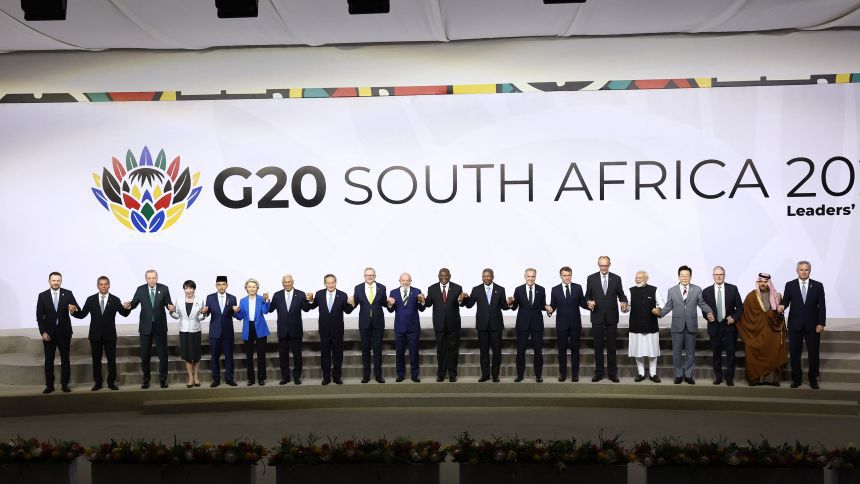
By: ThinkBusiness Africa The world’s largest economies, gathered at the historic G20 South Africa Summit on Sunday, have issued a forceful declaration acknowledging the severe debt vulnerabilities facing low-income and developing countries, particularly across Africa. The Leaders’ Declaration, positions global debt crisis at the forefront of the G20’s agenda for international financial architecture reform. The host nation’s focus on Global South priorities was evident as the final declaration—unusually adopted early in the summit proceedings—committed members to tangible steps for ensuring long-term debt sustainability and unlocking crucial fiscal space for development. G20 leaders expressed deep concern over the escalating cost of borrowing for the world’s most vulnerable economies. The declaration specifically highlighted that interest payments on total external public debt for low-income countries have more than doubled over the past decade, forcing many nations to spend more on debt servicing than on essential public services like education and healthcare. Debt service on external public debt reached $487 billion in 2023. Half of developing countries were paying at least 6.5% of export revenues to service external public debt. According to a UN report. Africa faces growing financing pressures as rising debt service costs severely constrain development. By the end of 2024, external debts to countries and multilateral financial institutions had reached $1.8 trillion, while annual debt servicing climbed to $163 billion, leaving 57% of Africans living in countries where debt payments exceed health or education spending. “We recognise that a high level of debt is one of the obstacles to inclusive growth… The situation is particularly challenging for many low-income countries, especially those in Africa,” the declaration states. Commitment to Revitalizing Debt Relief In a move to streamline and strengthen current processes, the G20 re-affirmed its commitment to improving the implementation of the G20 Common Framework for Debt Treatments (beyond the DSSI). This framework, designed to provide comprehensive debt restructuring for eligible countries, has faced criticism for being too slow and complex in previous cases. The declaration called for a renewed push to expedite debt treatments under the Common Framework to ensure that countries facing distress receive relief in a timely and orderly manner. Also, a strong call for greater transparency from all creditors, including the private sector and major non-Paris Club bilateral lenders, to provide a clear picture of a nation’s total debt obligations. Beyond immediate debt relief, the declaration supports a broader reform agenda for international financial institutions (IFIs). Leaders backed the ongoing review of the IMF-World Bank Low-income Countries Debt Sustainability Framework (LIC-DSF) to modernize the methodology for analyzing debt distress, making it more responsive to real-world economic shocks like climate disasters. “We underscore the importance of addressing gaps in debt management, debt transparency, public financial management, and domestic resource mobilisation and will continue to advance adequate capacity-building initiatives to this end.” The declaration read. The consensus reached in Johannesburg sends a strong political signal that the world’s major economies are ready to pivot from ad-hoc responses to a systemic and comprehensive approach to debt, viewing it not just as a financial problem but as a fundamental impediment to achieving the UN Sustainable Development Goals.
Edun Urges Rapid Economic Reforms as Nigeria Showcases Reform Gains at G20 Investment Dialogue
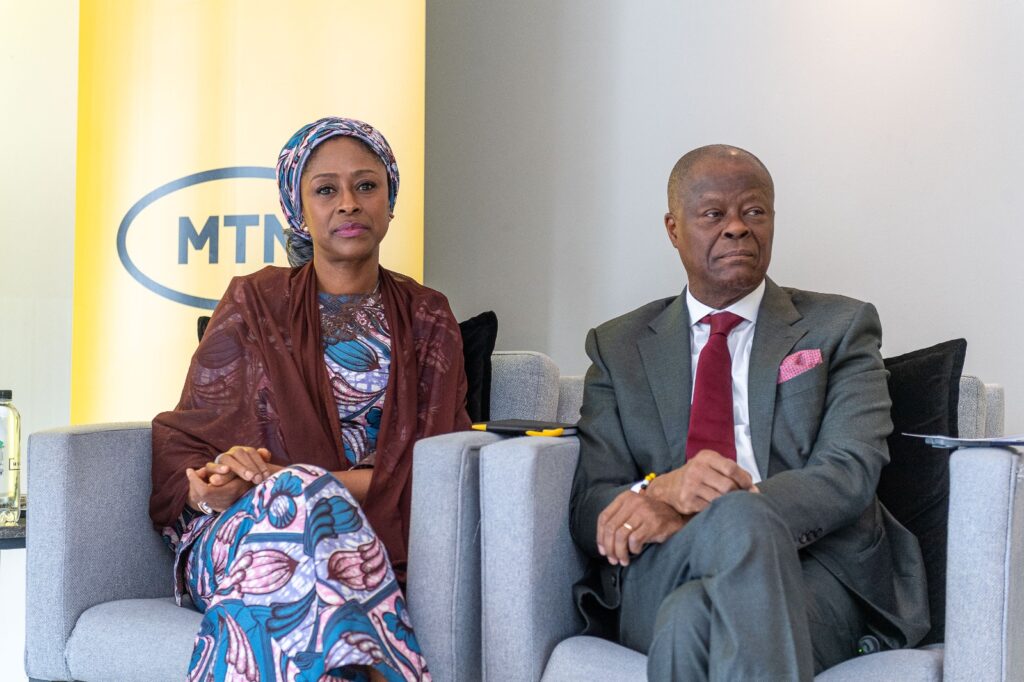
Africa must move decisively to accelerate economic reforms if it is to unlock sustained growth and withstand the pressures of a rapidly shifting global economy, Nigeria’s Minister of Finance and Coordinating Minister of the Economy, Wale Edun, said on the sidelines of the G20 Investment Breakfast Dialogue in Johannesburg, South Africa. Delivering the keynote address at a forum convened by MTN, CEOs from across South Africa, the Nigerian Investment Promotion Commission (NIPC) and development partners, Edun said Africa is meeting at a moment of “profound global economic change” that demands coordinated action, deeper regional collaboration, and an investment climate built on stability and reform. A global landscape in flux Setting the global context, Edun outlined four major disruptions reshaping the prospects of developing regions. First, global trade dynamics are being rewritten, with the old rules that supported the rise of China, India, and Brazil changing rapidly. Second, capital flows to emerging markets have tightened dramatically. Many developing economies, he noted, now pay more in debt service than they receive in development assistance. Africa alone is estimated by the African Development Bank to be paying about $163 billion in debt servicing in 2024 while total foreign direct investment is less than $100 billion. At the same time, technology is disrupting labour markets and reshaping the future of work — a worrisome trend for a continent where the median age is just 20 and millions of young Africans require jobs, skills, and opportunities. Finally, he said the world faces a paradox of “insufficient resources to fight poverty, yet abundant resources to fight climate change” — resources that often bypass Africa, despite the continent being disproportionately vulnerable to climate shocks. “These shifts mean one thing for Africa,” Edun said. “We must accelerate bold economic reforms and strengthen domestic resource mobilisation to finance investments, jobs, and long-term development.” Nigeria’s reform path: Building a platform for growth Using Nigeria as a case study, the minister said the country has embarked since May 2023 on a disciplined programme of reforms aimed at building a modern and competitive economy. Nigeria’s strategy, he explained, rests on two pillars: establishing macroeconomic stability so private investment can thrive, and increasing government savings to expand investments in education, healthcare, and infrastructure. To achieve this, the government implemented several difficult but necessary decisions, including the removal of fuel subsidies, liberalisation of the foreign exchange market, landmark tax reforms, and structural adjustments across energy, power, logistics, education, and industrialisation. “All these reforms have one purpose,” Edun said, “to build a competitive economy where private capital is rewarded, innovation is encouraged, and businesses have the confidence to invest.” Edun told investors that Nigeria is beginning to see clear signs of economic recovery and stabilisation. GDP grew by 4.23 percent in Q2 2025, compared to 3.1 percent in Q2 2024 and 2.51 percent in Q2 2023. Inflation, though still elevated, has been moderating consistently since March 2025, reaching 16.05 percent by October. External reserves have risen to $46.3 billion, and growth is increasingly broad-based, driven by trade, telecommunications, construction, and expansions in rail, electricity, and refining. “These indicators carry a simple message,” the minister said. “Nigeria is more stable, more predictable, and more investable than it has been in many years.” He acknowledged, however, that reforms have posed challenges for vulnerable populations. To cushion the impact, the government has expanded direct benefit transfers to 15 million households, with about 9 million already receiving cash support. Nigeria–South Africa partnership central to Africa’s future Edun stressed that Africa’s two largest economies must lead the continent’s drive toward investment, industrial growth, and job creation. “South African companies have had a long, deep, and successful presence in Nigeria,” he said. “This is the moment to learn from the past and invest deeper—not retreat.” He urged South African businesses to take advantage of Nigeria’s ongoing reforms and join the country’s new growth cycle. “Nigeria is not only open for business — Nigeria is reforming to accelerate business,” he added. The minister emphasised that sustained dialogue between government, the private sector, and development partners is essential for unlocking Africa’s economic potential. “Government’s role is to provide macroeconomic stability, invest in infrastructure and energy, ensure policy consistency and transparency, reduce the cost of doing business, and create an environment where capital can grow and scale,” he said. Industry leaders and state governors echo confidence Welcoming delegates earlier, MTN Group CEO Ralph Mupita described Nigeria as a “true African success story,” noting that the country accounts for 35–40 percent of MTN’s business and serves 85 million customers. He said MTN continues to support a strengthened Nigeria–South Africa business partnership through the bi-national commission, and he encouraged South African investors to leverage Nigeria’s reform momentum. Similarly, NIPC’s Executive Secretary, Aisha Rimi, highlighted the economic transformation underway in Nigeria, crediting President Bola Ahmed Tinubu’s reforms for establishing the foundation for accelerated growth. Many of the long-standing issues affecting South Africa–Nigeria investment relations, she said, are now being addressed through the bi-national commission. Representatives from South Africa’s Department of Trade and Investment echoed this view. Governors from Nasarawa, Gombe, Kaduna, and Plateau States also made presentations showcasing opportunities in agriculture, mining, transportation, and tourism. They noted that federal reforms have expanded fiscal space for state-level investment and enabled a pivot towards value-added industries rather than raw material exports. In his closing remarks, Edun said Nigeria has “laid the foundation for a modern, resilient, private-sector-led economy,” with a medium-term ambition of achieving at least 7 percent growth driven by private investment.
Malawi makes tourists pay in hard currency to boost fx reserves

By: ThinkBusiness Africa In a drastic measure aimed at replenishing its critically low foreign exchange (FX) reserves, the Malawian government has ordered foreign tourists to pay for all hotel and accommodation stays in hard currencies, such as US Dollars, Euros, or British Pounds. Finance Minister Joseph Mwanamvekha announced the new policy on Friday during a mid-year budget review, confirming the government’s shift toward stricter currency controls to address the country’s persistent hard-currency squeeze. The policy mandate is designed to ensure that the valuable foreign currency brought in by international visitors is directly captured by the central bank, rather than being exchanged on the local market or remaining outside the country’s formal financial system. “Our foreign reserves have come under immense pressure, particularly following the termination of the International Monetary Fund’s Extended Credit Facility,” Mwanamvekha stated. “This new regulation in the tourism sector is a necessary intervention to shore up our dwindling foreign reserves and ensure a stable supply of foreign exchange for critical national imports.” He said. The Minister stressed that tourism businesses must now secure special licenses to transact in foreign exchange, creating a ring-fence around tourism revenue to bolster the national foreign exchange kitty. Malawi’s economy has been under severe strain due to a chronic shortage of hard currency, which is essential for importing fuel, medicines, and agricultural inputs. The Malawian Kwacha (MWK) has struggled against major currencies, contributing to rising inflation and investor uncertainty. By targeting the tourism sector—a key non-traditional source of foreign earnings that accounts for approximately 7% of the nation’s GDP—the government hopes to achieve a quick and reliable boost to its reserves. In 2019 Malawi’s foreign exchange reserves was at $924.6 million, then it plummeted to $201 million in 2023 and $149 million in 2024. In 2025 it’s projected to be $118 million, an extremely low projection, covering only 0.3 months of imports, far below the internationally recommended three months of import cover needed for economic stability. Headline inflation rose from 20.8% in 2022 to 28% in 2023. Inflation is projected to average 29% in 2025.
Afreximbank posts solid nine-month results, boosted by liquidity and strong asset quality
By: ThinkBusiness Africa The African Export-Import Bank (Afreximbank) Group announced on Thursday a robust financial performance for the nine months ended September 30, 2025, demonstrating continued financial resilience and growth despite a challenging global economic environment. The bank’s financial statement highlights an increase in Net Income, a substantial jump in liquidity, and solid asset quality, although its loan portfolio saw a modest decline attributed to early repayments from financially healthier clients. Afreximbank recorded an increase in profitability, with Net Income climbing to US$654.3 million for the nine-month period, up from US$642.2 million in 2024. Gross Income rose to US$2.4 billion an increase from US$2.3 billion recorded in 2024, a notable achievement given the backdrop of declining benchmark interest rates. Operating Income also saw a significant boost, growing by 5.24% to US$1.44 billion. The Bank maintained impressive cost efficiency, with a Cost-to-Income ratio of 21%, remaining comfortably below the strategic ceiling of 30%. The Group reported a strong growth trajectory, evidenced by the expansion of its total assets and contingencies, which grew by 6.98% to reach US$42.9 billion as of September 30, 2025 increase from US$40.1 billion recorded in the corresponding period in 2024. The Bank’s liquidity position strengthened significantly. Cash and cash equivalents soared to US$7.6 billion, up from US$4.6 billion at the end of 2024; primarily driven by successful and targeted fundraising initiatives, unscheduled early loan repayments from borrowing customers. Consequently, the proportion of liquid assets to total assets increased sharply to 20% from 13% at year-end 2024. This robust liquidity pool positions Afreximbank well to support its future disbursement activities across the continent. While Net loans and advances decreased slightly to US$28.0 billion compared to US$29.0 billion in 2024 the reduction is a positive indicator of improving client financial health. Meanwhile, Moody’s and Fitch both downgraded the banks rating earlier in the year (July and June, respectively), citing concerns over asset performance, exposure to debt-distressed African sovereigns, and the bank’s shift in lending strategy. Fitch downgraded Afreximbank’s rating to BBB- with a negative outlook, from BBB. Moody did the same, lowering the rating to Baa2 with a stable outlook from Baa1. Afreximbank called the downgrades a miscalculation. Afreximbank’s asset quality remains sound, with a Non-Performing Loan (NPL) ratio of 2.51% from 2.33% in 2024, which is still within prudent risk limits.
South Africa cut key lending rate, set 3% new inflation target
By: Chidozie Nwali The South African Reserve Bank (SARB) has ushered in a new era of monetary policy, cutting its key lending rate and simultaneously cementing a lower, more ambitious inflation target. On Thursday, the SARB’s Monetary Policy Committee (MPC) announced a 25-basis-point (bps) reduction to the Repo Rate, bringing it down from 7.00% to 6.75%. This adjustment automatically lowers the commercial Prime Lending Rate to 10.25%. Last week Finance Minister Enoch Godongwana formally announced a historic change to the country’s inflation target, announcing a 3% point target with a 1-percentage-point tolerance band, meaning the effective target range is 2% to 4%. A change from the over 25 years old range of 3% to 6%, with the SARB informally targeting the midpoint of 4.5%. Minister Godongwana, delivering the Medium-Term Budget Policy Statement on Wednesday, confirmed that the new target was agreed upon with SARB Governor Lesetja Kganyago and supported by the President and Cabinet. The new goal immediately replaces the previous 25-year-old range and is expected to be implemented over the next two years. Governor Kganyago and the SARB had long advocated for a lower target, arguing that tighter price expectations are crucial for lowering the cost of living and borrowing, which in turn supports higher long-term economic growth and job creation. The MPC’s decision to ease policy was unanimous, reflecting growing confidence in the inflation outlook, despite a recent uptick in consumer prices. “Members agreed there was scope now to make the policy stance less restrictive, in the context of an improved inflation outlook,” Governor Kganyago told a news conference. While annual headline inflation rose slightly to 3.6% in October (up from 3.4% in September), it remains within the new 2% to 4% target band. Governor Kganyago stated that the MPC views the recent acceleration as largely due to temporary non-core items like meat, vegetables, and fuel, with inflation expected to head lower again in 2026. The SARB’s Quarterly Projection Model showed a small downward revision to the inflation outlook for both 2025 and 2026, largely due to a stronger rand and lower assumptions for the oil price. The rate cut provides immediate financial relief, particularly for the property market, where homeowners with variable-rate mortgages will see a slight reduction in their monthly repayments. South African retail trade sales showed a notable acceleration in September, rising by 3.1% year-on-year (yoy) For the third quarter of the year (July to September), retail trade sales grew by a modest 2.0% compared to the same period in the previous year. The latest rate cut is seen as a supportive measure for economic growth, which has been sluggish. The South African National Treasury forecasts real GDP growth of 1.2% for 2025.
AfDB secures €50M for Africa energy fund.
By: ThinkBusiness Africa The African Development Bank Group (AfDB) said on Wednesday it has secured new commitments totaling nearly euros 50 million for its Sustainable Energy Fund for Africa (SEFA), a multi-donor special fund, during a high-profile side event at COP30 in Belém. The funding, pledged by the governments of Germany and Italy, is earmarked to strengthen the rollout of the crucial Mission 300 initiative, a major drive by the AfDB and the World Bank Group to provide electricity access to an additional 300 million Africans by 2030. According to AfDB, Germany pledged €44 million, dividing the commitment across two strategic areas. €14 million dedicated to supporting SEFA’s universal energy access goals and a substantial €30 million allocation for the new SEFA Green Hydrogen Programme. Italy also made a new contribution of €5 million to the SEFA Special Fund for 2025, reaffirming its commitment to accelerating renewable energy and energy access projects across the continent. Dr. Katharina Stasch, Director-General for Climate Policy of the German Federal Ministry for Economic Cooperation and Development (BMZ), highlighted the strategic focus on emerging sectors. “We see the Africa-owned and Africa-led African Development Bank as an excellent partner in unlocking the potential of a green hydrogen economy for African countries.” She said. Dr. Kevin Kariuki, AfDB Vice-President for Power, Energy, Climate Change and Green Growth, stated that the commitments provide “wind in the sails for Mission 300 goals and solidify SEFA’s centrality in Africa’s universal energy access journey.” Approximately 600 million Africans (nearly half the continent’s population) still lack reliable access to electricity. This represents over 80% of the global electricity access gap. Beyond electricity challenges, the world bank said around 900 million Africans lack access to clean cooking solutions, relying instead on biomass, which leads to severe health and environmental consequences. Closing this gap requires an estimated $25 billion in annual investment and a tripling of the current connection rate.