By: ThinkBusiness Africa
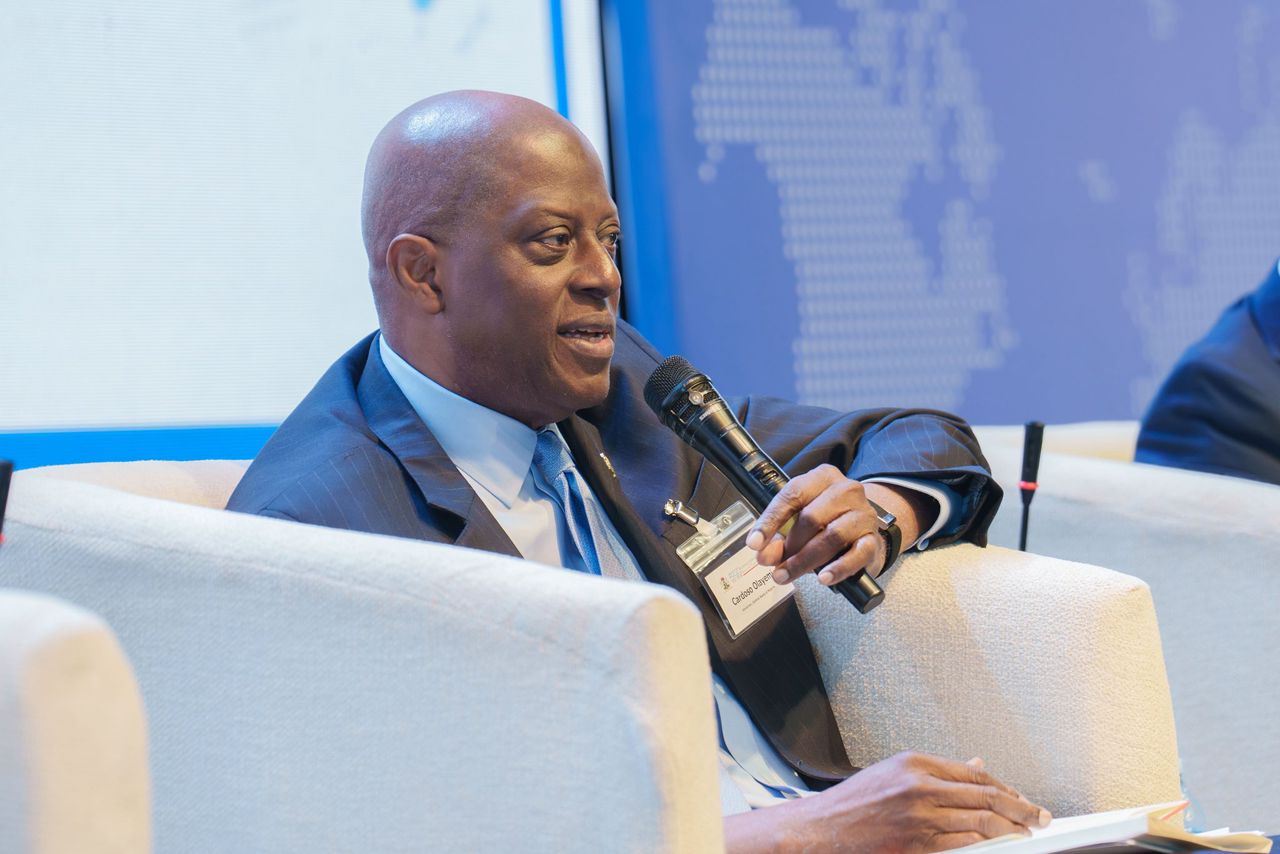
LAGOS, Nigeria — Olayemi Cardoso, Governor of the Central Bank of Nigeria (CBN), has issued a stark warning to global financial leaders, stating that the current “fragmented and inefficient” state of cross-border payments is a direct threat to inclusive growth in developing nations.
Speaking on Thursday, at the G-24 Technical Group Meetings, Cardoso argued that the global financial system is structurally biased against emerging markets, effectively “shutting out” millions of small businesses and households from the global economy.
Cardoso emphasized that while the world has moved toward rapid digitalization, the “plumbing” of international finance remains stuck in the past. He cited critical bottlenecks that continue to plague developing economies:
Global remittance corridors still average costs exceeding 6%, significantly higher than the United Nations’ Sustainable Development Goal target of 3%.
Transactions that should be instantaneous often take several days to settle, tying up capital for Micro, Small, and Medium Enterprises (MSMEs).
Rigid and fragmented regulatory requirements often act as a barrier rather than a safeguard, disconnecting local players from global opportunities.
“An economy cannot be more inclusive than its payment system,” Cardoso told the assembly. “If people cannot move money easily, affordably, and safely across borders, they cannot fully participate in modern economic life.” He said.
The Governor also raised the alarm regarding the rise of private digital platforms and stablecoins. He warned that if central banks fail to innovate and coordinate, these private alternatives could lead to currency substitution and a loss of monetary sovereignty for developing nations.
To counter this, Cardoso advocated for treating digital cross-border payments as a “public good.” He urged central banks to lead the design of new architectures.
The speech highlighted Nigeria’s proactive stance. Since the launch of the National Payment Stack in June 2025, the country has seen a marked shift in remittance growth.
Monthly inflows have stabilized at an average of $600 million, with the CBN eyeing a $1 billion monthly milestone.
Nigeria has simplified KYC (Know Your Customer) requirements for low-value transactions to encourage participation in the Pan-African Payment and Settlement System (PAPSS).
Cardoso concluded by reaffirming Nigeria’s commitment to working with the IMF, the World Bank, and G-24 partners to build a “development-oriented” global financial architecture that prioritizes speed, transparency, and equity.