By: Chidozie Nwali
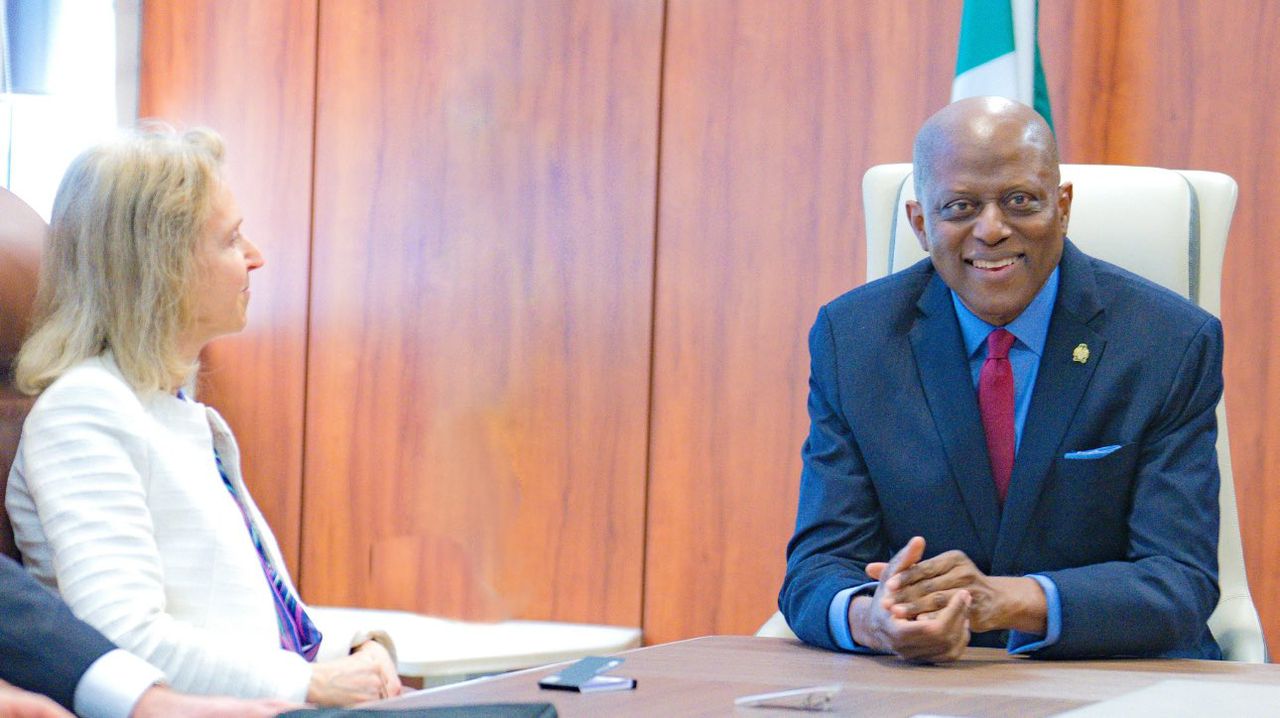
Amid deepening efforts for foreign investment, the Governor of the Central Bank of Nigeria (CBN), Olayemi Cardoso, hosted a senior delegation from British International Investment (BII) and the British High Commission on Wednesday.
According to the apex bank post on X (Twitter), BII Chair, Ms. Diana Layfield, alongside the British High Commissioner to Nigeria, Mr. Richard Montgomery was present as the meeting served as a cornerstone of the CBN’s 2026 strategy: transitioning from the aggressive currency stabilization measures of 2025 to a “long-term growth phase” powered by institutional development finance.
Governor Cardoso’s meeting with Ms. Diana Layfield, Chair of BII, and Mr. Richard Montgomery, British High Commissioner, focused on deploying “patient capital”—investment that prioritizes long-term economic structural changes over short-term returns.
Cardoso emphasized that the CBN is no longer just fighting inflation but is actively building a “transparent, data-driven regulatory framework.” This stability is designed to make the Nigerian banking sector resilient enough to act as a conduit for massive UK-backed investments.
“Development finance institutions (DFIs) are key partners in our reform agenda,” Cardoso stated. “By providing long-term funding and fostering strong corporate governance, BII is helping us build a financial system that supports real-sector growth.”
As of January 2026, Nigeria remains the second-largest recipient of BII investment in Africa, accounting for roughly 6.8% of its global portfolio.
BII’s portfolio in Nigeria is valued at over $550 million, spanning 116 companies and supporting over 54,000 jobs. Their strategy for 2022–2026 classifies Nigeria as a “Powerhouse” country, focusing on three pillars: Productive, Sustainable, and Inclusive growth.
BII-backed companies contributed $89.6 million in taxes to the Nigerian government in the last audited fiscal year.
The visit comes as the CBN projects Nigeria’s external reserves to hit $51.04 billion by the end of 2026, supported by “organic growth” rather than foreign borrowing.
By wooing BII, Cardoso is signaling to the wider global market that Nigeria’s monetary policies are yielding tangible partnerships with the world’s most disciplined investors.