
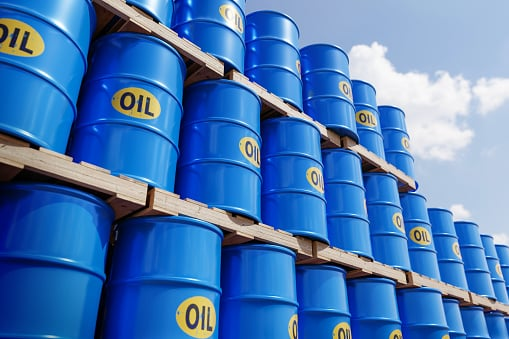
LAGOS — Nigeria generated an estimated $17.78 billion in gross crude oil revenue between February and May 2026, driven by global supply disruptions following the outbreak of the Iran war. The four-month harvest yielded a net windfall of $6.51 billion (approximately N9.77 trillion) above the federal government’s 2026 national budget benchmark price assumption of $64.85 per barrel.
The financial surge accelerated in May as domestic crude oil production climbed to a 15-month high of 1.53 million barrels per day (bpd), officially exceeding the country’s OPEC quota for the first time in over a year. The combination of elevated war-time pricing and expanding production volumes has provided a critical lifeline for the federation account.
The emergency price premium has significantly cushioned the country’s massive N25.91 trillion 2026 budget deficit, reducing immediate government pressure to issue expensive new domestic or Eurobond debt obligations. However, a persistent volumetric gap from the budgeted target of 1.84 million bpd prevents the historic deficit element from being completely wiped out, keeping Nigeria an average of 395,250 bpd below its fiscal planning baseline.
Monthly Production Performance & Budget Shortfalls
| Month | Actual Production (bpd) | Budget Target (bpd) | Daily Shortfall (bpd) | Status vs. OPEC Quota |
| February | 1.310 million | 1.840 million | -530,000 | Below Quota |
| March | 1.450 million | 1.840 million | -390,000 | Below Quota |
| April | 1.490 million | 1.840 million | -350,000 | Below Quota |
| May | 1.530 million | 1.840 million | -310,000 | Exceeded Quota (102%) |
| Average | 1.445 million | 1.840 million | -395,250 | — |
| Sources: NUPRC, OPEC |
Revenue Generation & Net Windfall Breakdown
| Month | Production (bpd) | Avg Price (bbl) | Gross Revenue | Net Windfall |
| February | 1.31 million | $87.00 | $3.19 billion | +$0.81 billion |
| March | 1.45 million | $99.40 | $4.47 billion | +$1.55 billion |
| April | 1.49 million | $120.36 | $5.38 billion | +$2.48 billion |
| May | 1.53 million | $100.00 | $4.74 billion | +$1.67 billion |
| Total | — | — | $17.78 billion | +$6.51 billion |
| Source: OPEC |
Turning the Corner on Past Fiscal Deficits
The current revenue boom represents an aggressive structural reversal from the previous two fiscal years, pulling the country out of severe revenue shortfalls. In 2024, aggregate national oil and gas revenues missed the national budget target by 24.7%, bringing in N15.07 trillion.
The structural crisis deteriorated deeper into the first three quarters of 2025, with petroleum tax and gas revenues plunging a staggering 73.92% short of targeted N23.54 trillion budget projections. Persistent pipeline vandalism, underinvestment in onshore upstream extraction, and softer international commodity pricing caused a severe N2.79 trillion oil revenue shortfall during the third quarter of 2025 alone.
Market Drivers and Upstream Cost Deductions
The geopolitical catalyst began on February 28, 2026, when the outbreak of the Iran war triggered an ongoing naval blockade and a critical shipping crisis as Iran closed the vital Strait of Hormuz. The severe physical market disconnect pushed international buyers toward safe Atlantic Basin supply routes, lifting premium demand and pricing for Nigerian crude grades to a peak of $120.36 per barrel in April. Global benchmark Brent crude has since moderated to $93.30 per barrel as a tentative cooling of immediate regional military strikes unwound a portion of the market’s risk premium.
However, complex upstream architectures mean the federal treasury only captures a net percentage of this market upside. In Joint Venture (JV) arrangements, gross numbers are heavily diluted by equity splits and standard production costs.
Upstream Cost Deductions & Equity Splits
(Calculated using the industry-wide $25.00/bbl operational baseline)
| Month | Gross Value | Production Cost ($25/bbl) | 60% NNPC Share | 40% IOC Share |
| February | $3.19B | $917.0M | $1.91B | $1.28B |
| March | $4.47B | $1.12B | $2.68B | $1.79B |
| April | $5.38B | $1.12B | $3.23B | $2.15B |
| May | $4.74B | $1.19B | $2.85B | $1.90B |
| Total | $17.78B | $4.35B | $10.67B | $7.11B |
| Sources: NUPRC, OPEC |
Out of the total $17.78 billion in gross commercial value generated, nearly 25% —amounting to $4.35 billion—was entirely consumed by the technical and security overhead of pulling the oil out of the ground based on the industry-standard $25.00 per barrel baseline. Under the pre-determined 60/40 JV equity split, NNPC Limited accounted for $10.67 billion of the net commercial value, while International Oil Companies (IOCs) held $7.11 billion before statutory taxes.
Technical extraction limits capped further gains earlier in the year. The Bonga deepwater field underwent scheduled turnaround maintenance precisely during the initial late-February price spike, restricting national oil output to a lower baseline of 1.31 million bpd before steady infrastructure recoveries and field restarts drove the climb to 1.53 million bpd by May.
Domestic Downstream Impact and Inflation
While the upstream sector enjoys a fiscal harvest, the domestic microeconomy faces severe inflationary adjustments. Because the downstream fuel sector is fully deregulated, soaring global oil prices immediately forced domestic petrol prices upward, hovering between N1,300 and N1,400 per litre across local filling stations. Independent petroleum marketers confirmed the local supply shock would have deteriorated further without the local production interventions of the Dangote Refinery acting as an essential baseline domestic structural buffer.
National Bureau of Statistics data showed yearly consumer inflation accelerated to a five-month high of 15.69% in April, reflecting aggressive transportation cost pass-through from the initial energy shock. Food inflation quickened to 16.06% year-on-year, significantly driving up the cost of local dietary staples and intensifying cost-of-living challenges across vulnerable households nationwide.
The fiscal windfall provides a substantial opportunity for the federation, but economic analysts urge targeted social investments and infrastructure deployments to cushion citizens against severe ongoing domestic price corrections.