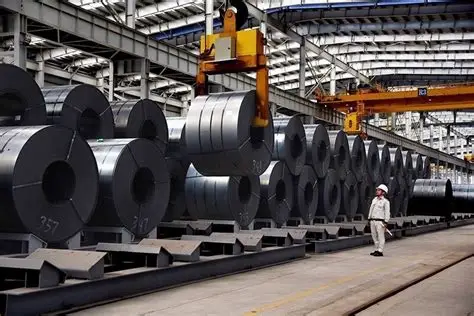
South Africa has imposed aggressive new import duties of up to 75% on structural steel from China and Thailand, moving to protect its embattled domestic industry from what it describes as a predatory surge of “dumped” foreign products.
The new rates represent a significant escalation from the provisional duties introduced in late 2024. China Imports now face a definitive duty of 74.98%, a sharp jump from the previous 52.81%. Thailand: Imports are now subject to a 20.32% duty, more than double the earlier 9.12% provisional rate.
The definitive anti-dumping duties, approved by Trade, Industry and Competition Minister Parks Tau, took effect on Thursday. The measures follow a final determination by the International Trade Administration Commission of South Africa (ITAC) that steel from these nations was being sold in the local market at prices below production costs, causing “material injury” to South African manufacturers.
The duties apply to various U, I, and H sections of iron or non-alloy steel, primarily used in large-scale construction, mining, and infrastructure projects.
The investigation was triggered by an application from ArcelorMittal South Africa (AMSA), the country’s only primary producer of these specific steel sections. AMSA has warned for years that a flood of cheap imports—which surged nearly 19-fold from China and Thailand in the 2023/24 financial year—made it impossible for local mills to remain viable.
“The commission found that the SACU [Southern African Customs Union] industry is experiencing material injury,” ITAC stated in its final report, citing suppressed prices, declining sales volumes, and the erosion of local market share as key factors.
China currently accounts for roughly 73% of all steel imports into South Africa. Local industry experts note that as traditional markets in Europe and North America have tightened their trade barriers against Chinese overcapacity, excess supply has been diverted to more open markets like South Africa
The steel sector is a pillar of South Africa’s industrial economy, but it has been crippled recently by high energy costs, logistical bottlenecks at state-owned Transnet, and weak domestic demand. Last year, the industry faced a crisis as plant closures put approximately 3,500 jobs at risk.
The new duties are scheduled to remain in place for five years, though they will be subject to a “sunset review” before they expire in 2031.