

Nigeria’s Portfolio Investment Surges 45% to $6.51 Billion in Q2 2026 on Fixed-Income Demand
Foreign portfolio investment into Nigeria surged 45% quarter-on-quarter to reach $6.51 billion in the second quarter of 2026, driven primarily by sustained foreign appetite for fixed-income paper. Official data released in the Central Bank of Nigeria’s (CBN) Q2 2026 statistical bulletin shows total inflows expanded by $2.03 billion from the $4.49 billion registered in the preceding quarter. On an annual basis, portfolio capital inflows expanded by 26.4% compared to the $5.15 billion recorded during the corresponding second quarter of 2025, highlighting improved offshore participation in local capital markets. Debt securities accounted for the dominant share of total portfolio investment, surging 16.1% from $4.28 billion in March to $4.97 billion by June. The $690 million quarter-on-quarter increase in debt instruments meant fixed-income assets represented roughly 76% of overall portfolio capital entering the country over the three-month period. In contrast, foreign investment in equity and investment fund shares remained broadly muted, edging up under one% from $1.53 billion in Q1 to $1.54 billion in Q2. The sustained influx of short-term portfolio flows comes as the apex bank maintains elevated benchmark interest rates to anchor inflation and stabilize the naira exchange rate across domestic trading windows. The foreign capital expansion complemented broader macroeconomic gains, with Nigeria’s external reserves climbing past $51 billion and the country recording a current account surplus of $7.54 billion in Q2 2026.
Nigeria rises on Bloomberg scorecard as central bank rebuilds the external buffer
Nigeria climbed four places to eighth on Bloomberg’s 2026 Africa investment scorecard, the biggest move in the ranking, after gains in economic strength, fiscal strength and external vulnerability. The external score, its best mark, sits on a reserve and foreign-exchange rebuild run by the Central Bank of Nigeria. Institutions and infrastructure, untouched by that work, are still holding the country down. The Bloomberg Economics Investment Risk-O-Meter, published with Businessweek’s 2026 Investor’s Guide to Africa, covers 19 economies. Nigeria passed Rwanda, Tanzania, Kenya and Namibia. Mauritius leads at 0.6. South Africa, first last year, slipped to second at 0.5. Nigeria’s overall rating is 0.1. A higher figure means lower relative risk. Nigeria scored 0.4 on economic strength, 0.6 on fiscal strength and 1.4 on external vulnerability. Institutions and governance came in at −1.2. Infrastructure was −0.5. Bloomberg does not name the Central Bank. The external metric is where its policy shows. Under Governor Olayemi Cardoso the CBN collapsed the old multiple-rate windows into the Nigerian Foreign Exchange Market, cleared a verified FX backlog and shifted trading onto an electronic matching system. Gross reserves, $33.22 billion at the end of 2023, were above $55 billion by mid-September 2026, an 18-year high on Cardoso’s figures. Net reserves rose from $3.99 billion at the end of 2023 to $34.8 billion at the end of 2025. Oil receipts and remittances supplied a large share of the dollars. The policy change was that those dollars now clear in one market. Yvonne Mhango, an Africa economist quoted in coverage of the report, called Nigeria the standout mover on rebased GDP, firmer growth and the external position, “but weak institutions and infrastructure remain important constraints.” Egypt, Ghana, Botswana and Ivory Coast all sit at 0.3, ahead of Nigeria. The Risk-O-Meter is a relative guide to where a higher return may be required, not a clearance to deploy. Contract enforcement, regulatory predictability, power and logistics are still where they were.
Analysts: Nigeria Portfolio Flows Hinge on the Naira, Not deposit floor
Foreign portfolio investors will not automatically exit Nigeria because the Standing Deposit Facility now pays 20%, market analysts say. They do not place capital at that window. The argument comes from an Africa Business Convention (ABC) briefing on foreign portfolio flows after the September policy meeting. It separates the deposit floor from tradeable money-market yields. “The SDF reduction does not automatically trigger FPI flight,” the briefing tittled “Evaluating the CBN’s September 2026 Monetary Easing, Corridor Compression, and FPI Dynamics” said. “FPI allocation decisions target market-clearing yields and FX-adjusted carry spreads, not the central bank deposit floor.” A day later, the Debt Management Office sold 364-day Treasury bills at a 15.89% stop rate. Bids topped N4.09 trillion against N400 billion offered, showing demand held. That discount rate still translates to a true yield near 18.9%. After August inflation of 15.39%, the real cushion is thinner than last month but remains positive. Offshore funds judge naira debt on an unhedged dollar basis. Local yield minus expected depreciation and a risk premium determines whether the carry stays attractive. Nigeria’s external position is the main shock absorber. Gross reserves stood at $55.25 billion on September 18, equal to about 11.3 months of import cover. The current account posted a $7.54 billion surplus in the second quarter, up from $4.49 billion in the first. Oil output and non-oil exports both improved. The naira has been broadly stable around N1,330 per dollar at the official window since the meeting. That calm, not the deposit rate, is what keeps carry intact. The briefing warns the real break point is currency expectations. If implied naira depreciation climbs toward 18 to 20%, dollar returns compress quickly. Its base case for the fourth quarter keeps inflation drifting toward 14.5% and depreciation below 8%. That would still leave a double-digit net dollar carry. A medium-risk path would see energy prices or Middle East tension shrink the trade surplus. Expected depreciation of 12 to 15% would narrow the buffer to low single digits. The authors say the central bank must keep Treasury bill and OMO auction rates market-clearing. Pegging issuance yields to the deposit floor would erase the offshore incentive. They also want regular, transparent reserve reporting so investors can price repatriation risk. Convertibility fears, not a two-point floor cut, historically trigger sudden stops. For local investors, real returns on bills have tightened to about 4.6% after inflation over the past year. That squeeze is meant to push savings toward equity and real activity.
Nigeria: The Policy Rate Is 23%. Here Is What Your Business Should Expect

Nigerian businesses should not expect cheaper bank loans in the coming weeks after the Central Bank reset the Monetary Policy Rate to 23% on Tuesday. Economists at a Wednesday webinar hosted by Macrostrat Nigeria Limited said the cut was a policy signal, not an immediate drop in the cost or supply of credit to manufacturers, traders and SMEs. The Monetary Policy Committee, at its 307th meeting on 21 and 22 September, reset the MPR from 26.50% to 23.00%, a 350 basis-point move that was larger than most analysts had priced. The consensus before the meeting was a hold, or at most a 50 to 100 basis-point trim. Governor Olayemi Cardoso did not present the decision as the start of a cheap-money cycle. He called it an operational reset. Market rates in the interbank market and on short-term government paper had already fallen below the old 26.50% benchmark, weakening the MPR as a policy signal. The corridor around the new rate was set at +50/-300 basis points, putting the standing lending facility at 23.50% and the standing deposit facility at 20%. The Cash Reserve Ratio was left at 45% for deposit money banks, 16% for merchant banks and 75% on non-TSA public-sector deposits. Cardoso said that package does not change the Bank’s underlying stance. That is the point businesses need to separate. Inflation eased to 15.39% in August. The official rate is now 23%. Neither figure is the rate most firms will pay. Speaking at the webinar, The Balancing Act: Navigating the CBN’s September MPC Decision for Real Sector Growth and Economic Resilience, Professor Emmanuel Nwosu of the University of Nigeria, Nsukka, said the transmission from policy rate to bank lending in Nigeria is slow, especially for smaller borrowers. “We are looking at transmission lag of at least 6 to 12 months,” he said. “This is just a signal. First it will have to translate to low cost of lending. This has not happened… So it’s not going to be fast.” He called on SMEs to use this opportunity to tighten their financial records and restructure their outstanding debts instead of borrowing new loans. Dr Faith Iyoha Senior Economist at Nigerian Economic Forum (NESG) said the Committee changed the advertised price of liquidity but not the volume banks can lend. “You’ve reduced the rate to track domestic economic reality because our market rates have been below the MPR. And then you’re just recalibrating,” she said. “They’ve just signaled a change in market rate without changing liquidity or credit availability. Banks still have only about 25% of their fund to give out as credit. And if credit is not available, you can hardly do anything with the cost.” Even if funding costs ease later, banks still have a choice. They can lend to a factory with unstable power and thin records, or buy Treasury bills, bonds and commercial paper. Professor Adeola Adenikinju, a former MPC member, and Dr Iyoha both said that bias has not gone away. “If it is still more attractive, then the finance will not go to the real sector. It will remain in short term instrument,” Dr Iyoha said. “This has not significantly changed anything.” Short-term government yields had already fallen below the old MPR. That is why the CBN said it had to reset the benchmark. If that paper still looks safer, the money stays in the market. Dr Ogho Okiti of ThinkBusiness Africa and Professor Comfort Amire of Crawford University said the bigger squeeze on firms is still diesel, power, haulage, bad roads and FX. “No matter how lower the interest rate is, it cannot solve the problem that comes from high production costs,” Professor Amire said. “It is the structural reforms that can make it possible to produce more with that particular money.” For operators, the practical reading is straightforward. Do not take on new debt because the headline rate fell. Keep cash close. If you already sit on expensive legacy facilities, use the shift in tone to reopen talks with your bank. Clean up your records; when lenders do loosen, they will look first at MSMEs with books they can underwrite. The Committee meets again on 23 and 24 November. What happens to the CRR, prime lending rates and T-bill yields will matter more than 23% on this week’s communiqué. Cardoso said the Bank would stay restrictive for as long as it had to. Until banks have more room to lend, the reset corrects the benchmark. It does not, by itself, cheapen credit.
Nigeria’s Central Bank slashes Benchmark Rate to 23% in surprise 350-point cut
Nigeria’s central bank cut its benchmark interest rate to 23% on Tuesday, a 350-basis-point reduction from 26.5%. The Central Bank of Nigeria announced the decision after the 307th Monetary Policy Committee meeting. The committee also reset the standing facilities corridor to +50 and –300 basis points around the new monetary policy rate. Cash reserve requirements were left unchanged at 45% for deposit money banks and 16% for merchant banks. A 75% reserve requirement on non-TSA public sector deposits was also retained. The new corridor puts the standing lending facility at 23.50% and the standing deposit facility at 20%. The cut is far larger than most forecasts ahead of the two-day meeting in Abuja. The rate had been kept at 26.5% since February, when the committee delivered a 50-basis-point cut. It then held that level in May and July as inflation cooled only gradually. Headline inflation had eased for three straight months, reaching 15.39% in August from 15.43% in July. Food inflation also fell in August, its first decline in about six months, strengthening the case for easier policy. Even so, the policy rate had remained more than 11 percentage points above August inflation, leaving conditions highly restrictive. Global oil prices above $100 a barrel and pre-election spending risks had been cited as reasons for caution.
Nigeria Signs Landmark Pact to Align Fiscal and Monetary Policies
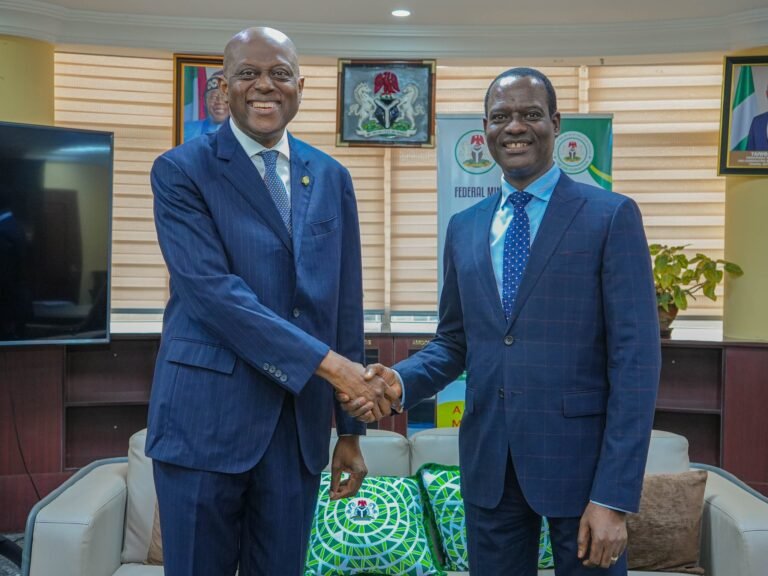
The Federal Government of Nigeria and the Central Bank of Nigeria have signed a historic pact to institutionalize coordination and improve macroeconomic management. The Memorandum of Understanding (MOU) was finalized in Abuja by Finance Minister Taiwo Oyedele and CBN Governor Olayemi Cardoso. The framework establishes structured protocols for data sharing, debt planning, and joint cash management. “This memorandum provides a structured framework for regular consultation, information exchange and policy coordination,” Cardoso stated. “Good economic management requires independent institutions, but independence does not mean isolation,” Oyedele added, emphasizing that the central bank’s statutory autonomy remains fully protected. Officials stated the agreement aims to eliminate policy contradictions while supporting the apex bank’s transition to an inflation-targeting framework. This reform arrives as authorities pursue single-digit inflation targets following a strong 2025 external surplus and rising foreign reserves exceeding $53 billion in August.
Hot Money, Heavy Bids: Nigeria’s $6.03bn Portfolio Surge Tests the Depth of Reform
Nigeria drew $6.03 billion in portfolio investment in the first quarter (Q1) of 2026, the Central Bank of Nigeria said in its Q1 economic report, up 14.4% from $5.27 billion in the previous quarter. That inflow dominated the financial account. Portfolio capital accounted for about 83.5% of the $7.22 billion in gross financial liabilities incurred in the period. The composition matters more than the headline. The money is liquid, short-duration and concentrated in tradable securities. It is not arriving as factories, power plants or other long-term productive assets. Paper, not plant Portfolio investment liabilities rose 14.08% to $58.01 billion, the fastest-growing component of Nigeria’s international financial liabilities. The auction calendar showed why. Subscriptions for CBN OMO bills reached N35.62 trillion against N9 trillion offered. Nigerian Treasury Bills drew N24.93 trillion in bids against a N7.97 trillion offer. Direct investment did not follow. FDI liabilities stood at $1.03 billion, down 7.09% from the previous quarter. Portfolio inflows were nearly six times as large. Other investment liabilities were $220 million. A thicker reserve buffer The rest of the external accounts were stronger. Total foreign-exchange inflows rose 13.26% to $31.34 billion. Outflows fell 11.78% to $11.01 billion, leaving a net inflow of $20.33 billion. Autonomous sources — flows outside the CBN’s own windows — brought in $21.15 billion, up 23.9% quarter on quarter. Gross reserves rose to $48.35 billion by the end of March, or 8.84 months of import cover. The catalyst Investors were not guessing. Since September 2023 the CBN under Governor Olayemi Cardoso has made Nigerian paper easier to hold: a single willing-buyer, willing-seller FX market, a cleared backlog of more than $7 billion, electronic matching on the interbank window, and a much narrower official–parallel spread. The bank also stepped back from financing the government and kept money tight — a policy rate that peaked at 27.5% before a one-step cut to 26.5%, a 45% cash reserve ratio on deposit-money banks, and heavy use of open-market operations to drain naira. That mix, plus still-high local yields, is what offshore accounts have been buying. It is not the whole story. Oil-related receipts, remittances and a broader bid for emerging-market carry all sit in the same trade. The CBN made the naira readable again. It did not conjure the $6.03 billion on its own. Recapitalisation, due by 31 March 2026, brought in about N4.65 trillion and put 33 banks over the new capital lines. After the quarter closed, reserves kept rising from $48.35 billion at end-March to more than $54 billion by mid-September. The later build helps explain why the bid for Nigerian paper did not fade with Q1. What the quarter does not prove Q1 showed that investors will buy Nigerian paper when the FX market looks less arbitrary and the yield pays for the risk. That is a vote for the current monetary stance. It is also a stock of liabilities that can reprice in weeks if global rates move or the naira’s stability looks less assured. The same tools that pulled the money in now shape what happens next. OMO and T-bills are how the CBN mops up the naira that accompanies those inflows; sterilising hot money is not free. A 45% cash reserve ratio and still-rich government paper give recapitalised banks a reason to sit in securities rather than fund plants. The unfinished test is not whether portfolio money can enter. It is whether the system built to attract it can live with a smaller bid — and still get credit to the real economy.
Nigeria’s FX Turnover Surges to $1.45 Billion on Stronger Central Bank Liquidity
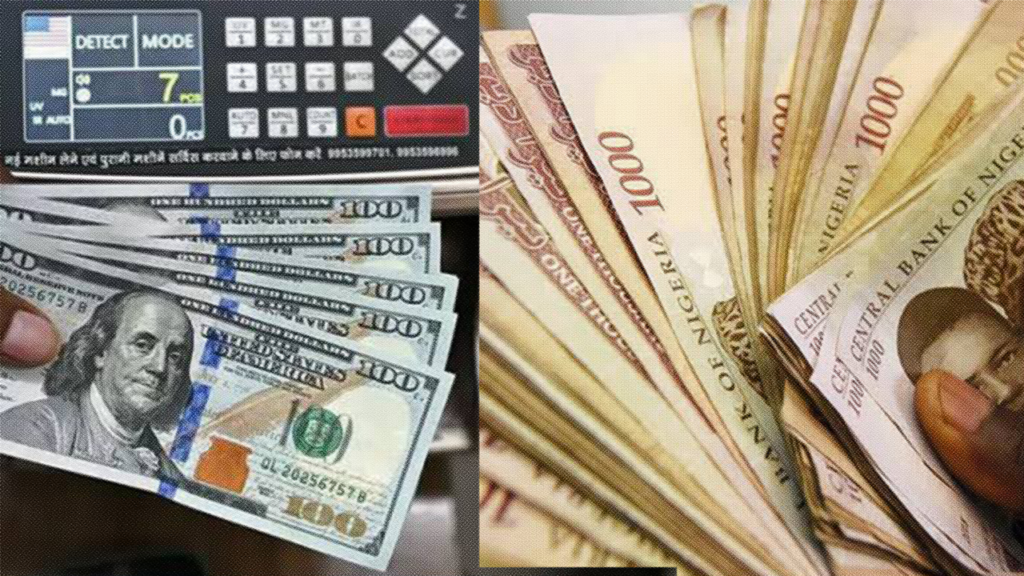
The Nigerian Naira traded within a tight band across the week, closing at approximately N1,326.51 per dollar at the official window following earlier interventions. Nigeria’s foreign exchange market recorded a sharp increase in trading activity, with total turnover on the Nigerian Foreign Exchange Market (NFEM) rising to $1.45 billion on Thursday, September 10, the highest daily level since July 21, 2026. An analysis of market data from the Central Bank of Nigeria reveals that this figure represents a 167.2% surge compared to the $544.11 million recorded the previous day. The dramatic liquidity expansion was bolstered by a strategic central bank intervention where authorities sold approximately $151 million to authorized dealers. According to a market update from CardinalStone, the funds were offered at rates between N1,322.71 and N1,331.50 per dollar, pushing total transaction deals to 470. Supported by these interventions, the naira firmed up slightly at the official session, closing around N1,328.22 per dollar on Thursday as trading activity gathered sustained momentum. This rebound aligns with broader macroeconomic buffers, as Nigeria’s gross external reserves continue to hold firm well above the $54 billion threshold, providing strong support against external volatility.
Nigeria’s Financial Inflows Top N3 Trillion as OMO Maturities Surge 30%
Nigeria’s estimated financial system inflows remain above the N3 trillion mark for a second consecutive week, driven by a 30.67% surge in Open Market Operation maturities to N2.94 trillion. Data from the central bank of Nigeria (CBN), shows OMO repayments account for approximately 97.5% of total weekly inflows, overshadowing minimal contributions from corporate bond coupons and commercial paper maturities. This heavy liquidity concentration highlights the ongoing impact of the Central Bank of Nigeria’s aggressive monetary sterilisation cycle, as short-term bills sold in previous weeks return to the banking system. Broad system liquidity recently climbed to N4.66 trillion, significantly easing short-term funding pressures across commercial lenders and softening overnight lending rates heading into mid-September. Market watchers are now monitoring whether the apex bank will deploy aggressive new OMO sales to re-absorb the liquidity surge during the upcoming N500 billion Treasury bills auction.
Nigerian Naira Rallies to N1,315 Against US Dollar on Strengthening Official Liquidity
The Nigerian Naira recorded significant appreciation against the US Dollar, closing at N1,315.67 per dollar on September 3, 2026, up from previous trading sessions. Official figures published on the Central Bank of Nigeria portal indicate a steady downward trend in official exchange rates over a two-week window. Baseline rates strengthened from N1,346.98 per dollar on August 24 down to N1,315.67 by September 3, reflecting sustained liquidity improvements. Upper-band pressures similarly eased during the period. The highest recorded transaction rate dropped from a peak of N1,350.00 down to N1,324.00 per dollar. This bullish run aligns with broader macroeconomic consolidation, bolstered by recent improvements in gross foreign exchange reserves crossing the $53 billion threshold. Analysts note that narrower spreads between official and parallel markets continue to restore stability and confidence across domestic commercial sectors.