

The Chinese Warehouse Next Door: Why African Traders Say They Can’t Compete Anymore

On Tuesday, some Igbo traders at Lagos Trade Fair Complex walked the market with handmade placards. “Chinese must go.” “They should go far from our market environment and not be taking our customers.” “This is a peaceful protest.” A man with a microphone told the crowd that Chinese sellers had arrived as wholesalers and then opened shops and warehouses inside the same complex, selling the same imported goods at prices local retailers could not match. The complaint was specific. Chinese operators, the traders said, no longer stop at the container gate. They rent shops, build warehouses, sell straight to the final buyer, and — in some accounts — lift customer numbers from waybills and call those buyers themselves. “We no longer make sales,” one trader said. “If you import goods, they slash their prices lower than our own and sell to our customers.” Follow-up videos from the same market showed traders visiting Chinese shops and telling them not to restock after current stock ran out. Lagos police later called the demonstration the work of a few “disgruntled fellow.” The market association said it was minor and under control. The argument did not go away. That argument is no longer a Lagos story. Across Africa, local wholesalers — the people who fly to Yiwu and Guangzhou, share containers, and live on the markup between port and stall — say Chinese firms have moved from factory floor to warehouse to shopfront. The manufacturer now owns the last mile. The African middleman is being sidelined out of his own supply chain. The numbers behind the warehouse The volume makes that shift rational. China–Africa trade reached a record $348 billion in 2025, up 17.7%. Chinese exports to Africa were $225 billion, up 25.8%. African exports the other way grew only 5.4%, to $123 billion. Nigeria was China’s second-largest African partner that year, with about $28 billion in two-way trade — $24.9 billion of it Chinese goods flowing in. The surge has not slowed. In the first eight months of 2026, China–Africa trade hit $273.94 billion. Chinese exports to the continent rose 25.8% to $177 billion. Africa’s trade deficit with China widened 34.5% to $80 billion. China’s exports to Africa have grown faster than its exports to any other region for a year and a half. Analysts put that down to Chinese industrial overcapacity and Western trade barriers pushing finished goods toward markets that still buy on price. However, those goods no longer have to pass through an African importer. Chinese firms have spent two decades building the missing piece: warehouses, “China Towns,” and hybrid malls that sell both wholesale and retail. Kenya: “Importers, retailers, wholesalers and hawkers” Kenya has lived this fight in public. In February 2023, more than a thousand traders marched on Nairobi after China Square opened on the city’s outskirts selling curtains and household goods at prices traders said were about 50% cheaper than their own imports. Placards read: “The Chinese cannot be importers, retailers, wholesalers and hawkers.” Some chanted “Chinese must go.” One trader asked the obvious question: if the Chinese firm is manufacturer, distributor, retailer and hawker, where does the Kenyan sit? China Square did not disappear. It paused, then expanded. By early 2025 it was opening a sixth Kenyan branch. Local hardware sellers said customers had simply walked over. Kenya’s appetite for Chinese goods kept rising. Imports from China reached KSh 671.2 billion in 2025, up 16.5%. Exports the other way were only KSh 16.9 billion. The deficit hit KSh 654.3 billion. On 2 September 2026 — thirteen days before the Lagos march — President William Ruto told small traders that foreigners running small shops should close them. He named Chinese merchants. “We cannot accept a situation where people come from China and open shops here to sell many of the products that you are selling,” he said. “These shops are supposed to belong to Kenyans.” Groups then harassed Chinese shop owners in Kamukunji, Nyamakima and Gikomba. Police made arrests while the Chinese embassy watched nervously. Ghana: the law said no. The malls said yes. Ghana wrote the restriction into statute more than a decade ago. The Ghana Investment Promotion Centre Act (GUTA) of 2013 reserves market trading, petty trade, hawking and stall retail for Ghanaians. A foreigner who wants to trade imported goods must put up at least $1 million and employ 20 skilled Ghanaians — and still cannot sell in markets or stalls. The Ghana Union of Traders Association has spent years demanding that the law be enforced. It has locked shops, threatened nationwide protests, and accused foreigners — especially Chinese and Nigerian traders — of taking a large share of hubs branded China Mall and China Town. GUTA has claimed foreigners control close to 40% of those retail nodes. In December 2025, GUTA locked foreigners’ shops in Kumasi until the metropolitan assembly told it to stop and set a deadline for foreign retailers to leave informal space. In August 2026, the investment authority and GUTA agreed to revive a task force against fronting. GUTA’s line is consistent: malls and formal supermarkets can take foreign capital; the open market cannot. Tanzania, Uganda, Angola: the same squeeze, different tools In Dar es Salaam’s Kariakoo market, Tanzanian traders said Chinese competitors had moved from containers into the same small trades — even hawking and phone repair. The Kariakoo Traders Association estimated the average small trader’s monthly income had fallen about 40% over five years. In July 2025, the government banned non-citizens from 15 business lines, including general wholesale and retail (except supermarkets and specialty outlets), phone repair, mobile money, salons, and small-scale mining. Fines start around $4,000; visas can be revoked. Traders later complained that enforcement was delayed and that some shops simply put a Tanzanian in front. Uganda saw an earlier version in 2017, when hundreds of Kampala traders protested Chinese merchants who, they said, had come as investors and then opened small retail. The mayor warned the anger could turn xenophobic. In Angola last year,
China pledges deeper economic cooperation with Cameroon in key Sectors

China is set to significantly expand its economic partnership with Cameroon, focusing on infrastructure, energy, and agriculture, Chinese Commerce Minister Wang Wentao announced Tuesday. Speaking during a high-level meeting with his Cameroonian counterpart in the capital, Yaoundé, Wang emphasized Beijing’s commitment to “deepening practical cooperation” and helping the Central African nation modernize its economy. The talks were held on the sidelines of the 14th Ministerial Conference of the World Trade Organization (WTO), which Cameroon is hosting this week. The visit underscores China’s role as Cameroon’s largest trading partner and a primary source of foreign investment. The discussions highlighted several priority areas for the coming years: Wang noted that China is ready to align its development strategies with Cameroon’s National Development Strategy 2020-2030 (SND30), which aims to transform the country into an emerging economy. The meeting follows a 2025 framework agreement designed to grant Cameroonian goods duty-free access to Chinese markets. While China remains the top supplier of machinery and telecommunications to Cameroon, both nations expressed a desire to rebalance trade by increasing Cameroonian exports of agricultural and processed goods. Cameroonian officials welcomed the pledge, noting that Chinese investment has been instrumental in the country’s recent industrialization efforts. “China’s win-win approach helps rebuild essential transport and energy infrastructure without the political conditionalities often seen elsewhere,” a ministry spokesperson stated. The two nations are currently preparing for the 55th anniversary of their diplomatic relations in 2026. As part of this milestone, Cameroon is expected to send a delegation of over 500 businesses to the upcoming Canton Fair in China to source industrial machinery and secure new technical partnerships.
South Africa slaps massive anti-dumping duties on steel from China and Thailand
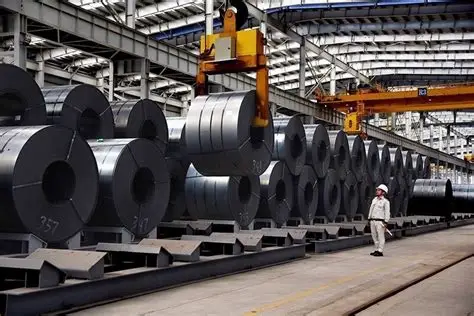
South Africa has imposed aggressive new import duties of up to 75% on structural steel from China and Thailand, moving to protect its embattled domestic industry from what it describes as a predatory surge of “dumped” foreign products. The new rates represent a significant escalation from the provisional duties introduced in late 2024. China Imports now face a definitive duty of 74.98%, a sharp jump from the previous 52.81%. Thailand: Imports are now subject to a 20.32% duty, more than double the earlier 9.12% provisional rate. The definitive anti-dumping duties, approved by Trade, Industry and Competition Minister Parks Tau, took effect on Thursday. The measures follow a final determination by the International Trade Administration Commission of South Africa (ITAC) that steel from these nations was being sold in the local market at prices below production costs, causing “material injury” to South African manufacturers. The duties apply to various U, I, and H sections of iron or non-alloy steel, primarily used in large-scale construction, mining, and infrastructure projects. The investigation was triggered by an application from ArcelorMittal South Africa (AMSA), the country’s only primary producer of these specific steel sections. AMSA has warned for years that a flood of cheap imports—which surged nearly 19-fold from China and Thailand in the 2023/24 financial year—made it impossible for local mills to remain viable. “The commission found that the SACU [Southern African Customs Union] industry is experiencing material injury,” ITAC stated in its final report, citing suppressed prices, declining sales volumes, and the erosion of local market share as key factors. China currently accounts for roughly 73% of all steel imports into South Africa. Local industry experts note that as traditional markets in Europe and North America have tightened their trade barriers against Chinese overcapacity, excess supply has been diverted to more open markets like South Africa The steel sector is a pillar of South Africa’s industrial economy, but it has been crippled recently by high energy costs, logistical bottlenecks at state-owned Transnet, and weak domestic demand. Last year, the industry faced a crisis as plant closures put approximately 3,500 jobs at risk. The new duties are scheduled to remain in place for five years, though they will be subject to a “sunset review” before they expire in 2031.