
Dangote refinery partners with Honeywell to boost petrochemical production

LAGOS, – Nigeria’s Dangote Petroleum Refinery has signed an agreement with Honeywell to scale up production of plastics and detergent raw materials, the companies said on Tuesday. The deal allows the 650,000 barrel-per-day plant to utilize Honeywell UOP technology to produce 750,000 metric tons of propylene and 400,000 metric tons of linear alkylbenzene (LAB) annually. “This is a major step in our transition toward high-value petrochemicals,” Aliko Dangote, president of Dangote Group, said in a statement. The project targets the global LAB market, projected to reach $11.5 billion by 2030, while providing essential components for Nigeria’s domestic detergent and soap manufacturers. Nigeria currently imports the bulk of its industrial chemicals, putting significant strain on foreign exchange reserves and increasing costs for local consumer goods producers. Honeywell will deploy its Oleflex technology for propylene production and integrate digital twin software to monitor real-time efficiency across the Lekki-based facility. The expansion aligns with the refinery’s broader plan to more than double its total processing capacity to 1.4 million barrels per day by 2028. The facility, which commenced fuel exports earlier this year, seeks to leverage Nigeria’s crude resources to dominate the continent’s refined product and chemical markets.
Nigeria: Dangote refinery gets more domestic crude amid Energy vitality
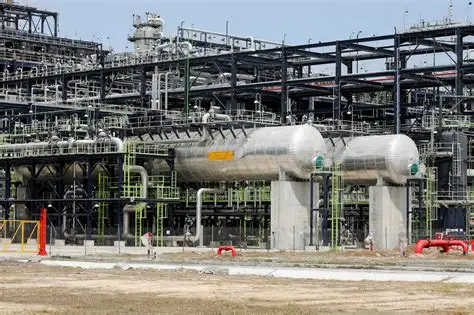
LAGOS — The Nigerian National Petroleum Company (NNPC) Limited has doubled its crude oil supply to the Dangote Petroleum Refinery, delivering 10 cargoes in March as part of a strategic push to bolster domestic fuel security. The increased allocation, which Aliko Dangote told Bloomberg on Tuesday, represents a significant jump from the previous average of five cargoes per month. The boost comes amid heightening global energy pressures, with Brent crude prices hovering above $110 per barrel due to sustained supply disruptions in the Middle East. Under the current arrangement, six of the ten cargoes were supplied in naira, while the remaining four were transactions settled in US dollars. This dual-currency approach is part of an ongoing framework intended to reduce the pressure on Nigeria’s foreign exchange reserves. “Nigeria doubled crude supply to Dangote Refinery in March as Africa’s top oil producer moved to shore up fuel availability after the Iran war disrupted Middle East shipments. Last month, they gave us six cargoes with payments in naira and four cargoes with payments in dollars,” Dangote stated. Despite the supply hike, the 650,000-barrel-per-day refinery is still operating below its peak requirement. Dangote noted that the facility needs approximately 19 cargoes monthly to run at full capacity, leaving a nine-cargo deficit that the refinery currently fills through imports from the United States and other African nations. The surge in domestic crude allocation is expected to improve the availability of refined products in the Nigerian market, potentially easing the logistics costs associated with importing gasoline and diesel during a period of extreme global price volatility.
Africa ridden by debt servicing, Middle East escalation more burden, Dangote says
Africa’s richest man Aliko Dangote said on Monday that the ongoing US-Israeli conflict with Iran could put more strain on African economies which are already struggling with high debt servicing. He warned that despite Africa having nothing to do with the conflict, the continent is still very much exposed to global energy price volatility, which will create hardship for the people and government. If the conflict doesn’t de-escalate soon, the business tycoon warned that the world would likely experience a replica of what happened during the COVID-19 pandemic—people would be forced to work from their homes again—because of high energy costs. Africans rely on daily earnings without much savings or reserves that could last for weeks or months – if the continent should go back to lockdown because of rising energy prices – Dangote said “a lot of people would not have anything to eat.” “Africa is very busy paying debts, putting this (price volatility from Middle-East escalation) again upto of us is going to add a lot of hardship on people and on the government” Dangote told reporters. S&P forecasted that Over 25 African nations are expected to exceed the 20% debt service-to-revenue benchmark this year. In countries like Egypt, interest payments could absorb as much as 70% of government revenue in 2026, largely due to high domestic borrowing costs and the fallout from exchange rate liberalizations. Last week, the World Food Programme (WFP) issued a global alert, warning that the escalating volatility in the Middle East is threatening to plunge an additional 10.4 million people in West and Central Africa into acute food insecurity, a staggering 21% increase in the number of people facing hunger across the region. Dangote’s comments come as Nigeria’s Dangote Refinery increases gasoline exports to Africa, capitalizing on disruptions to traditional fuel supply routes. The refinery has sold 12 cargoes of premium motor spirit to countries like Cote d’Ivoire, Cameroon, and Ghana.
Middle East supply shock accelerates Dangote Refinery’s regional dominance
LAGOS — The Dangote Petroleum Refinery has significantly ramped up gasoline exports across the African continent, filling a critical supply gap as the escalating conflict in the Middle East chokes traditional energy corridors. The 650,000 barrel-per-day facility in Lekki is now repositioning West Africa from a chronic fuel importer to a regional energy hub. This shift comes as the Iran-Israel conflict disrupts the Strait of Hormuz, stalling the flow of cheap, subsidized imports from the Persian Gulf and Europe that have historically dominated African markets. Regional supply pivot Shipping data for March 2026 from Kpler indicates that the refinery has dispatched over 450,000 metric tonnes of refined petroleum products to regional neighbors. Key beneficiaries of these diverted flows include Ghana, Côte d’Ivoire, Togo, and Cameroon, as these nations seek to bypass the high insurance premiums and logistical delays currently plaguing shipments from the Middle East. Impact on Market Prices While the surge in exports provides a lifeline for the region, it coincides with a period of extreme price volatility. Global crude prices have surged past $120 per barrel due to the conflict, forcing the refinery to adjust its exit prices to reflect international feedstock costs. In Nigeria, despite the increase in local production, pump prices have faced upward pressure, recently crossing the ₦1,300 per liter mark. However, officials note that without the Dangote facility, the region would be facing total fuel “stockouts” rather than just price hikes. Capacity and Euro-5 Standards The refinery, which achieved full operational capacity in early 2026, is producing Euro-5 standard fuels. This higher quality is allowing West African nations to accelerate their transition away from “dirty” sulfur-heavy fuels, a move that was previously hindered by the lack of specialized refining infrastructure in the region. As the Middle East crisis persists, the Dangote Group is reportedly in talks with South Africa and Kenya to establish long-term supply contracts.