

IMF Reports Positive Progress on Senegal Debt Talks, Backs Nigeria Policy Moves
IMF African Department officials said discussions on Senegal’s debt treatment are advancing constructively and described Nigeria’s recent monetary policy adjustment as appropriate, while warning that broad fuel subsidies remain costly and poorly targeted. Speaking at the Bangkok press briefing on the October Regional Economic Outlook Update earlier this week, Zeine Zeidane, Director of the African Department, told reporters, “We are in a very good place. We have reached a Staff-Level Agreement.” He added that Senegal’s authorities have hired financial advisers and expressed interest in treatment under the Common Framework. “Yesterday was the first meeting of the GSDR, the Global Sovereign Debt Roundtable, with the main bilateral official creditors of Senegal who were in the room. The discussion was positive.” Financing assurances from the official creditor committee would open the way for Board approval of the programme. Zeidane noted that existing GSDR tools and templates could help speed subsequent bilateral negotiations, though no fixed timeline is guaranteed. On Nigeria, Deputy Director Montfort Mlachila linked the upgraded growth outlook of 4.2% in 2026 and 4.% in 2027 to stronger oil receipts, improved reserves and liquidity, with services as the principal driver and inflation falling sharply from high levels. Zeidane addressed the Central Bank’s move to lower the policy rate from 26.5% to 23%. “They decided to normalize somewhat of the monetary policy to go to something to lower that real interest rate, which is appropriate, in our view. This is the right thing to do. And it’s not easing yet, because the stance itself remains at tightest.” He reiterated that energy subsidies typically benefit wealthier households. An illustrative scenario in the report shows generalized fuel-price smoothing can cost about 4% of GDP, while transfers delivering the same benefit to the poorest 40% of the population cost at most 0.5 %. “Resilience is not immunity,” Zeidane said earlier in his opening remarks. “The region’s resilience is real, and it reflects difficult reforms and remarkable adaptation.” He urged governments to protect the vulnerable without sacrificing future growth-enhancing investment. Meanwhile, Ghana’s first-half growth near 6.2 %, inflation within the target band and solid fiscal performance support the 5.7 percent projection for 2026, Mlachila said, with gold prices providing an additional cushion despite the country’s net-importer status. Zeidane confirmed strong performance under Ghana’s Policy Coordination Instrument so far and a recent sovereign upgrade, placing the country in a better position to weather commodity-price risks. Ongoing disruptions linked to the Middle East conflict have kept oil prices elevated, amplifying the divergence between exporters and importers already visible across the region. The IMF continues to offer financing, advice and capacity development tailored to individual country circumstances.
Nigeria 4.2%, South Africa 1%: IMF Growth and Inflation Forecasts for Sub-Saharan Africa
The IMF’s October 2026 World Economic Outlook projects Sub-Saharan Africa to grow 4.5% in both 2026 and 2027, above the global rate of 3.1%. Meanwhile, from an African perspective, the numbers highlight familiar divergence: East African reformers and resource recoveries drive the regional average, while the continent’s two largest economies remain far apart and many oil importers face persistent price pressures. Nigeria is forecast to expand 4.2% in 2026 and 4.3% in 2027, supported by improved macroeconomic stability and oil terms of trade. South Africa is projected at just 1.0% and 1.3%. Inflation for the region is expected to ease to 8.6% in both years. Nigeria’s inflation is seen at 15.6% then 14.7%; South Africa’s at 4.4% then 3.9%. Higher food and energy costs linked to Middle East disruptions continue to weigh on vulnerable households and oil-importing economies, even as some countries benefit from earlier reforms. The table below lists IMF real GDP growth and consumer-price inflation projections (annual percent change) for Sub-Saharan African economies, sorted by 2026 growth. Country 2026 Growth 2027 Growth 2026 Inflation 2027 Inflation South Sudan 10.5 3.9 27.6 28.3 Ethiopia 9.2 7.8 11.7 12.3 Rwanda 7.4 7.2 12.3 7.9 Guinea 7.2 7.8 6.3 5.8 Benin 7.0 6.8 0.8 2.0 Niger 7.0 6.5 -1.9 2.0 Côte d’Ivoire 6.0 6.1 2.2 2.5 Tanzania 6.0 5.9 4.0 4.2 Ghana 5.7 5.2 4.8 7.8 Zambia 5.6 4.9 8.0 7.5 Mali 5.5 5.7 3.0 2.5 Liberia 5.5 5.1 5.9 7.1 Democratic Republic of the Congo 5.2 5.7 4.3 7.4 The Gambia 5.1 5.1 7.0 5.7 Cabo Verde 5.0 5.0 1.2 2.8 Togo 5.0 5.3 1.1 2.3 Zimbabwe 5.0 3.5 4.0 5.0 Guinea-Bissau 4.7 4.9 2.5 2.1 Chad 4.5 5.4 -0.7 5.3 Kenya 4.5 4.7 6.0 5.0 Angola 4.4 3.3 10.6 10.2 Botswana 4.4 2.2 7.2 7.4 Burkina Faso 4.4 4.8 2.1 2.2 Nigeria 4.2 4.3 15.6 14.7 Sierra Leone 4.0 4.4 13.8 13.0 Madagascar 3.8 4.5 8.4 8.0 Eswatini 3.7 3.4 2.9 3.2 Burundi 3.6 4.7 10.5 12.2 Republic of Congo 3.5 3.6 4.0 3.4 Cameroon 3.2 3.6 3.4 4.3 Gabon 3.0 2.9 0.8 1.9 Comoros 2.9 3.1 4.0 3.2 Mauritius 2.7 3.2 4.7 5.5 Central African Republic 2.7 3.3 3.5 3.0 Malawi 2.6 2.3 21.9 25.0 Namibia 2.0 2.7 4.1 4.2 Lesotho 1.1 0.8 4.6 3.9 Mozambique 1.0 2.0 5.6 6.8 Seychelles 1.0 4.0 0.9 2.3 South Africa 1.0 1.3 4.4 3.9 São Tomé and Príncipe 0.4 1.9 11.0 9.6 Equatorial Guinea -1.7 -1.0 3.3 2.9 Sub-Saharan Africa 4.5 4.5 8.6 8.6 Source: IMF, World Economic Outlook, October 2026, Annex Table 1.1.5. Senegal isn’t on the table due to uncertainty surrounding its debt situation and related IMF programme discussions. Eritrea is excluded due to data limitations.
IMF Flags Opaque Debt Risks for African Frontier Economies
Global financial markets have held steady this year, supported by strong AI investment and corporate earnings that offset Middle East conflict pressures and policy uncertainty. Yet financial stability risks remain elevated. According to the IMF’s Global Financial Stability Report released this week, “Financial markets have remained resilient… but financial stability risks are elevated.” Weaker AI profitability, a sharp rise in sovereign yields or major cyberattacks could turn systemic if amplified by vulnerabilities. For many African frontier economies the risks are sharper. “In emerging market economies, policy buffers have eroded in some cases, while the greater reliance of frontier economies on opaque alternative financing could weaken debt transparency and hinder future market access,” the report states. Among weaker below-investment-grade emerging markets the median reserve adequacy ratio fell from 72% in the first quarter of 2026 to 63% in the second. Foreign-exchange interventions shifted toward Asia and Africa later in the year, but “economies that relied solely on foreign exchange interventions, including many in Asia and Africa, saw little meaningful recovery in exchange rates.” Frontier spreads that widened about 60 basis points at the war’s onset have narrowed, yet funding costs stay elevated with U.S. Treasury yields above 4.5%. “Financing of the largest external debt buildups among frontier economies has been outside bond markets, particularly for lower-rated sovereigns,” the IMF notes. “Continued buildup of these and other opaque transactions could increase the vulnerability of frontier economies to global shocks and hinder future market access,” it adds, calling transparent reporting “critical.” South Africa shows low AI equity sensitivity, but energy-importing African countries face headwinds from the conflict. Moody’s recently turned positive on sub-Saharan Africa’s outlook amid reforms and projected 4.3% growth, with Ghana and Zambia advancing restructurings. High debt-service burdens still constrain space. “Emerging and frontier market authorities should rebuild fiscal and external buffers, maintain a coherent policy mix, and strengthen disclosure of alternative financing arrangements,” the report recommends. Global banks would stay broadly resilient under an adverse scenario, yet vulnerable institutions would emerge. For African frontier economies, compressed spreads, opaque debt and thinner buffers raise the chance that any global yield spike quickly raises funding costs and curbs market access.
Senegal Eurobond Holders Form Creditor Group and Hire White & Case for Debt Restructuring Talks
Holders of Senegal’s sovereign bonds have organized an official creditor group and hired global law firm White & Case as legal counsel to navigate upcoming debt restructuring negotiations. Four sources with direct knowledge of the matter said that the newly formed coalition includes at least eight major international fund managers representing substantial commercial exposure. (Reuters reported). This creditor mobilization coincides with the International Monetary Fund recently approving a $2.2 billion funded program to support Dakar’s broad macroeconomic stabilization and structural reforms. The intervention follows the discovery of undisclosed public liabilities that pushed national debt past 130% of GDP, triggering sweeping credit rating downgrades and debt rework plans. Senegal’s debt overhaul explicitly targets international Eurobonds while insulating regional CFA franc debt, as commercial creditors organize to protect bondholder value amid expected distressed exchange terms.
Nigerian Naira Rallies to N1,315 Against US Dollar on Strengthening Official Liquidity
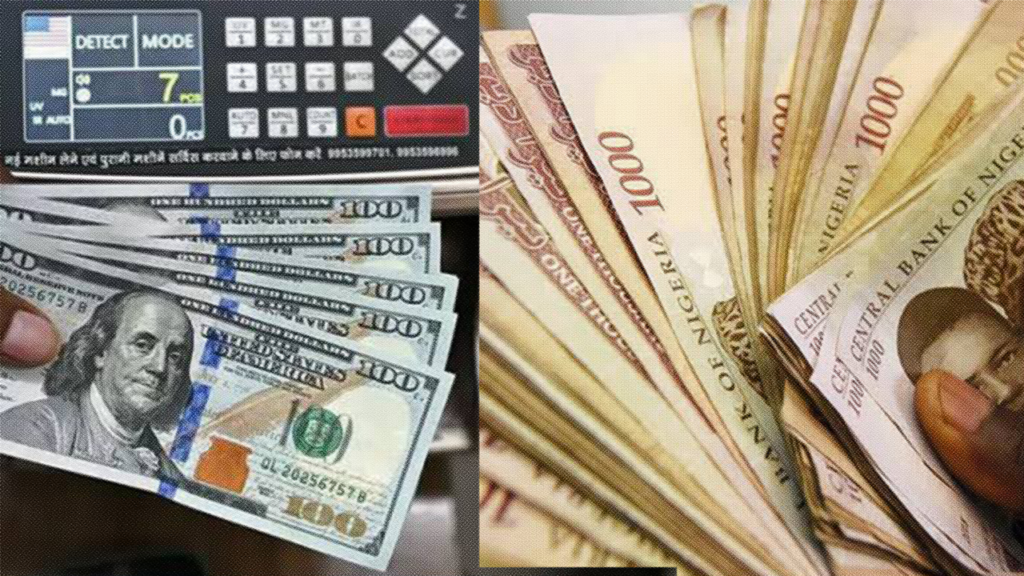
The Nigerian Naira recorded significant appreciation against the US Dollar, closing at N1,315.67 per dollar on September 3, 2026, up from previous trading sessions. Official figures published on the Central Bank of Nigeria portal indicate a steady downward trend in official exchange rates over a two-week window. Baseline rates strengthened from N1,346.98 per dollar on August 24 down to N1,315.67 by September 3, reflecting sustained liquidity improvements. Upper-band pressures similarly eased during the period. The highest recorded transaction rate dropped from a peak of N1,350.00 down to N1,324.00 per dollar. This bullish run aligns with broader macroeconomic consolidation, bolstered by recent improvements in gross foreign exchange reserves crossing the $53 billion threshold. Analysts note that narrower spreads between official and parallel markets continue to restore stability and confidence across domestic commercial sectors.
Senegal, IMF Strike $2.2 Billion Agreement as Debt Reaches 132% of GDP
Senegal and the International Monetary Fund have reached a staff-level agreement on a $2.2 billion, three-year financial package aimed at stabilizing the West African nation’s public finances. The Washington-based lender disclosed the 36-month arrangement on Tuesday, noting the deal remains subject to approval by IMF management and its Executive Board following corrective governance measures by Dakar. “The main reforms planned under the IMF-supported program aim to restore the viability of public finances while protecting vulnerable households,” the Fund said in an official statement. Dakar is grappling with severe debt sustainability challenges after total public-sector debt reached 132% of Gross Domestic Product at the end of 2024, driven by unrecorded historical borrowing. Government audits revealed over $11 billion in hidden debts accumulated under former President Macky Sall, leading the IMF to suspend a previous $1.8 billion facility agreed upon in 2023. Despite structural headwinds, Senegal’s fiscal deficit narrowed from 13.4% of GDP in 2024 to 6.4% in 2025 as President Bassirou Diomaye Faye’s administration rationalized public expenditures. Economic growth accelerated to 6.7% in 2025, buoyed by the country’s first full year of offshore oil production, though non-hydrocarbon sector expansion slowed sharply to 2.2%. To restore debt sustainability, Finance Minister Cheikh Diba announced plans to seek an enhanced G20 Common Framework debt treatment, characterizing it as a tailored liquidity mechanism rather than traditional debt restructuring. Market reactions were immediate as sovereign Eurobonds plummeted below 50 cents on the dollar following the debt treatment announcement and a credit rating downgrade by Moody’s to Caa2. Unlocking the funds requires Senegal to secure partner financing assurances and execute mandatory corrective actions to obtain an official IMF waiver regarding historical data misreporting. “The agreement remains subject to IMF Management and Executive Board approval, and it requires decisive corrective actions to support the authorities’ request for a waiver in the misreporting case prior to Executive Board approval. It also requires the receipt of the necessary financing assurances from Senegal’s partners.” IMF said.
IMF Mission Returns to Dakar in Bid to Anchor Senegal’s $1.8 Billion Fiscal Bailout
An International Monetary Fund staff team is visiting Dakar to advance discussions with West African authorities toward establishing a new lending program aimed at stabilizing Senegal’s public finances. According to a statement released by the Washington-based lender, the August 19 to September 1 mission seeks to build on preliminary policy negotiations initiated earlier this year. The multilateral intervention follows the suspension of a prior $1.8 billion facility after an independent audit revealed widespread off-budget borrowing and systematic fiscal data underreporting by the previous administration. Subsequent reconciliations conducted by international audit firm Forvis Mazars saw central government debt projections revised sharply upward from 74.4% to 118.8% of gross domestic product at end-2024. The country’s fiscal deficit also surged past 11% of GDP, driven by unrecorded off-balance-sheet liabilities and unpaid contractor obligations accumulated prior to President Bassirou Diomaye Faye’s election victory. “The staff team and authorities will continue discussions toward reaching a shared understanding of the policies and reforms that could be supported by an IMF arrangement,” the IMF stated. Financial authorities in Dakar have already implemented several preliminary remedial measures, including centralizing sovereign debt management operations, expanding the Treasury Single Account, and auditing state payment arrears. To secure final Executive Board approval, Senegal must consolidate its budget deficit back toward the West African Economic and Monetary Union regional threshold of 3% of GDP. This fiscal target requires structural reforms, such as phasing out untargeted energy subsidies, broadening the domestic tax revenue base, and rationalizing capital expenditure programs across public institutions. Despite severe debt servicing burdens, economic growth expanded by double digits in early 2025, buoyed by initial output from commercial offshore oil and natural gas fields. However, non-hydrocarbon sector output remains severely constrained at 3.1%, largely reflecting tight regional liquidity and structural bottlenecks across domestic construction and industrial sectors. A successfully negotiated Staff-Level Agreement remains critical for Senegal to restore credit rating stability, lower Eurobond yields, and catalyze bilateral development funding.
IMF Unlocks $1.8 Billion for Egypt as Economic Reviews Conclude
Egypt has secured immediate access to about $1.8 billion in fresh funding following the completion of two key financial program reviews. The International Monetary Fund said in a statement on Thursday that its Executive Board concluded the seventh review under the Extended Fund Facility and the second review under the Resilience and Sustainability Facility. The approval allows Cairo to draw roughly $1.5 billion under its primary loan arrangement alongside $272 million in sustainability financing, pushing total disbursements under the current package to $7.3 billion. Egypt originally secured a $3 billion loan in December 2022, which was expanded to $8 billion in March 2024 to combat severe foreign currency shortages and surging inflation. The Fund credited exchange rate flexibility, fuel price adjustments, and fiscal discipline for bolstering macroeconomic stability, enabling the economy to withstand regional conflict spillovers better than previous external shocks. Data from the Washington base lender indicates Egypt’s real gross domestic product grew 5.0% in the third quarter of fiscal year 2025/26, with full-year economic expansion projected at 4.6%. Headline inflation eased to 14.3% in June 2026, supported by rebounding remittances and tourism receipts, though prices are projected to rise temporarily to 16.7% in late 2026 due to energy adjustments. The primary fiscal surplus is projected to expand to 5.0% of GDP in FY2026/27, up from 4.8% in FY2025/26, alongside a 1.2 percentage point increase in tax revenues. Despite performance gains, the multilateral lender cautioned that elevated public debt, heavy financing requirements, and slow state-asset divestments continue to constrain fiscal space and private sector growth.
IMF Concludes $3 Billion Ghana Program with Final $371 Million Payout as Inflation Drops to 5.3%
The International Monetary Fund’s executive board completed its sixth and final review of Ghana’s $3 billion Extended Credit Facility on Monday, approving an immediate disbursement of about $371 million. The decision brings total disbursements under the 39-month arrangement to full capacity at $3 billion, marking the official end of Ghana’s macroeconomic stabilization program approved in May 2023. IMF in a statement praised the West African gold and cocoa exporter’s progress, stating that “Ghana’s performance under the program has been broadly satisfactory. Since program approval, substantial gains have been achieved in macroeconomic stabilization and debt sustainability, with inflation falling sharply, reserves nearly doubling by 2025, the primary fiscal balance swinging to a surplus, and the risk of debt distress returning to moderate.” IMF noted. The IMF board highlighted that headline inflation plummeted from 23.8% in late 2024 to 5.3% in June 2026, while first-quarter real GDP growth accelerated to 6.4% year-on-year. Fiscal discipline pushed the primary budget balance into a surplus of 2.1% of gross domestic product, while gross international reserves expanded to nearly $12 billion, covering four months of essential imports. The central bank lowered its key policy rate amid disinflation, while the current account recorded a 7.9% GDP surplus in 2025, driven by elevated export values for gold and cocoa. To safeguard these gains, the executive board also reviewed Ghana’s request for a 36-month Policy Coordination Instrument to anchor long-term structural reforms and preserve fiscal discipline without requiring further direct financial assistance.
IMF: Structural Reforms Key as AI Promises 4% GDP Surge for Sub-Saharan Africa
Artificial intelligence could expand Sub-Saharan Africa’s gross domestic product by nearly 4% or 0.5% annually over the next decade, provided governments accelerate investments in basic digital infrastructure. The International Monetary Fund (IMF) revealed the projection in its departmental paper, Unlocking the Potential: AI in Sub-Saharan Africa, warning that without aggressive policy intervention, the economic dividend will shrink to 0.2% IMF characterized the lower scenario as a “rounding error,” emphasizing that current infrastructure bottlenecks threaten to widen the productivity gap between Africa and high-income economies. Severe power deficits represent the primary operational barrier, with nearly 50% of the regional population lacking reliable electricity needed to run digital hubs, computer clusters, and continuous processing centers. Internet penetration also remains severely constrained across the continent, standing at roughly 38% compared to the global benchmark of 68%, according to recent Fund data. Private sector capital is already trickling into regional hubs, highlighted by Microsoft and G42’s $1 billion geothermal data center in Kenya, alongside Cassava Technologies’ $700 million GPU deployment with NVIDIA. However, the IMF cautioned that because 5.5% of global data centers exist in Africa—concentrated predominantly in South Africa, Nigeria, and Kenya—uncoordinated expansion could deepen intra-regional economic disparities. Unlike advanced economies where policy discussions center on white-collar job displacement, Africa’s AI integration targets productivity gains across informal microenterprises, tax administration, and smallholder farming. Practical deployments, such as Kenya’s Agricultural Observatory Platform, demonstrate how real-time data analytics delivered via basic mobile channels yield actionable planting and pest management advice for rural farmers. The Fund urged policymakers to forgo building costly frontier AI models, advising regional authorities to focus on adopting existing tools, building open-access fiber networks, and expanding digital literacy programs.