
Escalating Border Clashes Force Hundreds of Ethiopians into Kenya

Cross-border humanitarian strains spiked on Thursday as hundreds of Ethiopian nationals fled into Kenya following intense armed clashes in the strategically vital border town of Moyale. According to statement reports from Marsabit County Commissioner Stanley Kamande and Kenya Red Cross officials, the influx comprises predominantly displaced women and children seeking refuge across several villages within Kenyan territory. The humanitarian emergency follows a fresh outbreak of violent inter-communal clashes between Oromo and Somali groups on the Ethiopian side of the border town. Local economic disruptions escalated rapidly, forcing the complete suspension of commercial transport corridors along the 350-kilometer Nagelle Borana-Moyale route connecting Addis Ababa and Nairobi. The violence was triggered by administrative border disputes, the raising of regional flags, and the shooting of a 13-year-old girl, which sparked retaliatory arson and widespread business closures. This security breakdown echoes historical border volatility, including major 2018 Moyale clashes that killed 21 people and displaced over 5,000 residents across the Kenyan border. The Kenya Red Cross is conducting rapid needs assessments to deploy shelter, medical supplies, and food assistance, though no formal refugee camps are currently established to absorb the influx.
Dangote Secures $327m Kenya Pipeline Stake to Expand East African Fuel Reach
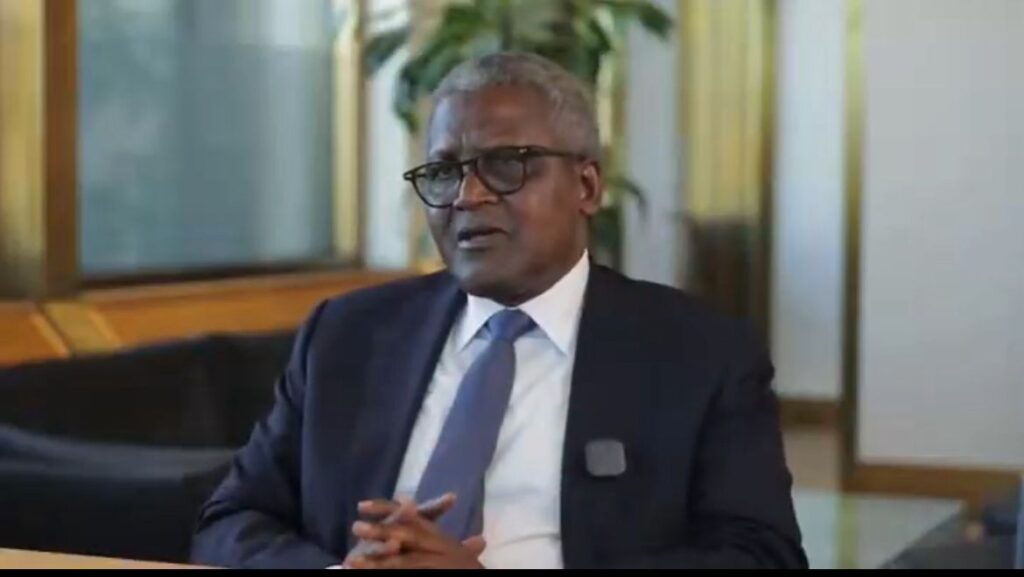
Billionaire industrialist Aliko Dangote has acquired a 25% equity stake in the state-backed Kenya Pipeline Company (KPC) for approximately $327 million. The strategic buy-in significantly expands his footprint across East Africa’s energy landscape. Dangote publicly disclosed the multi-million-dollar deal during the Financial Times Africa Summit in London, stating the investment is designed to optimize downstream distribution of refined petroleum products across the region. The acquisition values KPC at KSh 163.9 billion ($1.3 billion). The infrastructure firm operates a 1,342-kilometer midstream transit network capable of pumping over 14 billion liters of petroleum products annually. The transaction comes shortly after Nairobi offloaded a 65% majority stake in KPC through an Initial Public Offering (IPO) earlier this year. The privatization drive aims to raise non-tax state revenue amid tight fiscal constraints. Beyond equity ownership, Dangote pledged an additional $1.5 billion investment to modernize and expand KPC’s infrastructure. The network services high-growth landlocked import markets, including Uganda, Rwanda, South Sudan, and eastern DRC. The midstream acquisition directly complements Dangote’s broader continental growth playbook. Last month, the group broke ground on a proposed 700,000 barrel-per-day refinery project situated near Kenya’s Lamu port. Furthermore, control over East African logistics routes creates a synchronized distribution corridor for heavy output from Dangote’s 650,000 bpd Lekki refinery complex in Lagos, Nigeria. By securing essential regional midstream assets, the Nigerian conglomerate guarantees end-to-end operational integration, positioning itself to capture lucrative, growing cross-border energy demand under the African Continental Free Trade Area framework.
Kenya Economy Expands 5.1% in Q2 2026 Amid Global Energy Pressures
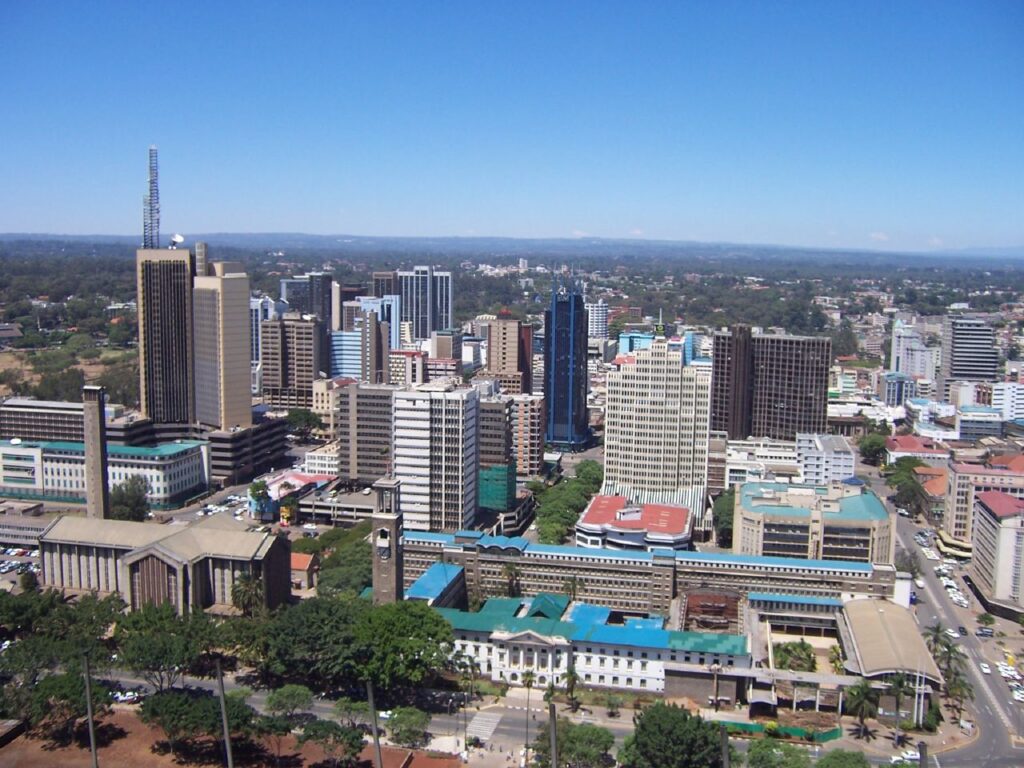
Kenya’s economy grew by 5.1% year-on-year in the second quarter of 2026. The expansion maintains a steady momentum following a solid 5.3% growth rate recorded in Q1. The figures were released on Friday by the Kenya National Bureau of Statistics (KNBS). The performance marks an improvement from the 4.9% growth recorded in the same period last year. Key service sectors drove the resilience. Electricity and water supply surged 7.7%, accommodation and food services expanded 7.4%, while transportation and storage accelerated to 4.4% from 3.3% a year earlier. However, high crude oil prices capped faster expansion. Agricultural growth eased to 3.5% from 4.0% in Q2 2025, largely impacted by shorter rainfall cycles across key farming zones. The data follows the Central Bank of Kenya holding its benchmark rate steady at 8.75%. Policymakers recently raised full-year 2026 GDP growth projections to 5.0% as credit conditions improve.
Kenya Hikes Fuel Prices to Historical Highs as Middle East Conflict Elevates Import Costs
Kenya raised maximum retail fuel prices on Wednesday as soaring Middle East conflict costs boosted import expenses, pushing petrol and kerosene prices in the East African nation to historical highs. According to the Energy and Petroleum Regulatory Authority (EPRA), super petrol increased 6% to KSh226.96 per litre in Nairobi, while diesel rose 4.5% to KSh227.76 for the October 15–November 14 pricing cycle. Kerosene registered the largest surge, leaping 14.89% or KSh28.49 to reach KSh219.87 per litre, driven by higher landed costs and regulator efforts to curb cross-fuel blend adulteration. To soften consumer price shocks, Kenyan lawmakers extended a reduced 8% Value-Added Tax (VAT) rate on petroleum products through January 14, maintaining the discount from the standard 16% rate. EPRA Director General Edward Kinyua noted that government intervention preserved stabilization funds, following KSh29.4 billion spent on fuel price support during the FY2025/26 period to control inflation. The price adjustments follow landed cost spikes, with super petrol import expenses jumping 11.81% in August, reflecting elevated freight and maritime insurance premiums across Red Sea supply routes. Relying on the Middle East for nearly all refined petroleum imports, Kenya faces renewed inflationary pressures across key sectors, including logistics, agriculture, manufacturing, and power generation. The pump price increase coincides with headline inflation hitting 6.8% in September, complicating Central Bank of Kenya policy efforts to anchor price stability amidst regional currency pressures.
Kenya Confirms Second Ebola Case in Quarantine as Contact Tracing Holds Line
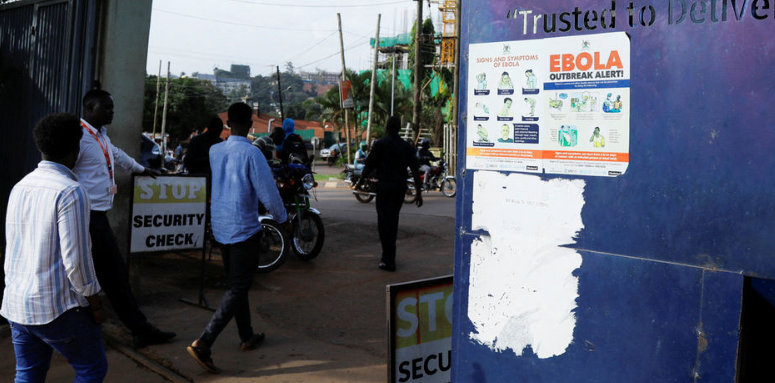
Kenya’s Ministry of Health confirmed a second case of Bundibugyo Ebola virus disease on 14 October 2026. The patient, a 39-year-old man and close family member of the country’s first case, developed symptoms while already under quarantine and daily monitoring. The announcement came in a press release from the Office of the Director General for Health, Dr. Patrick Amoth, shared on the ministry’s official X account. The man fell ill on 13 October with fever, fatigue and joint pains, was isolated immediately, and tested positive at both the National Virology Reference Laboratory and the KEMRI-CDC laboratory. He is now receiving supportive care at a designated treatment centre. Kenya has recorded two confirmed cases and one death. Both cases are linked, and authorities report no evidence of wider community spread. Contact tracing identified 128 contacts of the first case. As of 13 October, 113 had been traced, with 108 under 21-day quarantine in Kenya for daily checks. Five contacts are outside the country and have been notified under International Health Regulations, while tracing continues for the remaining 15. The first case involved a Kenyan who had lived in the Democratic Republic of Congo, traveled through Uganda, arrived in Nairobi around 3 October, and died on 5 October after hospital admission. The ongoing DRC Bundibugyo outbreak is one of the largest recorded, with thousands of cases and over 4,000 deaths reported. WHO has been notified and is supporting Kenya’s response with supplies and technical assistance. The ministry states Kenya remains open, with no restrictions on travel, trade or public gatherings. Officials urge the public to stay calm, seek prompt care for symptoms, and rely only on official updates. The development follows intensified border screening and surveillance after the imported case, amid concerns about regional detection gaps. Early isolation of the second patient is presented as evidence that quarantine and monitoring protocols are functioning as designed to limit further transmission.
Kenya Stave Off Ebola Outbreak as 293 Diagnostic Tests Return Negative
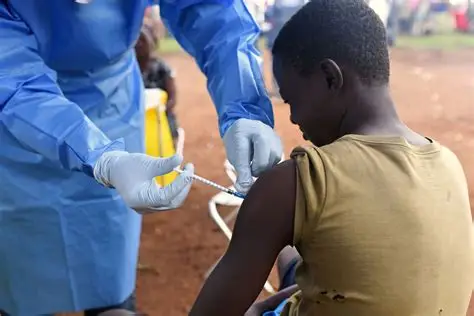
Kenya has recorded zero new Ebola infections after conducting 293 laboratory tests nationwide following the death of an imported case on October 5. According to the Ministry of Health, 293 diagnostic samples collected from 289 alerts across the country returned negative, containing the immediate risk of a domestic outbreak. The case involved a Kenyan citizen traveling from the Democratic Republic of Congo through Uganda, who tested positive for the Bundibugyo strain in Nairobi before passing away. Health authorities confirmed that 108 of the 122 primary contacts identified, including healthcare personnel, airline passengers, and family members remain in supervised quarantine without presenting symptoms. To mitigate cross-border transmission risks, border personnel have screened over 667,000 travelers across 26 entry points, backed by five specialized operational testing laboratories. Kenya is the fourth regional nation impacted by the ongoing eastern DRC Ebola epidemic, which has recorded over 8,000 cases to date.
One year after the USAID cut, Africa’s HIV drugs held, clinics did not
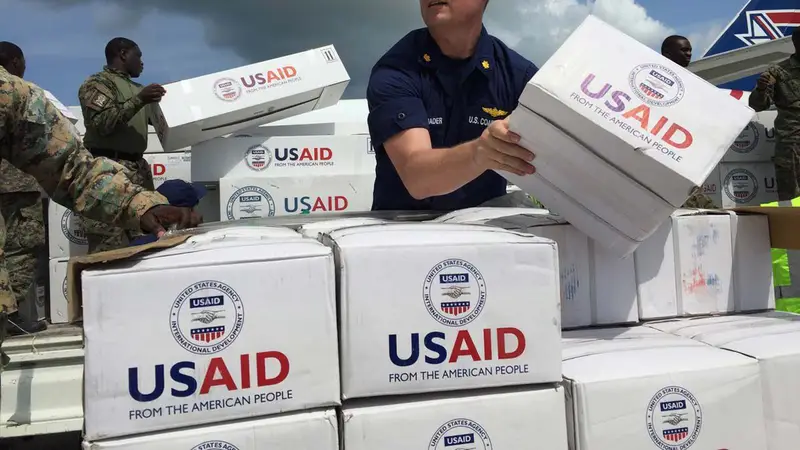
A year after the United States froze foreign aid in January 2025, HIV treatment for most of the roughly 20 million people PEPFAR supported in 55 countries, mainly in sub-Saharan Africa, is still running. The outreach that sat around it is not. At least 1,700 HIV sites have closed. Prevention spending fell 51%. PrEP dropped 21% in Global Fund countries and by as much as 72% at clinics studied in Uganda and Zimbabwe. Testing there fell by up to 64%. PEPFAR-supported treatment fell by about 2 million people, roughly 10%. Part of that is a change in how patients are counted, not a mass loss of drugs. The breaks with the old trend were in Uganda, Zambia, South Africa and Kenya. Children lost ground faster: 77,163 fewer were on PEPFAR-supported treatment, about 31,000 of them in South Africa and 6,000 each in Kenya and Zimbabwe. Confirmed deaths tied to the closed clinics are documented in Kenya, not as a national surge. AFP verified at least 24 deaths of HIV-positive sex workers who had been stable on treatment. Judy, 36, died on 7 August 2026 after visits that brought her drugs to Mathare stopped. Beatrice, 43, died on 24 August 2025; her sister Rosemary a year later. Kenya’s own 2026 estimates put AIDS deaths at 19,434, down 0.3% over five years, and new infections down about 56%, to about 14,000. Where the clinics closed In Kenya, Bar Hostess Empowerment and Support Programme’s two USAID centres had reached 14,500 sex workers. One closed in September 2025. The Roysambu centre was due to close a year later. About 12,000 clients dropped off its books, including 2,300 with HIV. All 25 USAID-funded sex-worker clinics in western Kenya closed. Sex Workers Outreach Programme recorded a 48% rise in new infections among Nairobi sex workers in the first half of 2026 against the same period in 2024. PEPFAR-supported treatment in Kenya fell by about 12,000 people. A Sh5.24 billion emergency fund kept some drugs and salaries moving. It did not restore the outreach. South Africa funds about 90% of its own antiretrovirals. PEPFAR was 17% of a response covering 7.2 to 8 million people with HIV. Twelve key-population clinics closed and more than 60,000 patients moved to state facilities. People on treatment rose only 40,000, to 6.18 million. The net loss of PEPFAR-linked treatment was about 95,000. HIV-related deaths from mid-2024 to mid-2025 were estimated at 53,000, not a clear rise. No equivalent list of confirmed sex-worker deaths has been published. The deals that replaced the grants By September 2026, 35 countries had signed new US health memorandums, 24 of them in Africa, including Kenya, Nigeria, Ethiopia, Uganda, Tanzania, Congo, Rwanda and Mozambique. Zambia was finalising a deal. Ghana, Zimbabwe and Namibia refused, mainly over patient data and specimens. Thirty-four deals total about $24.2 billion for 2026–2030, roughly 40% from recipient governments. The US share is about $14 billion. Nigeria’s package is about $5.1 billion, with $2.1 billion from the US. Kenya gets up to $1.6 billion in US funds and adds $850 million. Ethiopia’s deal is $1.47 billion, $1.02 billion of it American. Uganda is promised nearly $2.3 billion from the US. Congo’s partnership is $1.2 billion, $900 million American. Zambia expects $1.5 billion from the US and is putting in $2.1 billion. Eswatini signed $248 million health deal with the US specifically to sustain the fight against HIV/AIDs. Congo, Guinea and Rwanda signed beside minerals agreements. The memorandums took effect on 1 October 2026. Grant money was not yet flowing. The deals cover HIV, tuberculosis, malaria and maternal health. They do not reopen the NGO clinics the stop-work order closed.
Kenya Airways passenger dies on Nairobi–Lagos flight after mid-air emergency
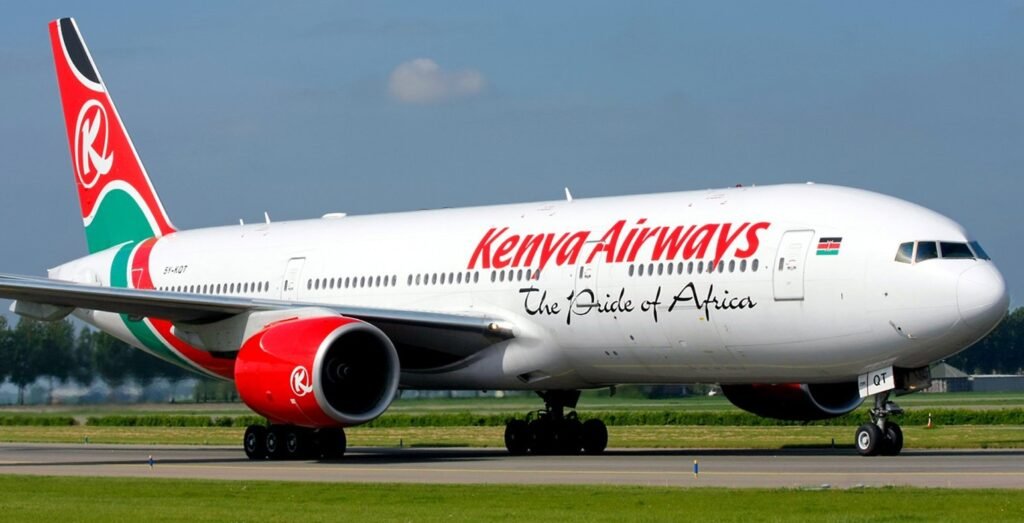
A Kenya Airways passenger died on Tuesday after becoming unresponsive about 20 minutes before a Nairobi–Lagos flight landed, the airline said on Wednesday. The death adds operational and reputational pressure to a carrier still recovering from a heavy 2025 loss. In a statement posted on X, Kenya Airways said the emergency began at about 21:20 Nigerian time on 6 October. “One of our passengers was found to be unresponsive approximately 20 minutes before landing in Lagos,” the airline said. The aircraft landed at Murtala Muhammed International Airport at 21:41, where medical staff confirmed the death. “Our crew administered first aid as per their training and followed all emergency procedures,” Kenya Airways said. It offered condolences, apologised for inconvenience, and said it is working with the family, local authorities and aviation regulators. No name, flight number or cause of death was given. Nigeria’s regulator has offered a sharper account. Michael Achimugu, NCAA director of public affairs, told Punch he was briefed by the airline’s country manager. He said the passenger had been denied entry in Madagascar and was being returned by the carrier that had brought him there. Achimugu said the man became restless, tried to reach the cockpit, then tried to open a rear door. Crew restrained him, with his hands tied behind his back, before he was declared dead on arrival. Police have taken over the inquiry. Achimugu urged against concluding the cause while investigations continue, and said the family could request an autopsy. The episode follows a weakened balance sheet. In March Kenya Airways reported a pre-tax loss of 17.93 billion shillings ($138.3 million) for 2025, reversing a 5.53 billion shilling pre-tax profit in 2024. Revenue fell 14% to 161.47 billion shillings after capacity dropped about 18%. Management blamed the grounding of three Boeing 787-8s, about a third of the wide-body fleet, on engine and parts shortages. Passenger numbers fell to 4.55 million from 5.22 million. Negative equity widened to about 132 billion shillings. The airline has said it is seeking fresh liquidity while adding capacity, including on the London route. In-flight deaths are uncommon, but a restraint followed by a death will draw regulator and insurer scrutiny.
Kenya’s $6.1bn oil plan advances as 2,152-tonne drilling cargo docks in Mombasa
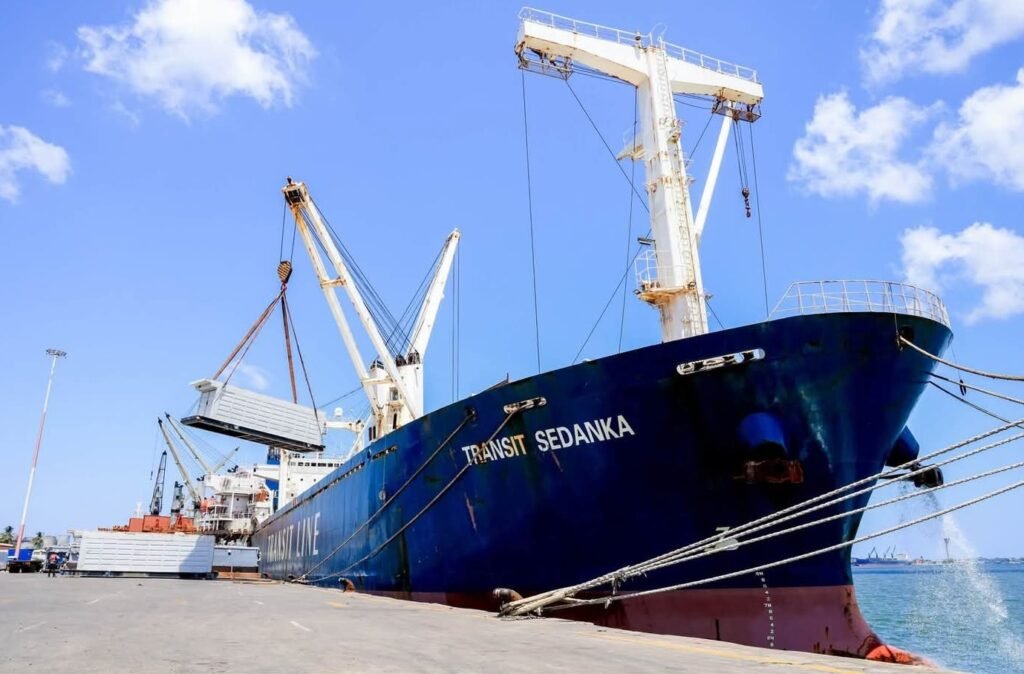
The Port of Mombasa has received 2,152 tonnes of onshore drilling equipment for commercial oil production in Turkana’s South Lokichar Basin. The Kenya Ports Authority said on Sunday the consignment arrived Saturday aboard MV Transit Sedanka after sailing from Abu Dhabi via Duqm. Among the cargo is a GW70 integrated onshore drilling rig rated at 1,500 horsepower and valued by the authority at more than KSh 2 billion. Operator Gulf Energy E&P BV SEZ has leased the unit from Great Wall Drilling Company and will move it by road to Turkana after discharge and clearance. The company has set 1 November as the first-well spud date, keeping first oil targeted for December 2026. South Lokichar is estimated to hold 326 million barrels of recoverable oil across a 25-year development period. Total project investment is put at about $6.1 billion, or roughly KSh 790 billion, making it one of Kenya’s largest energy undertakings. Phase one is designed to produce 20,000 barrels a day. Output is planned to rise to 50,000 barrels a day in the second phase. Energy regulator EPRA said this month that first crude exports through Mombasa are expected in the first quarter of 2027. The cargo arrives 14 years after Tullow Oil’s 2012 discovery. Tullow sold its Kenyan assets to Gulf Energy in 2025 for $120 million. Kenya approved the Field Development Plan in late 2025. Parliament ratified the plan in February 2026, clearing the path to field work. Gulf Energy has contracted Baker Hughes for integrated well services and SLB to supply an early production facility for phase one. Early barrels are expected to move by road tanker to Mombasa. Later volumes may shift to rail once extra capacity is in place. The December deadline leaves little slack. The rig still needs commissioning, while roads, security and community issues in Turkana remain live risks. If the schedule holds, Kenya would join East Africa’s small group of crude producers and test whether a domestic operator can convert a long-stalled discovery into export cash.
UNGA 81: The hospital versus the creditor
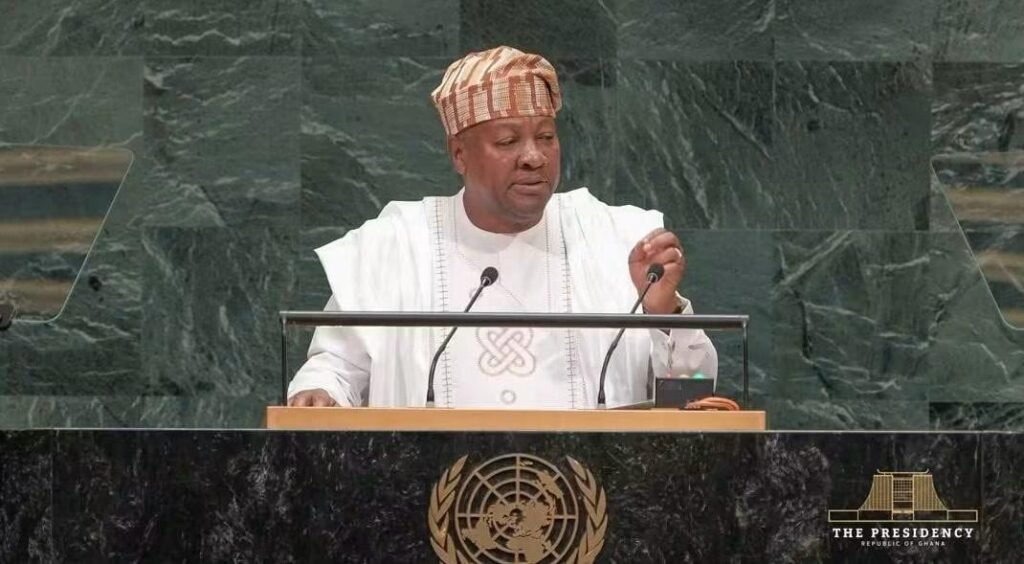
African leaders came to the 81st United Nations General Assembly with the usual demand for two permanent Security Council seats. They also came with a complaint their finance ministries have been making for years: African governments pay too much to borrow. “The hospital competes with the creditor, the classroom competes with debt service, and too often the creditor is paid first,” Kenya’s President William Ruto told the Assembly on 23 September. Ghana’s John Mahama went further the next day. Developing countries, he said, borrow at rates “up to eight times higher” than industrialised economies. Ruto had used a lower range, two to four times on average. Mahama added that African and Caribbean states already hit by floods and droughts are then forced to borrow to rebuild. The choice, as he framed it, is “to service predatory debt or serve their people.” Nigeria’s vice-president, Kashim Shettima, reading President Bola Tinubu’s national statement, asked for cheaper concessional finance and debt rules that leave room for development spending. South Africa’s Ronald Lamola said African governments had spent about as much on debt service in the past year as they need to close the continent’s infrastructure gap. That burden, he said, “betrays the promise of development and destroys the prospects for democracy.” Ruto’s figures were the ones repeated in the corridors. Global public debt reached $102 trillion in 2024, he said. Developing countries held less than a third of it and paid about $1 trillion in interest. Forty-six of those countries, on his count, now spend more on interest than on health or education. “The question, therefore, is not simply whether finance is available,” Ruto said. “It is who can access it, at what price, for how long and under whose assessment of risk.” Ruto cited a UNDP review of 19 African countries that put the cost of rating “subjectivities” at about $75 billion. The study did not accuse global rating agencies: Moody’s, S&P or Fitch of fixing the books. It said gaps in hard data leave more room for judgement in African ratings, and that those “subjectivities” had cost the 19 countries more than $24 billion in extra interest and more than $46 billion in loans that were never made, measured over the life of the bonds. Combined, about $75 billion — more than aid to Africa in the year UNDP used for comparison. It is not $75 billion a year, even if that is how it was repeated in New York. “Capital must price risk; it must not price prejudice,” Ruto said. UNDP’s ratings tracker fills in the market detail. African borrowing costs have averaged about 11.6%, more than eight percentage points above the US benchmark. By late 2025 only three of the 34 African governments with a sovereign rating were investment grade. Unrated sovereigns are often still dearer to fund, because investors have less to price. Ruto also said the shortage is not African savings. Non-bank domestic capital on the continent has passed $2 trillion, he said, and pension and insurance assets exceed $1 trillion. In Kenya, pension funds hold 46% of their money in government paper and 0.02% in infrastructure debt, even though the rules allow up to 10%. “Why do African pension funds prefer US Treasuries over African power plants?” The policy list was familiar to anyone who covers development banks. Lend more, for longer, in local currency. Use guarantees to bring in private lenders. South Africa wants indebted governments to negotiate as a group through a “Borrowers’ Club.” Several leaders said climate reconstruction should be financed with grants, not another loan. “Africa does not seek charity. Africa seeks equal partnership,” Mahama said. On the sidelines, Ghana’s Accra Reset project — an effort to change how development finance is organised — made the same point. A government can overhaul its own books, Mahama said, and still be blocked “if the global architecture around it remains fundamentally flawed.” African spreads are not only a ratings story. Tax collection is often weak. Local capital markets are thin. Commodity prices move the accounts. Restructuring has been slow. Investors price politics and contract risk, not only the rating letter. Ruto said governments still have to control debt, put up projects that can be financed, keep contracts and deal with corruption. The stronger claim from this Assembly is about the cost of money, and about rules that steer African savings away from African assets. A Security Council seat is a status fight. Debt service is already in this year’s budget.