
Goldman Sachs slashes Q2 oil forecasts following U.S.-Iran ceasefire

LAGOS — Goldman Sachs has lowered its second-quarter 2026 oil price forecasts for Brent and U.S. crude, citing a significant reduction in the geopolitical risk premium following a surprise two-week ceasefire agreement between the United States and Iran. In a note to clients late Wednesday, the investment bank trimmed its Brent crude forecast to $90 per barrel, down from a previous estimate of $99. West Texas Intermediate (WTI) forecasts were also adjusted downward to $87 per barrel from $91. The revision follows a 40-day period of intense regional conflict that had effectively shuttered the Strait of Hormuz, a critical chokepoint for global energy supplies. Risk Premium Recedes Goldman analysts, led by Daan Struyven, attributed the “nudge down” to the tentative pause in hostilities mediated by Pakistan. The bank noted that oil flows through the Strait are already beginning to edge higher, easing immediate supply fears that had gripped the market since late February. “Given the reduction in the risk premium at the front of the curve and already edging up oil flows through the [Strait of Hormuz], we nudge down our Q2 forecast,” the bank stated. The diplomatic breakthrough triggered an immediate market reaction, with Brent crude prices falling approximately 11% this week. However, the outlook for the remainder of 2026 remains cautious. Goldman maintained its second-half forecasts at: Upside Risks Persist Despite the short-term relief, Goldman warned that the market remains “fragile.” Analysts highlighted that if the ceasefire fails and Middle East production losses reach 2 million barrels per day, Brent could spike toward $115 by the end of the year. The bank’s caution is mirrored across the sector. While Goldman is pricing in a de-escalation, J.P. Morgan continues to project a Q2 average of $100, citing persistent supply tightness, while Macquarie recently warned that a worst-case scenario involving extended conflict could see prices reach $200. Trading on Thursday saw a slight rebound in prices as market participants questioned the durability of the truce and the extent to which Middle Eastern supply can fully resume while regional tensions remain unresolved.
Oil prices surge past $116 as Houthi missile strikes widen Middle East conflict
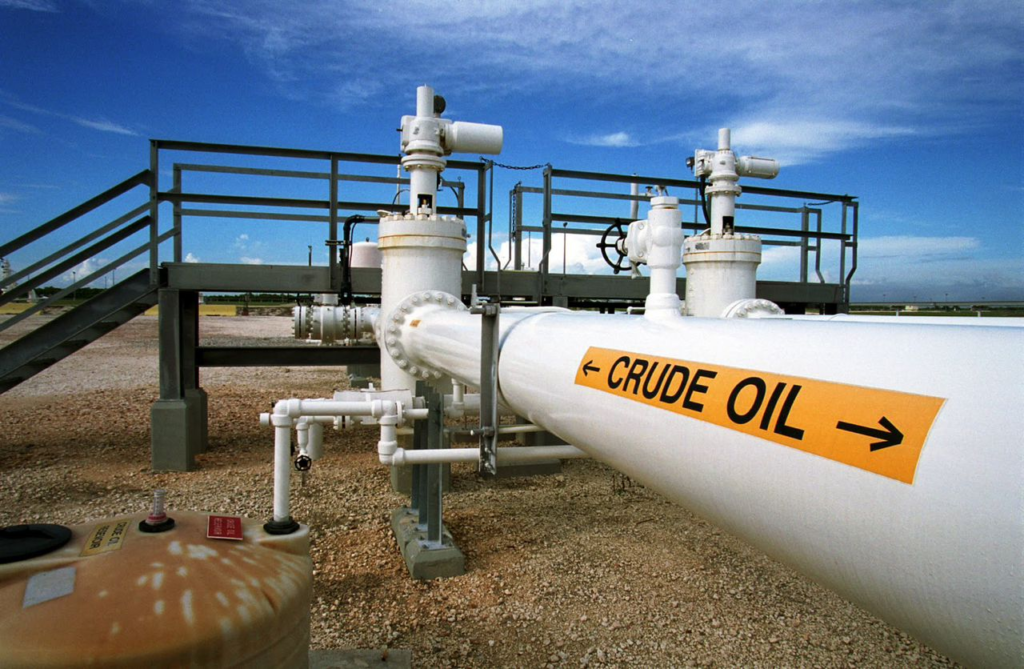
LAGOS — Global oil prices jumped more than 3% Monday morning as the entry of Yemen’s Houthi rebels into the Middle East conflict sparked fresh fears of a prolonged supply disruption. Brent crude futures surged to a peak of $116.40 per barrel in early trading, marking its steepest monthly climb since the 1990 Gulf War. U.S. West Texas Intermediate (WTI) followed suit, crossing the psychological $100 threshold to trade near $103.10. The price spike follows weekend missile and drone strikes by Iran-aligned Houthi forces targeting strategic sites in Israel. The escalation has effectively moved the theater of war beyond the Persian Gulf and into the Red Sea, a critical artery for global energy transit. Markets reacted sharply to the news, as investors began pricing in a “fear premium” over the potential closure of the Strait of Hormuz and the Bab el-Mandeb Strait. Together, these chokepoints handle nearly 25% of the world’s daily oil and LNG trade. The rally comes as the U.S.-Iran conflict enters its fifth week. Analysts note that Brent has soared roughly 59% throughout March, reflecting a market that has largely discounted the possibility of a swift diplomatic resolution. In response to the volatility, the International Energy Agency (IEA) has already signaled the release of 400 million barrels from emergency reserves. However, the move has done little to cool prices as eight OPEC+ members maintain a pause on production increases until their next scheduled meeting on April 5, 2026.
Energy security crisis: oil markets brace for new highs on Middle East threats
LAGOS — Global oil prices remained highly volatile on Monday as the market balanced an escalating military “war of nerves” over Middle Eastern energy facilities against a surprise U.S. decision to release millions of barrels of sanctioned Iranian crude. Market Reaction and Pricing Brent crude futures hovered near $112.90 per barrel in early Monday trading, maintaining a three-week rally that has seen the global benchmark surge more than 50% since the onset of the U.S.-Israeli conflict with Iran. Concurrently, U.S. West Texas Intermediate (WTI) traded near $99.00, reflecting a widening spread as geopolitical risks continue to disproportionately affect Atlantic Basin and Asian supplies. Escalating Threats to Infrastructure The price floor is being held firm by a 48-hour ultimatum issued over the weekend by U.S. President Donald Trump, who warned that major Iranian power plants would be “obliterated” if the Strait of Hormuz—a chokepoint for 20% of global oil—is not fully reopened to shipping by late Monday. In a sharp escalation of rhetoric, Iran’s Parliament Speaker Mohammad Baqer Qalibaf responded in a post on X that any strike on Iranian domestic energy assets would lead to the “irreversible destruction” of oil, gas, and desalination infrastructure across the Middle East. This follows a string of recent attacks on major facilities, including the South Pars gas field and Qatar’s Ras Laffan LNG complex. The “Iranian Barrels” Strategy Seeking to cap record-high fuel prices ahead of the U.S. midterm elections, the Treasury Department issued a 30-day sanctions waiver on March 20. Known as General License U, the waiver allows for the sale and delivery of approximately 140 million barrels of Iranian oil currently “stranded at sea” on tankers. U.S. Treasury Secretary Scott Bessent described the move as a tactical maneuver to “use Iranian barrels against Tehran” to stabilize the market. The waiver is strictly limited to oil loaded before March 20 and does not permit new production, serving as a finite supply bridge rather than a long-term solution to the energy crisis. Outlook: A Historic Supply Shock The International Energy Agency (IEA) has labeled the current disruption the “greatest global energy security challenge in history,” noting that the 11 million barrels per day currently removed from the market exceeds the shocks of the 1970s. Analysts at Goldman Sachs have already revised their 2026 Brent forecast upward to $85 per barrel, warning that if the 48-hour window for the Strait’s reopening closes without a diplomatic breakthrough, prices could test the $120 mark by week’s end.