

Oil Prices Drop as U.S. Sanctions Strategy Offsets Hormuz Shipping Risks
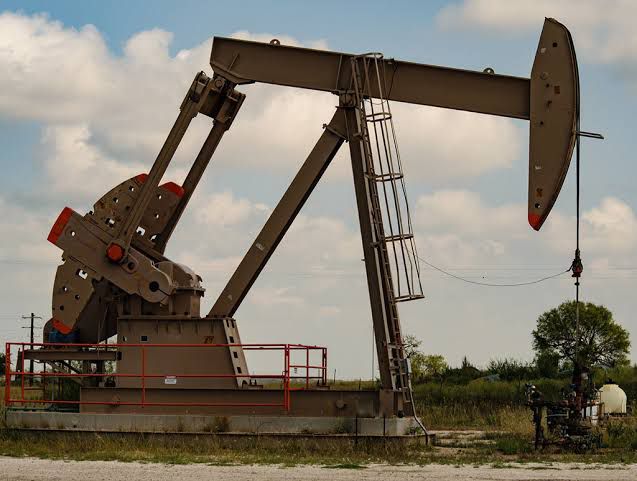
Global crude oil benchmark prices fell by more than 1% on Thursday. Energy investors weighed escalated maritime supply risks in the Middle East against aggressive U.S. government efforts to reduce petroleum shipping expenses. According to market data reported early Thursday, international benchmark Brent crude futures dropped $1.64, or 1.6%, to settle at $104.42 a barrel by 0337 GMT. The decline erased gains registered during Wednesday’s trading session. Concurrently, U.S. West Texas Intermediate (WTI) crude futures shed 98 cents, or 1%, slipping to $94.11 per barrel. The downward movement comes despite broader energy commodity volatility driven by geopolitical friction across critical maritime corridors. Trading sentiment shifted after Washington signaled plans to ease targeted maritime sanctions. U.S. officials are evaluating regulatory relief for shadow fleet oil tankers to lower surging petroleum freight costs and stabilize global logistics. The policy initiative temporarily neutralized market anxiety surrounding attacks on commercial vessels near the Strait of Hormuz. However, broader supply fundamentals remain tight following recent commercial inventory drawdowns, keeping long-term market volatility elevated
Oil Prices Retreat Nearly 2% as Trump’s Russia Sanctions Waiver Fuels Supply Hopes
Brent crude traded near $107.80 a barrel early Monday, down almost 2% from Friday’s $109.86 settlement, while WTI slipped to about $97.40 from $101.41. The retreat erased part of last week’s gains after both benchmarks touched multi-month highs. The benchmarks extended losses in Asian sessions trade. Friday’s settlement marked Brent’s highest close since May 19. The decline followed President Donald Trump’s executive order waiving key sanctions and tariffs under the Graham Act, raising prospects of higher Russian fuel exports. Secretary of State Marco Rubio said the administration would assess the economic impact over up to 60 days. Traders also weighed a recent U.S.-Russia diesel export arrangement against ongoing Ukrainian strikes on Russian energy infrastructure. Ukrainian President Volodymyr Zelenskyy warned the U.S. moves would harm Kyiv’s position. Friday’s rally had been driven by escalating Middle East risks, including Houthi attacks near Saudi export terminals and reported tanker strikes in the Persian Gulf. Analytics firm Kpler earlier noted Gulf crude flows had fallen sharply on a seven-day average. Despite Monday’s pullback, prices remain elevated. Brent is up roughly 75–77% year-to-date and WTI about 70%, reflecting persistent supply concerns from the Russia-Ukraine conflict and Strait of Hormuz disruptions that began earlier in 2026. The Brent-WTI spread stayed wide near $10 a barrel, underscoring tighter seaborne availability relative to U.S. inland supply. Physical markets continue to signal tightness, particularly in refined products such as diesel. Market participants will monitor further developments on sanctions relief, vessel security in the Gulf, and any resumption of energy infrastructure attacks. Inventory data and OPEC+ policy signals remain additional near-term drivers.
Oil Prices Decline as U.S. Sanctions Strategy Offsets Hormuz Risks

Global crude oil benchmark prices dropped by over 1% on Thursday. Investors weighed escalated supply risks in the Middle East against aggressive U.S. government proposals to reduce energy logistics expenses. International benchmark Brent crude futures dropped $1.64, or 1.6%, to trade at $104.42 a barrel by 0337 GMT. The loss erased gains made during Wednesday’s trading session. Simultaneously, U.S. West Texas Intermediate (WTI) crude futures shed 98 cents, or 1%, slipping to $94.11 per barrel. The decline comes despite broader commodity volatility driven by geopolitical tensions across critical transit points. Trading sentiment shifted after Washington signaled plans to ease targeted maritime sanctions. U.S. officials are exploring regulatory relief for shadow fleet oil tankers to reduce soaring petroleum freight rates and stabilize transport costs. The policy measure neutralized energy market anxiety concerning military attacks on commercial shipping vessels. Energy traders remain concerned over potential transit disruptions near the Strait of Hormuz, a key choke point for global oil. Meanwhile, on Wednesday a Singapore flagged ship identified as the GFS Pride sank at the strait of Homuz after hitting a mine placed by Iran. The ship had over 2500 containers on board; raising fear of continuous maritime disruption at the strait. However, the price pullback occurred even as secondary market data indicated a steep 11.1-million-barrel drawdown in U.S. commercial crude inventories for the week ending October 9, highlighting prevailing macroeconomic uncertainties.
Nigeria Meets OPEC Quota for Fifth Consecutive Month as September Output Reaches 1.53 Million Barrels Daily
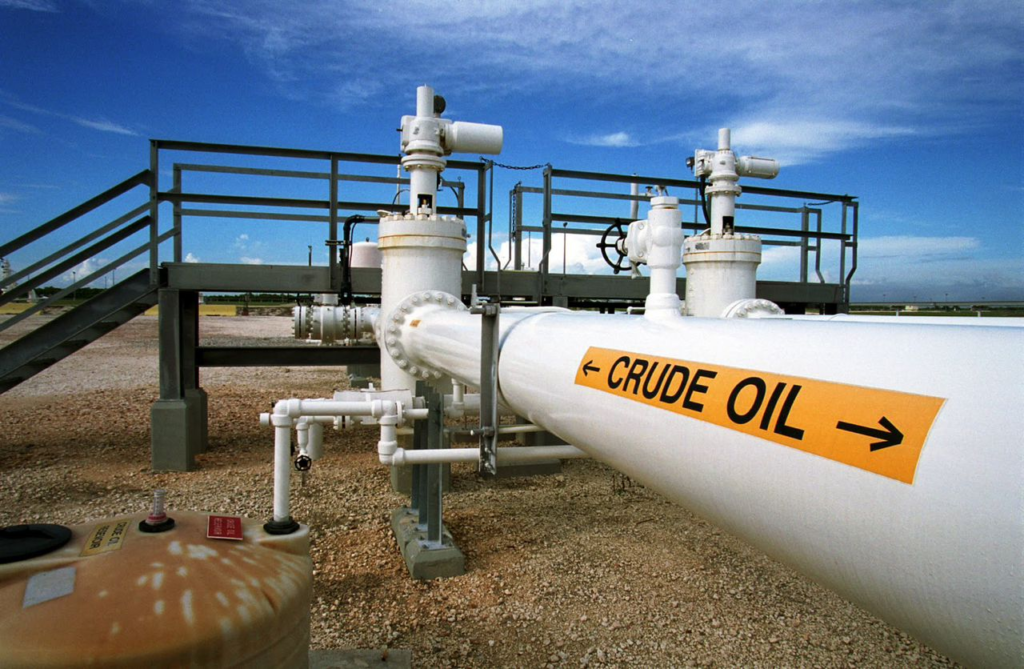
Nigeria produced an average of 1.53 million barrels per day of crude oil in September 2026, equalling 102% of its OPEC quota of 1.5 million barrels. Combined crude and condensate output averaged 1,717,030 barrels daily, a 2.34% rise from August, with a single-day peak of 1.84 million barrels and a low of 1.68 million. According to data released by the Nigerian Upstream Petroleum Regulatory Commission (NUPRC) on Tuesday, the performance marked the fifth straight month of quota compliance. Strict crude averages stood at 1.53 million bpd in May, 1.55 million in June, 1.51 million in July, 1.50 million in August and 1.53 million in September. The regulator attributed the September gains primarily to stable operations across most producing assets and the absence of major pipeline outages. These conditions improved production uptime and crude evacuation efficiency. Forcados Terminal led average daily combined output at 320,320 barrels, followed by Bonny Terminal at 303,270 barrels. Nigeria retained its position as Africa’s largest crude oil producer. The figures align with OPEC’s direct-communication data, though secondary sources placed September crude slightly higher at about 1.562 million bpd. Earlier in October, NNPC Limited had reported combined production near 1.821 million barrels per day, reflecting methodological differences that exclude or include condensate differently against the OPEC crude-only quota. The September result continues a broader recovery. Average crude output rose from roughly 1.345 million bpd in 2024 to 1.432 million in 2025, with third-quarter 2026 averaging about 1.512 million bpd. NUPRC has identified more than 788,000 barrels per day of shut-in production across 63 operators for restoration, re-entered 77 wells and approved 128 for drilling between January and September, while advancing a 2026 licensing round offering 40 blocks. Sustaining compliance supports export volumes and government revenue amid ongoing efforts to unlock idle capacity and attract offshore investment.
Shell Nigeria Sells Domestic Gas Business to Vaaris Energy to Streamline Operations
British energy giant Shell has agreed to sell its entire stake in the Shell Nigeria Gas Group to local operator Vaaris Energy Limited. According to an official corporate statement released by Shell Petroleum B.V. on Tuesday, the divestment marks a complete exit from Nigeria’s domestic gas distribution market. The transaction encompasses Shell Nigeria Gas Limited and its holding entity, which together manage around 170 kilometers of commercial distribution pipelines supplying over 130 industrial clients. Financial terms of the strategic agreement remain strictly confidential between both participating energy corporations. Market regulators must review and greenlight the transition before final ownership transfer takes place across Ogun, Abia, and Rivers states. Current operational continuity remains guaranteed as normal business functions persist without service disruptions for existing commercial clients. This deal follows a broader industry trend where multinational oil majors progressively divest onshore and downstream assets to indigenous Nigerian firms. Despite offloading domestic distribution networks, Shell maintains heavy investments in regional deepwater fields and its major stake in Nigeria LNG.
Oil Prices Rise as Iran Deploys New Maritime Tactics in Strait of Hormuz

Global crude prices surged on Wednesday as fresh attacks on two commercial vessels in the Strait of Hormuz renewed severe supply disruption fears across key maritime trade routes. Brent crude futures rose 63 cents, or 0.6%, to $106.32 a barrel, while U.S. West Texas Intermediate gained 66 cents, or 0.7%, to $94.80 a barrel, Reuters reported. Iranian officials confirmed to Reuters that Tehran is deploying new tactical operations against transit ships. The aggressive maneuver aims to sustain elevated crude prices and influence upcoming U.S. midterm elections. Both energy benchmarks surged over $1 per barrel during early Asian trading sessions. Prices later pared a portion of those rapid gains as market participants calculated the immediate physical supply risks. The Strait of Hormuz serves as the world’s most critical oil chokepoint, handling approximately 20% of global petroleum liquids consumption. Maritime security threats there instantly inflate global energy risk premiums. Tensions in the Persian Gulf have kept Brent crude anchored above the $100 threshold for months. This persistent strength complicates global central bank efforts to contain stubborn transportation and energy inflation. The maritime escalations follow recent U.S. Energy Information Administration forecasts projecting fourth-quarter Brent prices to average $105 per barrel. Supply vulnerability in the Middle East continues driving market volatility.
Oil Prices Slip as Traders Weigh Saudi Supply Risks Against Russian Diesel Flows

Oil prices retreated on Tuesday, marking their first potential decline in nearly a week as markets balanced Middle Eastern supply threats against expectations of rising Russian diesel exports. Brent crude futures fell $1.30, or 1.2%, to settle at $105.35 a barrel. Meanwhile, US West Texas Intermediate dropped $1.25, or 1.3%, to $92.49 a barrel. The downward pressure follows recent geopolitical friction and physical infrastructure attacks in Saudi Arabia. These incidents previously drove a sustained multi-session rally across major global petroleum benchmarks. Simultaneously, traders factored in potential relief for global middle-distillate markets through incoming diesel shipments from Russia. This expected inventory addition eased immediate tightness fears across key importing regions. Broader macroeconomic headwinds, including persistent inflation prints and shifting central bank monetary policies, continue to complicate demand forecasts for the upcoming quarter, capping aggressive upward momentum. Meanwhile, The Organization of the Petroleum Exporting Countries (OPEC) slashed its 2026 global oil demand growth forecast by over 70%, lowering projections from 1.4 million barrels per day down to 400,000 bpd.
Oil Prices Fall After Trump Claims Russia-Ukraine Energy Ceasefire
Global oil prices slid on Monday as expectations of increased Russian energy exports eased supply shortage fears. Traders reacted to claims of a diplomatic breakthrough impacting refining supply chains. Brent crude futures dropped $1.54, or 1.47%, to $103.18 a barrel in early Asian sessions, while US West Texas Intermediate fell $1.54, or 1.68%, to $90.31. The decline followed statements by US President Donald Trump asserting that Ukraine and Russia agreed to halt strikes on energy infrastructure. The announcement came shortly after Washington negotiated a bilateral diesel-supply deal with Moscow. Under the supply agreement, Russia is expected to deliver over 4.8 million tons of diesel to global markets in phases. The first tranche involves an immediate release of 300,000 tons. Russia would supply another 500,000 tons in November and a further 1 million tons “immediately thereafter”, President Trump said. The diplomatic shift marks a major policy pivot, partially unwinding previous US energy sanctions intended to squeeze Kremlin revenues. Market analysts note the sudden influx of refined product reduces geopolitical risk premiums. The price retreat comes despite ongoing geopolitical volatility elsewhere. A recent attack on Riyadh’s airport and ongoing Middle East tensions had previously pushed delivered crude near multi-month highs. Additionally, the US Department of Energy recently authorized an emergency release of 4 million barrels from the Strategic Petroleum Reserve. The move aimed to offset regional disruptions caused by Hurricane Isaias. Ukrainian President Volodymyr Zelenskyy criticized the US-Russia fuel agreement, calling it a weak decision that provides Moscow billions in war funding. Kyiv officials noted they were not consulted prior to the announcement. Traders now await official confirmation from the Kremlin regarding the terms of the energy truce, as well as verifiable delivery schedules for the promised diesel shipments.
Oil Prices Surge Past $102 Amid Middle East Escalation; US Hurricane Threat Trigger Dual Supply Shock
International crude oil benchmarks rallied sharply in early Thursday trade as escalating maritime security risks in the Middle East and hurricane-driven production shut-ins in the United States converged to trigger major supply fears. According to market data, Brent crude futures surged by $2.28, or 2.28%, to trade at $102.28 per barrel. Simultaneously, U.S. West Texas Intermediate (WTI) crude futures posted a solid gain of $1.66, or 1.88%, climbing to $89.94 per barrel during the early Asian trading window. The price surge is driven by heightened risks in the Persian Gulf and Strait of Hormuz, where increased attacks on commercial shipping threaten a critical transit corridor handling roughly 20% of global seaborne crude. Adding to supply anxiety, U.S. energy firms began precautionary evacuations and platform shut-ins across the Gulf of Mexico as an approaching hurricane threatened offshore production, which accounts for 15% of total domestic crude output. The simultaneous disruptions followed the latest energy reports showing a drawdown of over 2 million barrels in U.S. crude inventories, signaling tightening commercial stockpiles. The widening Brent-WTI spread, now exceeding $12 per barrel, underscores a growing risk premium priced into international seaborne shipments compared to landlocked North American crude supplies. Market analysts warn that persistent geopolitical friction and seasonal weather vulnerabilities could keep oil prices elevated above $100 per barrel, squeezing global refiners navigating already depleted distillate stocks.
Nigeria opens 40 oil blocks as regulator chases shut-in barrels and fresh capital

Nigeria has opened bidding for 40 oil and gas blocks, seeking fresh upstream capital while output remains well below its 2030 target of 3 million barrels a day. The Nigerian Upstream Petroleum Regulatory Commission announced the 2026 licensing round on Tuesday in Abuja. Chief executive Oritsemeyiwa Eyesan said President Bola Tinubu, who is also petroleum minister, had approved the offer of onshore, shallow-water and deepwater acreage. Investors must show technical competence, financial capacity and a commitment to develop the assets, she said at the regulator’s fifth anniversary. Full block details, qualification rules and participation steps will be posted on the NUPRC website and a dedicated portal in the coming days. The round follows a 2025 exercise in which 143 companies submitted 200 bids and 31 winners secured 37 blocks, the commission said. Those earlier awards could add about 500 million barrels to reserves and at least 300,000 barrels a day within five years, subject to development. They could also add about 20 trillion cubic feet of gas reserves, supporting the government’s Decade of Gas programme. Eyesan said the last round drew interest beyond the Niger Delta, including the Anambra Basin, Benue Trough, Chad Basin and Benin Basin. Immediate priorities include restoring more than 788,000 barrels a day of shut-in production identified across 63 operators. The regulator also wants offshore projects valued at $30 billion to $50 billion taken to final investment decision. Domestic gas delivery is to rise from about two-thirds of the obligation to full delivery, Eyesan said. Since 2024 the commission has approved 120 field development plans, representing about $47.6 billion in capital commitments. Those plans could add 1.74 million barrels of oil a day and 13.9 billion cubic feet of gas a day when fully developed. Nigeria’s share of Africa’s upstream capital commitments rose from 4% in 2021 to 38% in 2025, the regulator said. Output is recovering but still short of ambition. NUPRC put August crude and condensate at 1.68 million barrels a day. Crude alone was about 1.50 million barrels a day, while OPEC’s direct-communication figure for August was 1.573 million. Theft, ageing fields and underinvestment still cap gains.