

South Africa Pulls Plug on SKD Vehicle Assembly Support to Boost Local Manufacturing
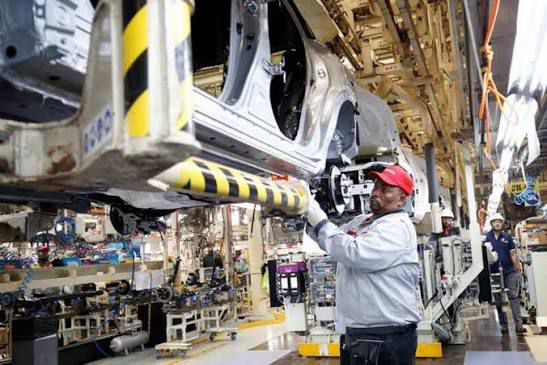
South Africa is overhauling its automotive policy by phasing out government support for semi knocked-down vehicle assembly facilities that rely heavily on imported component kits. Speaking on Thursday at the annual South African Auto Week, Trade, Industry and Competition Minister Parks Tau revealed the sweeping regulatory shift. The policy change targets operations importing near-complete vehicle bodies. Officials want to eliminate loopholes and drive deeper local industrialization through true complete knocked-down production. Existing facilities will experience a gradual phase-out of incentives. Meanwhile, prospective automotive manufacturing projects relying on kit-assembly models will receive zero policy backing. “We must transition away from superficial assembly toward genuine domestic value addition across our automotive value chains,” Tau emphasized during the industry gathering. This directive follows long-standing complaints from local automakers regarding unfair competition. Furthermore, Tau announced a formal competitiveness inquiry into the light commercial vehicle sector. Automotive manufacturing remains a core pillar of South Africa’s industrial economy, contributing billions to exports and employing thousands of workers nationwide.
Ghana Evacuates Nearly 2,000 Citizens from South Africa Amid Xenophobic Attacks
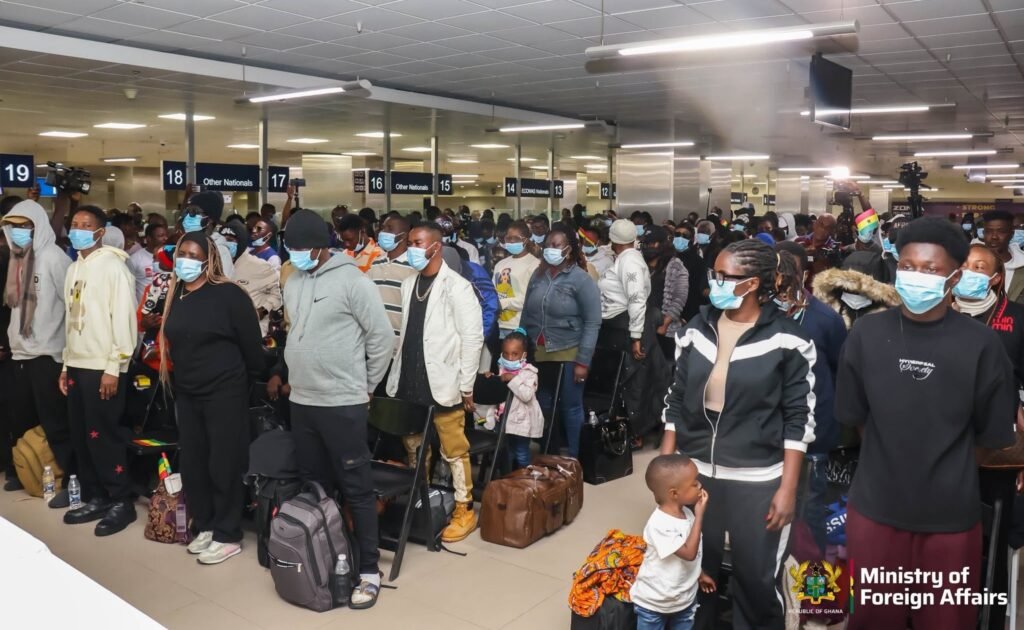
Ghana has evacuated 1,964 of its citizens from South Africa following renewed xenophobic attacks and anti-immigrant intimidation against African nationals, particularly in areas such as Durban, its foreign ministry said on Monday. According to the Ministry of Foreign Affairs, the voluntary operation ran from May 27 to September 4, 2026, ending with the arrival of a final group of 41 returnees. Foreign Affairs Minister Samuel Okudzeto Ablakwa said this was the first time Ghana acted so swiftly to remove willing citizens from harm during repeated waves of such violence. The government reported total costs of GH¢49,721,786 (about US$4.36 million), covering chartered and commercial flights, ground transport, accommodation, feeding, medical care and reintegration support. State funding accounted for GH¢33.72 million, while Engineers and Planners contributed GH¢16 million. Each returnee received a GH¢5,000 reintegration grant plus a GH¢500 transport allowance. Ablakwa stressed that assistance was available to any Ghanaian who felt unsafe, came under attack or sought refuge at the Pretoria mission or Pentecost Church facilities, without political or regional discrimination. Some returnees later voiced regret about returning, saying the financial package proved insufficient for resettlement needs. On October 11 the NPP Minority in Parliament demanded an independent audit, alleging payment registers and flight records do not fully match the 1,964 total and leave more than GH¢16 million unexplained. Ablakwa has invited the Auditor-General to review all evacuations since 2017 and confirmed the ministry supplied over 200 pages of documents under a Right to Information request. He has reiterated that Ghana stands ready to evacuate more citizens if the situation worsens, noting persistent anti-immigrant sentiment and a recent court ruling on asylum seekers. While responding to reports about renewed tensions in South Africa emerging from a recent decision of their apex court on asylum seekers, the Minister Stated that, “it does appear to us that the whole undercurrents of anti-immigrant sentiments continue to remain strong. That is why as a government we must be commended for how proactively we acted”. To buttress this point, he noted that, “there have been many waves of these xenophobic attacks, but this is the first time that the government of Ghana has acted so swiftly to take our citizens who were willing, who voluntarily signed up to be taken out of harm’s way. And we can now boldly state that we have successfully evacuated 1,964 Ghanaians”, the Minister stated. More than 6,300 Ghanaians have been brought home from distress situations worldwide since 2025, including from Libya, Myanmar and Cambodia.
One year after the USAID cut, Africa’s HIV drugs held, clinics did not
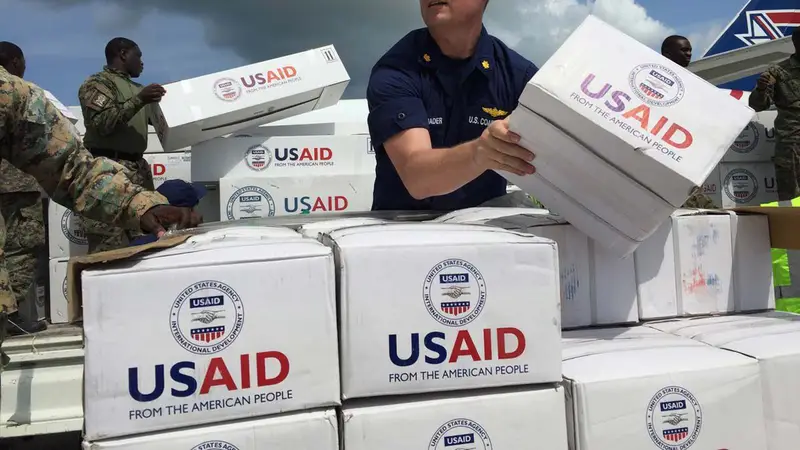
A year after the United States froze foreign aid in January 2025, HIV treatment for most of the roughly 20 million people PEPFAR supported in 55 countries, mainly in sub-Saharan Africa, is still running. The outreach that sat around it is not. At least 1,700 HIV sites have closed. Prevention spending fell 51%. PrEP dropped 21% in Global Fund countries and by as much as 72% at clinics studied in Uganda and Zimbabwe. Testing there fell by up to 64%. PEPFAR-supported treatment fell by about 2 million people, roughly 10%. Part of that is a change in how patients are counted, not a mass loss of drugs. The breaks with the old trend were in Uganda, Zambia, South Africa and Kenya. Children lost ground faster: 77,163 fewer were on PEPFAR-supported treatment, about 31,000 of them in South Africa and 6,000 each in Kenya and Zimbabwe. Confirmed deaths tied to the closed clinics are documented in Kenya, not as a national surge. AFP verified at least 24 deaths of HIV-positive sex workers who had been stable on treatment. Judy, 36, died on 7 August 2026 after visits that brought her drugs to Mathare stopped. Beatrice, 43, died on 24 August 2025; her sister Rosemary a year later. Kenya’s own 2026 estimates put AIDS deaths at 19,434, down 0.3% over five years, and new infections down about 56%, to about 14,000. Where the clinics closed In Kenya, Bar Hostess Empowerment and Support Programme’s two USAID centres had reached 14,500 sex workers. One closed in September 2025. The Roysambu centre was due to close a year later. About 12,000 clients dropped off its books, including 2,300 with HIV. All 25 USAID-funded sex-worker clinics in western Kenya closed. Sex Workers Outreach Programme recorded a 48% rise in new infections among Nairobi sex workers in the first half of 2026 against the same period in 2024. PEPFAR-supported treatment in Kenya fell by about 12,000 people. A Sh5.24 billion emergency fund kept some drugs and salaries moving. It did not restore the outreach. South Africa funds about 90% of its own antiretrovirals. PEPFAR was 17% of a response covering 7.2 to 8 million people with HIV. Twelve key-population clinics closed and more than 60,000 patients moved to state facilities. People on treatment rose only 40,000, to 6.18 million. The net loss of PEPFAR-linked treatment was about 95,000. HIV-related deaths from mid-2024 to mid-2025 were estimated at 53,000, not a clear rise. No equivalent list of confirmed sex-worker deaths has been published. The deals that replaced the grants By September 2026, 35 countries had signed new US health memorandums, 24 of them in Africa, including Kenya, Nigeria, Ethiopia, Uganda, Tanzania, Congo, Rwanda and Mozambique. Zambia was finalising a deal. Ghana, Zimbabwe and Namibia refused, mainly over patient data and specimens. Thirty-four deals total about $24.2 billion for 2026–2030, roughly 40% from recipient governments. The US share is about $14 billion. Nigeria’s package is about $5.1 billion, with $2.1 billion from the US. Kenya gets up to $1.6 billion in US funds and adds $850 million. Ethiopia’s deal is $1.47 billion, $1.02 billion of it American. Uganda is promised nearly $2.3 billion from the US. Congo’s partnership is $1.2 billion, $900 million American. Zambia expects $1.5 billion from the US and is putting in $2.1 billion. Eswatini signed $248 million health deal with the US specifically to sustain the fight against HIV/AIDs. Congo, Guinea and Rwanda signed beside minerals agreements. The memorandums took effect on 1 October 2026. Grant money was not yet flowing. The deals cover HIV, tuberculosis, malaria and maternal health. They do not reopen the NGO clinics the stop-work order closed.
South Africa Fuel Prices Hit Record R30 Per Litre as Iran War Surges Global Crude
South African fuel pump prices will jump by up to 12% on Wednesday, pushing inland 95-octane petrol past R30 per liter (approximately $1.80) for the first time in national history. The Department of Mineral and Petroleum Resources announced the regulated price hikes on Monday, attributing the spike to surging international petroleum costs triggered by the escalation of the US-Iran war. Under the new pricing structure, inland Petrol 95 increases by R3.33 to R30.25 per liter. Petrol 93 climbs by R3.12 to reach R30.04 per liter across Gauteng and inland provinces. Wholesale diesel with 0.005% sculpture content soars by R3.24 per liter, while 0.05% sulphur diesel rises by R2.84. Illuminating paraffin jumps R3.58 per liter at wholesale, compounding household energy costs. Global benchmark Brent crude surged from $87.89 to over $101 per barrel during the review period. Supply uncertainty through the Strait of Hormuz and elevated global shipping rates drove severe under-recoveries in domestic pricing. Although the South African Rand held relatively stable near R16.21 against the US Dollar, local currency firmness provided negligible relief against the massive increase in international product supply costs. The double-digit surge threatens headline consumer price inflation, raising transport fares and freight charges across key agricultural and retail supply chains. Economists expect heightened pressure on the South African Reserve Bank’s interest rate stance.
South Africa Private Sector Contracts in September as Headwinds Mount
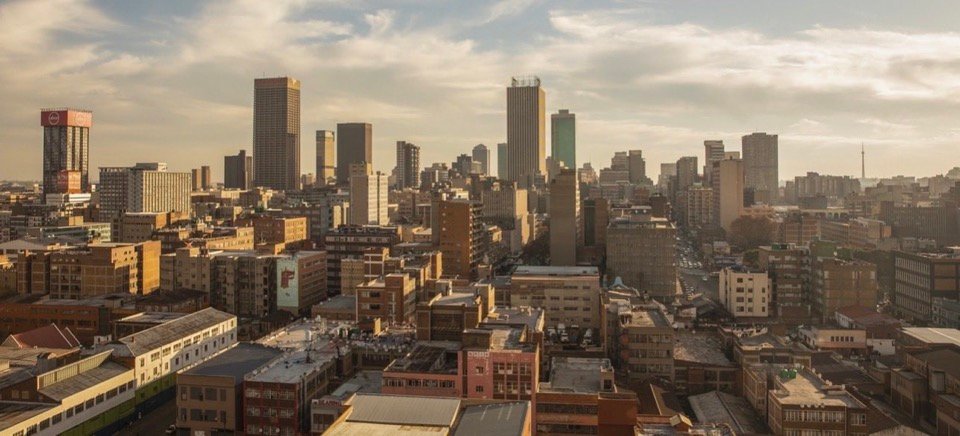
South Africa’s private sector business conditions contracted sharply in September, as falling new orders, severe port bottlenecks, and accelerating fuel-driven cost pressures squeezed private sector commercial activity nationwide. According to survey data released Monday by S&P Global, the flagship South Africa Purchasing Managers’ Index fell to 49.0 in September from 50.5 in August, crossing below the 50.0 neutral threshold. The index reading indicates the fastest downturn in private sector activity since December, reversing brief expansion gains recorded during the previous month as business momentum stalled abruptly. New order inflows posted their steepest decline in two-and-a-half years. Survey respondents attributed the sharp reduction in demand to deteriorating domestic market confidence and heightened price sensitivity among commercial buyers. Logistics disruptions severely hindered business operations as supplier delivery times lengthened at the fastest pace since February 2024, driven by persistent freight congestion at the Port of Durban and raw material shortages. Operating expenses accelerated as rising fuel prices pushed purchase price inflation to a three-month high. To protect operating margins, companies increased selling prices at the fastest rate seen since June. The private sector decline follows official statistics showing South Africa’s economy contracted 0.2% in the second quarter, highlighting underlying fragility across the broader macroeconomic landscape. Compounding pressure on businesses, the South African Reserve Bank raised its benchmark interest rate by 25 basis points to 7.25% in late September to combat intensifying upside inflation risks driven by energy costs. Despite immediate operational constraints and flat employment levels, long-term business sentiment rose to its highest level since May, as firms anticipate gradual supply chain relief over the next twelve months.
Q2: South Africa Records $3.3B Foreign Direct Investment Inflows
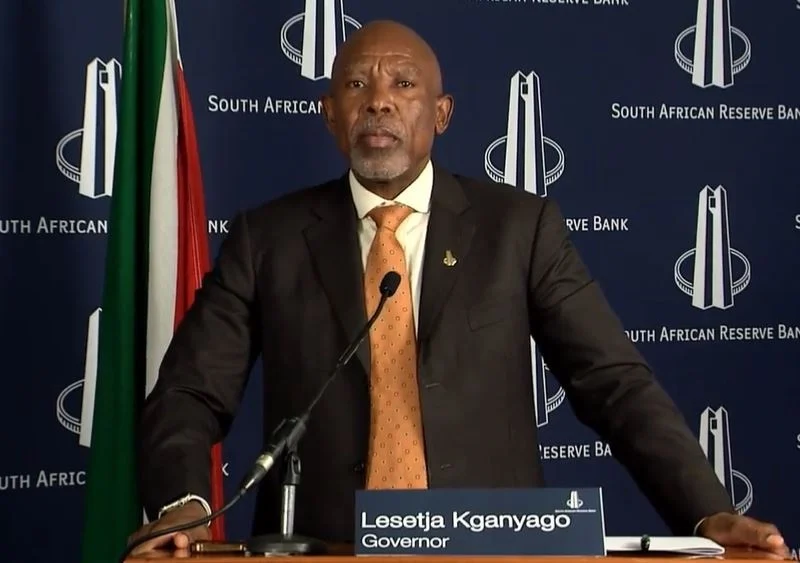
South Africa recorded foreign direct investment inflows of 49.8 billion rand ($3.03 billion), during the second quarter of 2026, marking a substantial acceleration from the previous quarter. Data released on Tuesday by the South African Reserve Bank confirmed that these capital inflows more than doubled compared to the 20.3 billion rand recorded during the first three months of the year. The sharp quarterly expansion was primarily driven by a significant internal corporate transaction involving a domestic telecommunications firm securing substantial debt funding from its non-resident parent organization. In sharp contrast to surging direct investments, portfolio capital moved in the opposite direction, registering a net outflow of 9.0 billion rand across the April-to-June reporting period. Non-resident investors aggressively disposed of 34.2 billion rand in domestic equity securities while simultaneously acquiring 25.1 billion rand in domestic debt instruments during the quarter. Foreign purchases of local debt were softened by the government paying off a maturing $1.25 billion international bond. This capital movement unfolds alongside broader regional macroeconomic adjustments as central banks across Sub-Saharan Africa navigate fluctuating foreign exchange reserve trajectories and shifting global monetary policy cycles.
South Africa Inflation Climbs 4.4% in August on Transport Pressures
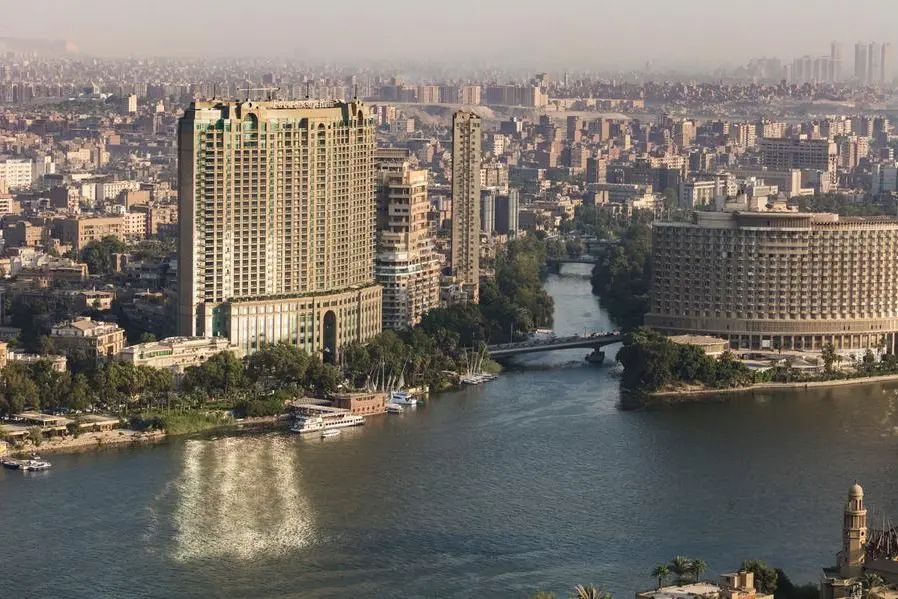
South Africa’s annual inflation rate ticked up to 4.4% in August, edging slightly higher from 4.3% in July. According to data released by Statistics South Africa on Wednesday, the consumer price index remained anchored above the central bank’s ideal 3% midpoint goal. On a month on month base inflation remained unchanged decreasing 0% in August over the previous month 0.2%. Transportation costs remained the primary driver of upward momentum, registering an 8.8% year-on-year increase following a prior 8.9% advance. Diverging fuel trends defined the transport sector during the month. Retail petrol prices fell by 2.0% between July and August, offering temporary relief to everyday motorists. Conversely, commercial logistics faced persistent overhead strain as diesel prices climbed 3.1% over the same period. Food inflation also picked up, rising to 1.1% from 0.9%, marking its first increase since November 2025. The persistent pressure leaves headline figures well outside the South African Reserve Bank’s preferred 3% target midpoint.
How African Businesses are still borrowing through mid-2026
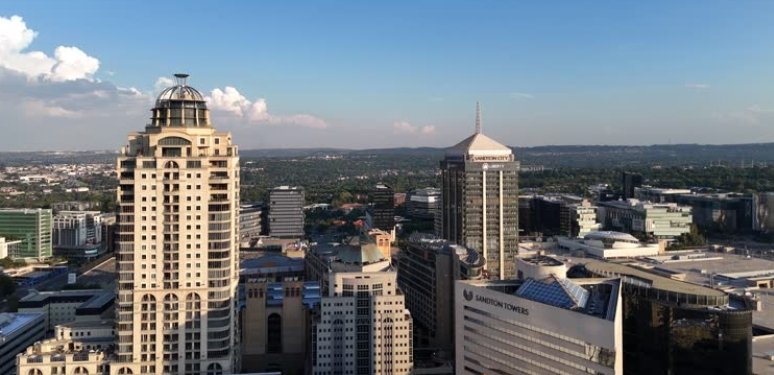
Private-sector credit across Africa is still expanding in mid-2026, but the path is uneven. Ghana and Tanzania are running the fastest. Nigeria has climbed for three months after an early-year drop. Kenya and Uganda are in double digits. South Africa and Egypt are slower. Banks are tighter on long-dated industrial risk. Firms that can issue paper or tap trade lines are doing so. The Figures below are local-currency stocks and official growth rates complied by ThinkBusiness Africa from central-bank releases through July and August 2026. Ghana and TanzaniaBank of Ghana data put outstanding private-sector credit at GH¢119.6 billion at end-June, up 41.2 percent year on year. The average lending rate had fallen to 15.64% from 27.0% a year earlier, after inflation eased and IMF programme reviews were completed. Real credit rose as well. Tanzania’s stock reached TZS 53.77 trillion in July, from TZS 51.92 trillion in June. Annual growth accelerated to 31.2% from 28.1%, led by harvest finance, trade, mining and construction. Personal loans, mostly to MSMEs, still account for about a third of bank books. The Bank of Tanzania raised its policy rate to 6.25% in July even as credit sped up. Households and small firms are adding debt just as policy begins to tighten. Asset quality has not broken in the official numbers, but the test comes after the harvest books reprice. East AfricaUganda’s annual private-sector credit growth reached 16.1% in June. The outstanding stock was Shs 27.7 trillion, up 3.8% from May and 16.0% from a year earlier. Net extensions over the three months to June were Shs 2.89 trillion, nearly double the previous quarter. That is a flow, not the stock. Average shilling lending rates eased to 17.73% from 18.65%. Kenya’s private-sector credit grew 10.2% in July, after 10.6% in June, the first stretch of double-digit growth since early 2024. The Central Bank Rate is 8.75%. Average commercial lending rates were 14.3% in July. Trade, construction, agriculture and consumer durables took most of the new loans. Rwanda’s private-sector credit stock was about RWF 5.91 trillion in June. Lending standards have tightened as the National Bank of Rwanda has adjusted policy. Growth is still positive; approval is more selective. NigeriaCentral Bank of Nigeria figures show credit to the private sector at N84.55 trillion in August, from N83.43 trillion in July and N83.26 trillion in June, three consecutive monthly increases after an April low of about N80.6 trillion. In August the CBN eased Discount Window restrictions tied to FX and government-securities activity and restored tenored repo operations of four to 90 days. Services and trade still take the largest share of bank credit. Manufacturing and oil and gas remain large tickets, but screening is tighter during recapitalisation. South Africa and EgyptSouth African private-sector credit grew 7.41% year on year in July, from 7.77% in June, the softest pace since late 2025. Claims on the private sector were about R2.63 trillion in June. Household leverage and a cautious Reserve Bank have kept banks conservative. Egypt’s loans to the private sector were about EGP 3.66 trillion in June. Real local-currency loan growth averaged 7.3% in the second quarter. Sovereign issuance still occupies a large share of bank balance sheets. Corporate borrowers face tight conditions even as headline inflation has eased. Snapshot Country Credit stock Period Rate used USD equivalent Ghana GH¢119.6bn June 2026 GH¢11.35/$ (BoG interbank, end-June) $10.5bn Tanzania TZS 53.77trn July 2026 TZS 2,633/$ (July average) $20.4bn Uganda Shs 27.7trn June 2026 UGX 3,659/$ (end-June) $7.6bn Kenya KSh 4.29trn June 2026* KSh 129.5/$ (end-June) $33.1bn Nigeria ₦84.55trn August 2026 ₦1,332/$ (end-August) $63.5bn Rwanda RWF 5.91trn June 2026 RWF 1,461/$ (end-June) $4.0bn South Africa R2.63trn June 2026 R16.4/$ (June average) $160bn Egypt EGP 3.66trn June 2026 EGP 50.7/$ (June average) $72bn Dollar figures convert each local-currency stock at the official or interbank rate for that reporting month. They are period-matched, not current-market values. Definitions of private-sector credit still differ by country. How Businesses are Funding ThemselvesIn high-rate markets — Nigeria, Egypt, South Africa — larger companies are issuing commercial paper and other short-dated corporate debt rather than rolling expensive overdrafts. Banks under recapitalisation and tighter risk models prefer trade, services and consumer names with faster cash conversion. Manufacturing, oil and gas, real estate and infrastructure still get large facilities; the process is slower and more collateral-heavy. Where inflation has broken and lending rates have fallen, as in Ghana and Uganda, credit has responded quickly. Demand is not the constraint. The price and term of money are. — Compiled from central-bank monetary statistics and official monthly reviews released through mid-September 2026.
South African President Cyril Ramaphosa Booked Off Sick From Official Duties
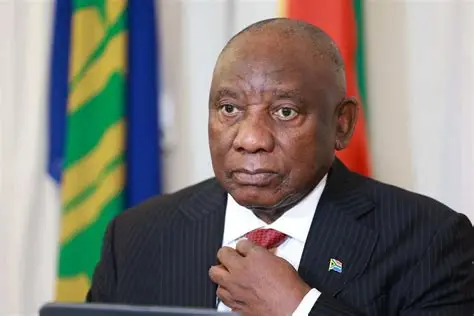
South African President Cyril Ramaphosa has temporarily stepped back from public engagements and official government duties following medical advice after falling ill upon returning from international travels. According to an official statement released by the South African Presidency, the 73-year-old leader took ill after flying back from the BRICS summit in New Delhi, India. The Presidency confirmed that “President Ramaphosa, who returned from the BRICS Summit in India on Monday, has been advised by his medical team to rest and recover”. Cabinet ministers will stand in for him at scheduled events. Meanwhile, Deputy President Paul Mashatile is also recovering from a medical procedure, leaving both top leadership offices temporarily absent. This simultaneous absence comes at a critical time for South Africa as the administration prepares for upcoming local government elections scheduled for November. Government operations and delegated tasks continue through administrative teams.
South Africa Inflation Expectations Ease to 4% in Q3
South Africa’s one-year-ahead household inflation expectations dropped to 4% in the third quarter of 2026, easing from 4.2% following prior Middle East oil shock pressures. According to the Bureau for Economic Research survey data released on wednesday, two-year-ahead projections also edged down to 3.8% from 3.9%, moving closer to the central bank’s ideal 3% anchor. Headline inflation previously climbed to a 5% peak in June 2026 before cooling down to 4.3% in July, reflecting broader stabilization trends across domestic consumer markets. This easing trend reduces input cost pressures for businesses, lowering operational overheads, stabilizing supply chain pricing, and easing upward wage negotiation demands from corporate workforce entities. Lower borrowing costs may follow as the Reserve Bank gains confidence, improving commercial credit access, boosting corporate capital investments, and strengthening consumer spending across regional retail sectors.