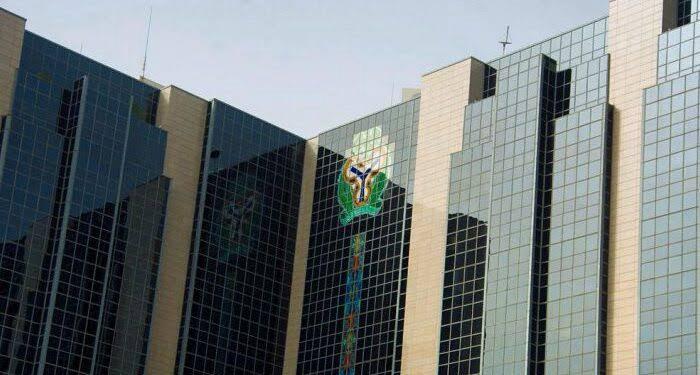


LAGOS, – The Central Bank of Nigeria (CBN) has pivoted from direct funding to a private-sector-led de-risking model to attract long-term investment into the nation’s primary raw materials value chain.
Usman Okpanachi, Director of the Statistics Department, revealed this shift at the 2026 Bullion Lecture in Lagos, stating the bank will now act as a catalyst rather than a lender.
The bank is deploying credit enhancements and blended finance to attract “patient capital,” estimated at N246 trillion over ten years, to transform Nigeria from a commodity exporter to a processor.
This move addresses systemic bottlenecks including poor data quality, weak policy coordination, and high entry risks that have historically deterred large-scale industrial players from the domestic extraction sector.
Under this framework, the CBN is phasing out legacy intervention programs in favor of “willing buyer, willing seller” market dynamics, aligning with the 2026 Growth Acceleration and Investment Mobilisation Strategy.
Data systems are being upgraded to provide investors with real-time insights into the mining and agricultural sectors, facilitating better risk assessment for commercial banks and private equity firms.
The strategy prioritizes integrating local mining into formal global value chains, such as LBMA-standard gold, to stabilize external reserves which grossed $47 billion in February 2026.
In January, the CBN governor, Olayemi Cardoso, hosted a senior delegation from British International Investment (BII) and the British High Commission, in a bid to get long-term capital investment.
Governor Cardoso’s meeting with Ms. Diana Layfield, Chair of BII, and Mr. Richard Montgomery, British High Commissioner, focused on deploying “patient capital”—investment that prioritizes long-term economic structural changes over short-term returns.
By moving away from the FX-heavy “100 for 100” policy, the CBN expects private partnerships to reduce the manufacturing sector’s dependence on imports for essential industrial inputs.