
Lagos — one of Africa’s most populous cities, is betting on rail, water, and mass transit to escape chronic gridlock, shifting its long-term strategy away from traditional road expansion projects.
The Lagos Metropolitan Area Transport Authority (LAMATA) announced the pivot following a high-level workshop to update the city’s Strategic Transport and Mobility Master Plan (STMMP) through 2050.
Officials confirmed the state will now prioritize an integrated multimodal system. This strategy aims to move millions of commuters via the expanding rail network, BRT corridors, and revamped waterways.
This policy shift addresses the reality that building more roads cannot keep pace with a population projected to hit 45 million by 2050. The focus is now on high-capacity transit.
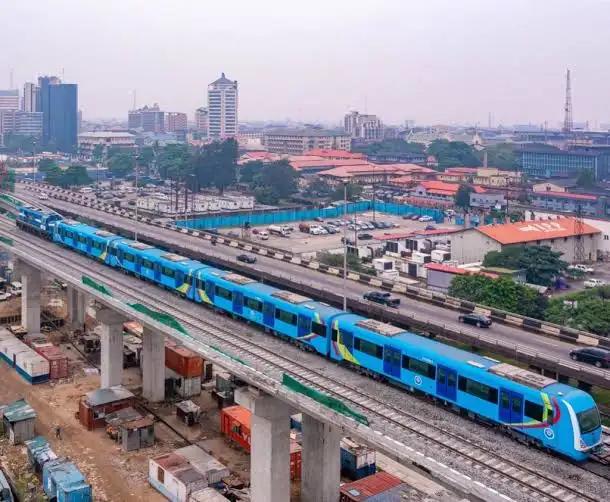
The announcement comes as the Red Line rail begins partial operations, joining the existing Blue Line. Together, these tracks form the backbone of a network intended to carry millions daily.
“In a decisive move to reshape urban mobility, the Lagos Metropolitan Area Transport Authority (LAMATA) convened a high-level stakeholders’ workshop to update its Strategic Transport and Mobility Master Plan (STMMP), setting a clear roadmap for Lagos’ transportation needs through 2050,” Lagos State Commissioner for Transportation, Mr. Oluwaseun Osiyemi, said in a statement.
The $3 billion Green Line, connecting Lekki to the rest of the city, was recently fast-tracked through a partnership with Chinese engineering firms.
Additionally, the state is investing €410 million in the Omi Eko project. This initiative will deploy 75 electric ferries to move 25 million passengers annually, reducing road pressure and emissions.
By integrating these modes under a single payment system, the Cowry Card, Lagos aims to reduce private car usage from 11% to just 2% over the next three decades.