

A 747-ton batch of Nigerian cattle bone pellets recently arrived at Dalian Port, China, signaling a major breakthrough for local agribusiness under Beijing’s newly expanded trade frameworks.
The bulk cargo cleared customs at the major northeastern Chinese logistics hub as one of the earliest processed agricultural derivative shipments from West Africa to benefit from fresh, duty-free market access.
This arrival follows the official launch of China’s comprehensive zero-tariff policy on May 1, 2026, which granted unilateral duty-free access to 53 African nations, including Nigeria, covering 100% of tariff lines.
However, the non-oil shipment represents a structural departure from traditional bilateral trade dynamics, which have long been dominated by raw Nigerian crude oil exports counterbalanced by inflows of finished Chinese manufactured goods.
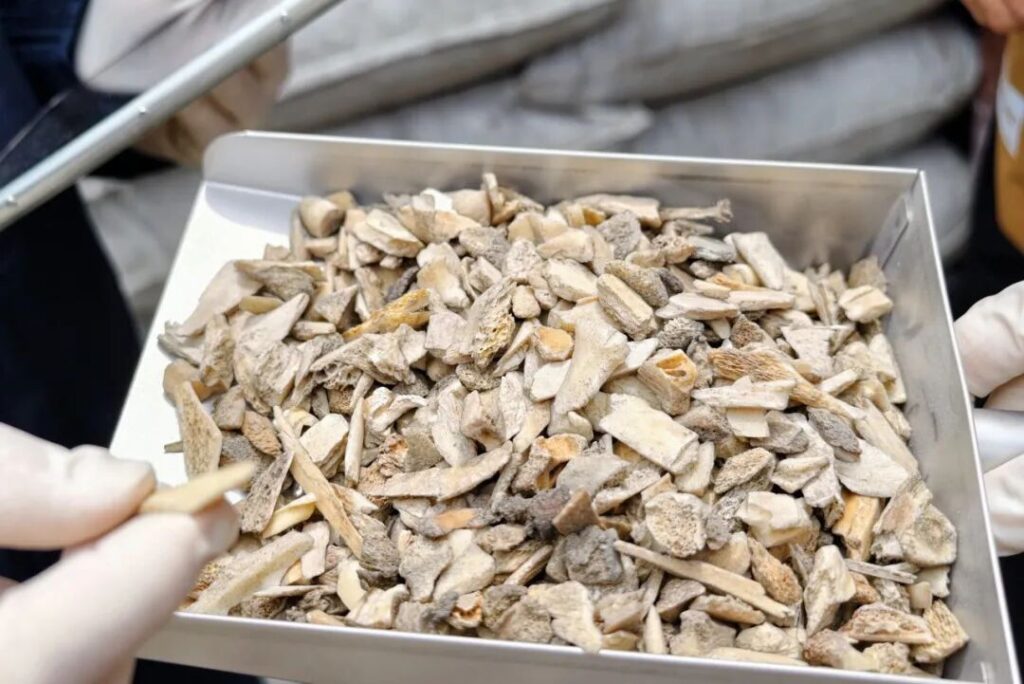
Cattle bone pellets serve as high-value industrial inputs in China’s domestic manufacturing sectors, where specialized chemical and biomedical factories process the raw material into pharmaceutical gelatins, collagen casings, and premium bone china.
The zero-tariff treatment eliminates previous import duties ranging from 8% to 30%, drastically lowering entry barriers for African agro-processors trying to compete inside the world’s largest consumer trading market.
“Exporting raw commodities keeps Africa trapped in low-value trade,” said international trade specialist Mr. Tesman Irabor. “China could import raw materials, process them, and re-export finished goods—even back to Africa.” He told ThinkBusiness Africa on Tuesday.
Irabor noted that the current zero-tariff window provides an unprecedented structural opportunity for continental agribusinesses to aggressively scale up local factory operations and transition toward value-added export processing.
Chinese demand for agricultural imports remains strong, with bilateral trade between China and Africa growing 23.7% year-on-year during the first quarter of 2026, outperforming general global trade averages.
While the zero-tariff policy eliminates financial duties, Nigerian exporters face stringent biosecurity and quarantine standards enforced by the General Administration of Customs of China regarding moisture, pests, and chemical residues.
Industry experts are urging public-private collaboration to set up digital traceability tools and robust food processing facilities, ensuring local products consistently satisfy rigid international health and safety protocols.
Proponents also highlight the need to balance aggressive commodity exporting with domestic supplies, warning that uncontrolled agro-industrial outflows could trigger localized food shortages and price spikes within domestic markets.
“The zero tariff policy is not just a trade incentive—it is a structural opportunity for Africa to industrialize its agriculture, deepen value chains, and access a massive, stable market.
“But the real winners will be agribusinesses that move beyond raw commodity exports into value addition, quality assurance, and strategic market positioning.” Mr. Irabor said.
By integrating regional supply lines through the African Continental Free Trade Area, Nigerian firms can source raw agricultural materials regionally, process them locally, and ship finished products toward East Asian ports.