

Africa’s Merchandise Trade Hits $1.5 Trillion Despite Chronic $74 Billion Financing Gap
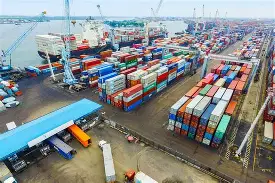
Africa’s total merchandise trade expanded 6.1 percent to $1.5 trillion in 2025, driven by resilient GDP growth across major regional economies despite a persistent $74 billion trade finance deficit. The African Export-Import Bank’s 2026 trade report reveals continental GDP growth accelerated to 4.5 percent last year, up from 3.4 percent in 2024, outpacing global averages amid cooling inflation. Total imports reached $781.5 billion against $685.2 billion in exports, leaving a $96.3 billion trade deficit. Meanwhile, intra-African trade grew 5.5 percent to hit a record $213.8 billion. However, local exporters remain severely constrained by a restrictive $74 billion trade financing gap, heavily exacerbated by low foreign exchange liquidity and dwindling international correspondent banking relationships. A stark divergence between official central bank monetary policy rates and commercial lending rates across the continent further weakened policy transmission, keeping private credit highly restrictive. West Africa recorded significant volume shifts, propelled by Nigeria scaling up refined petroleum exports to neighboring nations, including Ghana, Cameroon, and Togo, reinforcing regional energy security. To counter these systemic flaws, Afreximbank plans to double its intra-African trade finance allocations to $40 billion by the end of 2026, up from $17.5 billion disbursed in 2024. Additionally, the Pan-African Payment and Settlement System is expanding rapidly, with over a dozen central banks connected to lower transaction fees and reduce heavy reliance on hard currencies. Africa’s total merch
Lafarge Africa Rebrands as HBM Nigeria Following $1 Billion Takeover
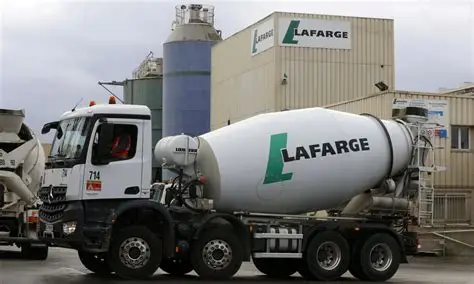
LAGOS – Lafarge Africa Plc has officially changed its corporate name to HBM Nigeria Plc. The announcement was disclosed in a regulatory filing to the Nigerian Exchange Limited on June Tuesday. The name change reflects a major shift in ownership. China’s Huaxin Building Materials (HBM) completed a $1 billion takeover of the manufacturing giant, acquiring an 83% majority stake from Holcim. Shareholders overwhelmingly approved the corporate rebranding at the company’s 67th Annual General Meeting earlier this year. The transition aligns the local cement manufacturer with its new global parent company. Financially, the company enters this new era on solid ground. HBM Nigeria recently reported a 101% surge in profit after tax, reaching N97.95 billion for the first quarter of 2026. Net sales also climbed 35% year-on-year to N334.88 billion during the same quarter. Management attributed the record-breaking financial growth to volume-led revenue expansion and disciplined cost management. Group Managing Director Lolu Alade-Akinyemi stated that the new corporate identity will not disrupt current activities. The rollout will follow a phased process across its nationwide plants and operations. The company assured investors, workers, and host communities of seamless business continuity. HBM Nigeria remains committed to delivering its massive 10.5 million metric tonnes of installed annual cement capacity.
$13B Debts: Senegal Walks Back Minister’s Debt Restructuring Comments to Calm Financial Markets
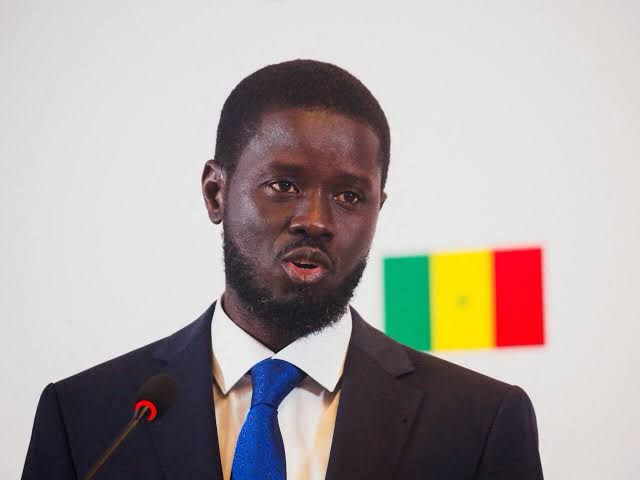
Senegal’s finance ministry on Tuesday repudiated statements made by the country’s industry minister regarding a potential public debt restructuring, declaring them a personal opinion that contradicts official state policy. The Ministry of Economy, Finance and Planning firmly asserted it remains the sole official communications channel for public finances and international financial partnerships. The diplomatic damage-control follows an unsanctioned television broadcast on June 22 by Industry and Commerce Minister Serigne Gueye Diop, who suggested Senegal might restructure its debts. The finance ministry immediately sought to reassure nervous international markets, stating Senegal remains fully committed to honoring all financial obligations to its creditors, technical partners, and global investors. “These statements constitute a personal opinion and in no way reflect the official position of the State of Senegal,” the ministry of finance said in a statement disassociating itself from the comments of the industry minister. The minister’s unauthorized remarks triggered immediate anxiety across international bond markets, threatening to spike borrowing costs for the West African nation at a highly sensitive economic juncture. The policy clash comes as Senegal undergoes a rigorous, tense renegotiation with the International Monetary Fund (IMF) over a frozen $1.8 billion lending program. An official government audit recently uncovered over $13 billion in unrecorded debt hidden by the previous administration, causing Senegal’s deficit-to-GDP ratio to exceed 10%. Sovereign bond yields had already climbed significantly following the audit’s release, forcing the new administration to seek a rapid resolution with international lenders. Analysts warn that even minor communication missteps from non-finance officials can severely damage investor confidence and disrupt delicate ongoing bailout talks with the IMF.
Guinea Bans Raw Gold Exports to Force Local Refining

Guinean President Mamadi Doumbouya has announced an immediate, indefinite ban on raw gold exports. The emergency decree forces all mining operators to process and refine their precious metal entirely within national borders, state-owned radio broadcasted. The policy directive targets industrial corporations, semi-industrial firms, and hundreds of artisanal miners. Doumbouya declared that Guinea will no longer allow its natural wealth to leave daily in an unrefined state. Data from the Ministry of Mines and Geology shows joint gold exports reached 22,142 kilograms in the first quarter of this year alone. Government officials aim to capture the profits historically lost to foreign refineries. “Guinea possesses the second largest gold reserves in West Africa, but its gold leaves the country daily in raw form to be processed, certified, and sold elsewhere,” Doumbouya stated during a meeting with industrial and artisanal gold producers, as well as gold traders active in the West African country, broadcasted by the state-owned Radio Télévision Guinéenne. The export restriction aligns with recent African resource nationalism trends. It mirrors Zimbabwe’s strict ban on raw lithium exports, which similarly aimed to curb mineral leakages and boost local industrialization. All domestic gold processing must now occur at the newly built Nimba Gold Refinery in Conakry. The state-of-the-art facility features an initial processing capacity of 2,000 kilograms of gold per day. Refining gold into ingots locally will allow Guinea to certify and sell its products directly to international markets. The transition aims to strengthen national financial reserves while creating specialized, high-paying engineering jobs. Recent World Trade Organization data reveals that raw gold accounts for 47.2% of Guinea’s total export value, generating 4.81 billion dollars annually. The metal stands as the nation’s top fiscal resource. The military government warned that compliance is mandatory. Any mining operator attempting to smuggle or export unrefined gold faces immediate license suspension and the permanent termination of their extraction contracts. “From today, I put an end to this practice: Guinea will require its gold to be processed within its borders. Raw gold will no longer leave Guinea,” the military president said.
Nigeria’s Stock Exchange Scraps Uniform Price Rules for New Tiered Volume Framework
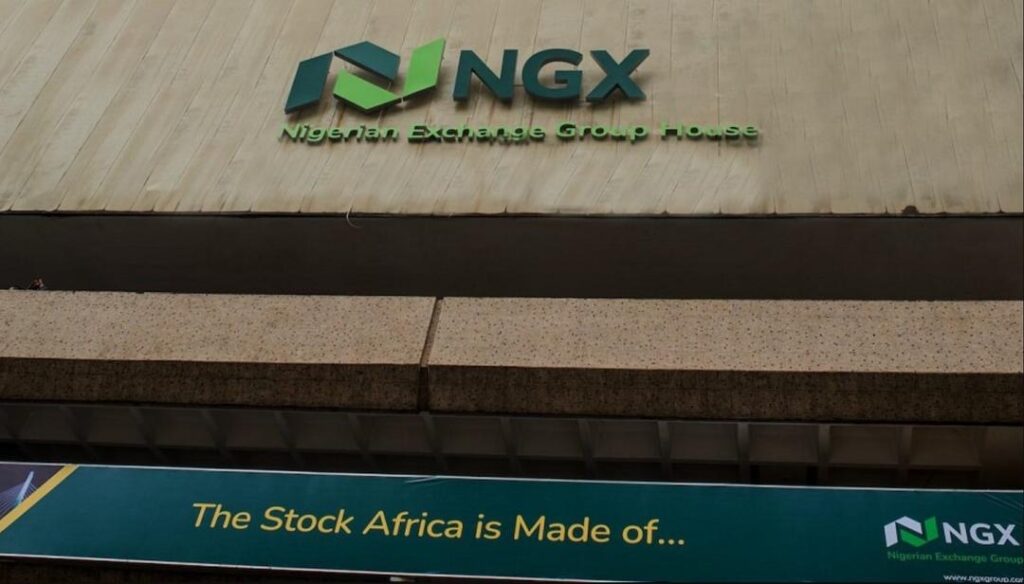
LAGOS—The Nigerian Exchange Limited has implemented a tiered price-movement framework, ending the uniform 100,000-unit trade threshold to boost market liquidity and ensure realistic price discovery across different stock categories. Under the Securities and Exchange Commission’s approved rules, trades falling below new asset-class minimums will execute normally between buyers and sellers but will fail to trigger any official stock price movement. High-priced equities trading at N1,000 or above, classified as Group A, now require a significantly lower minimum volume of 10,000 shares to shift their market prices. Medium-priced stocks trading between N500 and N1,000 under Group B now need at least 50,000 units, while low-priced equities below N500 retain the baseline 100,000-unit volume requirement. The intervention addresses severe liquidity blockages in premium large-cap equities, where the previous rigid 100,000-share rule made it expensive and difficult for high-value stocks to reflect true market demand. Market analysts note that while the old uniform system protected the exchange from manipulation by small retail trades, it choked price responsiveness for institutional investors handling heavyweight equities. The new framework drastically lowers the financial barrier for price discovery on premium boards, requiring far less capital to influence valuations of the market’s most expensive corporations. The Automated Trading System now filters out sub-threshold transactions automatically, isolating them as minor retail exchanges that leave the daily closing ticker and official market capitalization completely unchanged.
$100M: Why the AfDB Just Bought Its Way Into the ECOWAS Development Bank

LAGOS – The African Development Bank Group (AfDB) has approved a $100 million financial package for the ECOWAS Bank for Investment and Development (BIDC), fundamentally altering the regional financial landscape. While the headline numbers highlight a massive boost for West African infrastructure, the real transformation is happening in the boardroom. By injecting $30 million of this facility as direct equity, the AAA-rated AfDB is becoming the very first development finance institution to acquire a direct ownership stake and a permanent seat on BIDC’s Board of Directors. To understand the weight of this intervention, look at the balance sheet. BIDC has historically operated with a speculative-grade ‘B’ credit rating from agencies like Fitch, weighed down by a high-risk regional environment and an average sovereign shareholder rating of ‘CCC+’. While BIDC successfully boosted its authorized capital from $1.5 billion to $3.5 billion to expand its lending runway, borrowing heavily on external markets without an investment-grade anchor has kept its cost of capital aggressively high. This structural limitation creates a punitive cycle where regional banks face a steep risk premium when borrowing on international capital markets. The resulting high interest rates are passed down to local infrastructure initiatives, making critical energy and development projects cost-prohibitive. “The African Development Bank Group’s acquisition of a stake in the BIDC marks an important milestone in the institution’s development. Beyond the capital injection, this investment by a major AAA-rated shareholder strengthens the BIDC’s credibility with international investors and supports efforts to mobilise long-term resources for the benefit of ECOWAS countries.” Andrews Amankwah, Director of the Treasury at the ECOWAS BIDC said in a statement released on Thursday. The AfDB’s boardroom presence changes the game. This strategic move serves as an institutional de-risking mechanism, using the continental giant’s sterling credit reputation to instantly anchor BIDC’s corporate governance framework. The strategy is already showing a clear multiplier effect. The remaining $70 million long-term credit line, earmarked exclusively for West African solar and hydroelectric initiatives, is expected to leverage and crowd in an additional $230 million in co-financing. The capital injection targets 207 megawatts of clean energy capacity, extending power grids to 250,000 underserved households across the 15-member state of Ecowas bloc. Furthermore, the operation directly advances the New African Financial Architecture for Development (NAFAD), a continental strategy heavily endorsed at the recent 2026 AfDB Annual Meetings in Brazzaville. By investing directly in sub-regional institutions, African nations are building internal financial capacity to reduce long-term reliance on external capital providers.
Equatorial Guinea Government Resigns Over 10% Goal Failure
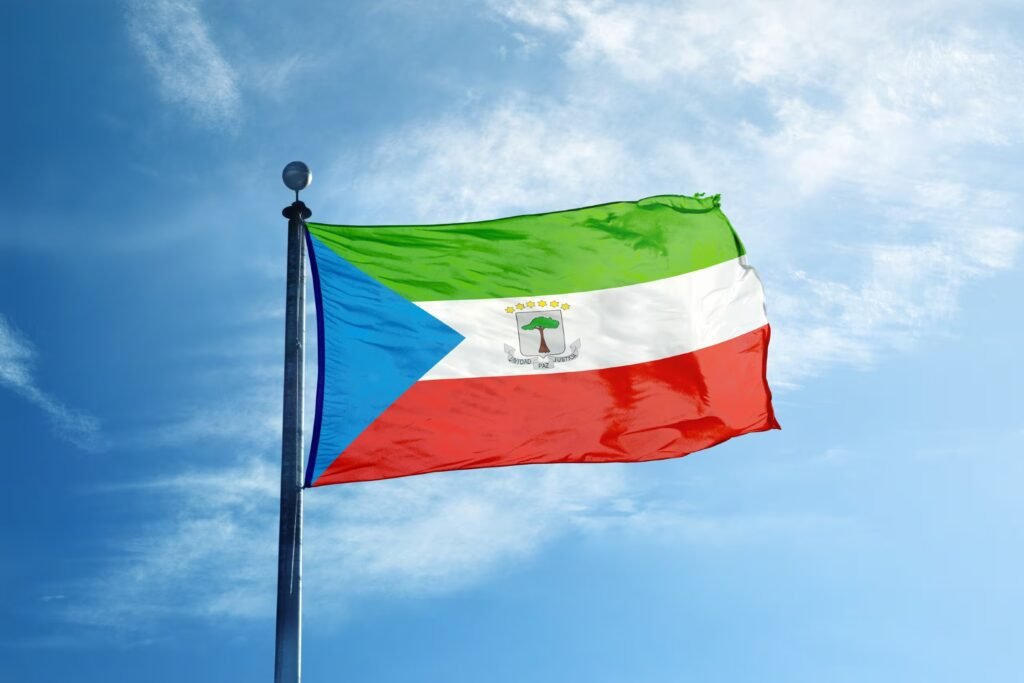
Equatorial Guinea’s Prime Minister Manuel Osa Nsue Nsua and his entire cabinet have resigned after failing to meet economic and administrative performance targets. Vice President Teodoro Nguema Obiang Mangue announced the collective resignation on Tuesday via social media platform X, citing a massive shortfall in government execution. An official performance assessment revealed the outgoing administration achieved barely 10 percent of its planned objectives, triggering immediate executive dissolution. The Vice President stated that public responsibility must deliver results, declaring the achieved progress clearly insufficient relative to the country’s significant resource allocations. The state had deployed substantial human, material, and financial assets to address citizen needs, making the low implementation rate unacceptable to leadership. This political overhaul comes amid severe macroeconomic pressure. The International Monetary Fund projects a -2.7% GDP contraction this year, following a steep -6.4% economic decline previously. The structural crisis is driven by maturing oil fields. National crude production plummeted to roughly 44,000 barrels per day by April, squeezing vital hydrocarbon revenues. With foreign exchange shortages ongoing and the fiscal deficit widening, the presidency is expected to appoint a dynamic cabinet to fast-track stabilization and resource mobilization.
Mission 300: World Bank Energy Initiative Electrifies 50 Million Africans
LAGOS – A joint World Bank and African Development Bank initiative has connected over 50 million Africans to electricity, reaching nearly 20% of its target just two years after its formation. The milestone, announced Tuesday under the “Mission 300” program, marks a significant acceleration. Power is now being delivered at nearly double the pace recorded at the initiative’s 2024 launch. The program aims to provide electricity to 300 million people in Sub-Saharan Africa by 2030. Currently, nearly 600 million Africans, roughly 83% of the global energy deficit—still live without electricity. Tanzania led the progress by connecting 7.5 million people, representing a five-fold increase in its annual electrification pace. Ethiopia and Nigeria followed closely, connecting 4.6 million and 4.5 million people, respectively. Expansion is driven by National Energy Compacts across 30 countries. These frameworks combine government policy reforms with layered public financing to de-risk investments and attract private energy providers to remote communities. “Governments, partners, private sector, and others who comprise what has evolvedinto an M300 movement must double down to achieve access for 300 million people by 2030. We need all hands on deck” said Sidi Ould Tah, President of the African Development Bank Group. To maintain momentum, the initiative recently launched a Private Sector Council. The council mobilizes commercial capital to scale up mini-grids and standalone solar setups, which will supply half of all intended connections.
Nigeria Oil Windfall Hits $6.51 Billion as May Production Surge Breaks Quota Ceiling
LAGOS — Nigeria generated an estimated $17.78 billion in gross crude oil revenue between February and May 2026, driven by global supply disruptions following the outbreak of the Iran war. The four-month harvest yielded a net windfall of $6.51 billion (approximately N9.77 trillion) above the federal government’s 2026 national budget benchmark price assumption of $64.85 per barrel. The financial surge accelerated in May as domestic crude oil production climbed to a 15-month high of 1.53 million barrels per day (bpd), officially exceeding the country’s OPEC quota for the first time in over a year. The combination of elevated war-time pricing and expanding production volumes has provided a critical lifeline for the federation account. The emergency price premium has significantly cushioned the country’s massive N25.91 trillion 2026 budget deficit, reducing immediate government pressure to issue expensive new domestic or Eurobond debt obligations. However, a persistent volumetric gap from the budgeted target of 1.84 million bpd prevents the historic deficit element from being completely wiped out, keeping Nigeria an average of 395,250 bpd below its fiscal planning baseline. Monthly Production Performance & Budget Shortfalls Month Actual Production (bpd) Budget Target (bpd) Daily Shortfall (bpd) Status vs. OPEC Quota February 1.310 million 1.840 million -530,000 Below Quota March 1.450 million 1.840 million -390,000 Below Quota April 1.490 million 1.840 million -350,000 Below Quota May 1.530 million 1.840 million -310,000 Exceeded Quota (102%) Average 1.445 million 1.840 million -395,250 — Sources: NUPRC, OPEC Revenue Generation & Net Windfall Breakdown Month Production (bpd) Avg Price (bbl) Gross Revenue Net Windfall February 1.31 million $87.00 $3.19 billion +$0.81 billion March 1.45 million $99.40 $4.47 billion +$1.55 billion April 1.49 million $120.36 $5.38 billion +$2.48 billion May 1.53 million $100.00 $4.74 billion +$1.67 billion Total — — $17.78 billion +$6.51 billion Source: OPEC Turning the Corner on Past Fiscal Deficits The current revenue boom represents an aggressive structural reversal from the previous two fiscal years, pulling the country out of severe revenue shortfalls. In 2024, aggregate national oil and gas revenues missed the national budget target by 24.7%, bringing in N15.07 trillion. The structural crisis deteriorated deeper into the first three quarters of 2025, with petroleum tax and gas revenues plunging a staggering 73.92% short of targeted N23.54 trillion budget projections. Persistent pipeline vandalism, underinvestment in onshore upstream extraction, and softer international commodity pricing caused a severe N2.79 trillion oil revenue shortfall during the third quarter of 2025 alone. Market Drivers and Upstream Cost Deductions The geopolitical catalyst began on February 28, 2026, when the outbreak of the Iran war triggered an ongoing naval blockade and a critical shipping crisis as Iran closed the vital Strait of Hormuz. The severe physical market disconnect pushed international buyers toward safe Atlantic Basin supply routes, lifting premium demand and pricing for Nigerian crude grades to a peak of $120.36 per barrel in April. Global benchmark Brent crude has since moderated to $93.30 per barrel as a tentative cooling of immediate regional military strikes unwound a portion of the market’s risk premium. However, complex upstream architectures mean the federal treasury only captures a net percentage of this market upside. In Joint Venture (JV) arrangements, gross numbers are heavily diluted by equity splits and standard production costs. Upstream Cost Deductions & Equity Splits (Calculated using the industry-wide $25.00/bbl operational baseline) Month Gross Value Production Cost ($25/bbl) 60% NNPC Share 40% IOC Share February $3.19B $917.0M $1.91B $1.28B March $4.47B $1.12B $2.68B $1.79B April $5.38B $1.12B $3.23B $2.15B May $4.74B $1.19B $2.85B $1.90B Total $17.78B $4.35B $10.67B $7.11B Sources: NUPRC, OPEC Out of the total $17.78 billion in gross commercial value generated, nearly 25% —amounting to $4.35 billion—was entirely consumed by the technical and security overhead of pulling the oil out of the ground based on the industry-standard $25.00 per barrel baseline. Under the pre-determined 60/40 JV equity split, NNPC Limited accounted for $10.67 billion of the net commercial value, while International Oil Companies (IOCs) held $7.11 billion before statutory taxes. Technical extraction limits capped further gains earlier in the year. The Bonga deepwater field underwent scheduled turnaround maintenance precisely during the initial late-February price spike, restricting national oil output to a lower baseline of 1.31 million bpd before steady infrastructure recoveries and field restarts drove the climb to 1.53 million bpd by May. Domestic Downstream Impact and Inflation While the upstream sector enjoys a fiscal harvest, the domestic microeconomy faces severe inflationary adjustments. Because the downstream fuel sector is fully deregulated, soaring global oil prices immediately forced domestic petrol prices upward, hovering between N1,300 and N1,400 per litre across local filling stations. Independent petroleum marketers confirmed the local supply shock would have deteriorated further without the local production interventions of the Dangote Refinery acting as an essential baseline domestic structural buffer. National Bureau of Statistics data showed yearly consumer inflation accelerated to a five-month high of 15.69% in April, reflecting aggressive transportation cost pass-through from the initial energy shock. Food inflation quickened to 16.06% year-on-year, significantly driving up the cost of local dietary staples and intensifying cost-of-living challenges across vulnerable households nationwide. The fiscal windfall provides a substantial opportunity for the federation, but economic analysts urge targeted social investments and infrastructure deployments to cushion citizens against severe ongoing domestic price corrections.
Zimbabwe State Miner Secures Funding to Double Gold Output to 220,000 Ounces by 2029
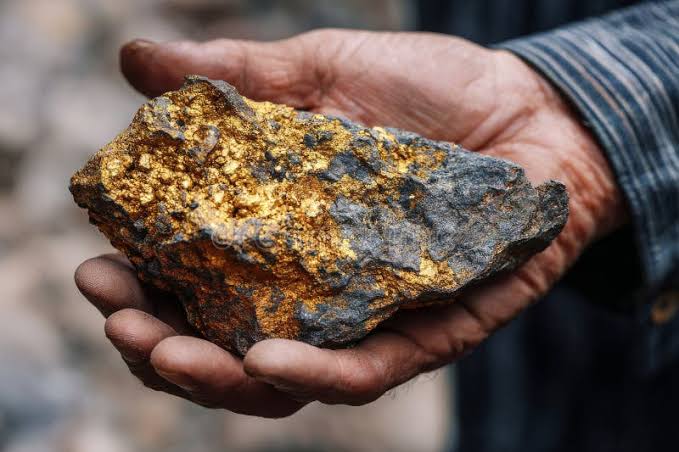
Zimbabwe’s state-owned Mutapa Gold Resources plans to double its annual output to 220,000 ounces by 2029 after securing crucial funding for a multi-asset expansion project, official production reports revealed Friday. The state-backed miner has raised $75 million from local Zimbabwean commercial banks to fund the first phase of the expansion, while active negotiations continue with international lenders for an identical $75 million tranche. Capital from the initial $150 million funding package will primarily target the Shamva Hill open-pit project, driving its standalone annual gold production from 24,000 ounces to nearly 80,000 ounces starting August 2026. The aggressive expansion follows a 10% year-on-year drop in Mutapa’s output to 104,626 ounces for the fiscal year ending March 31, a decline management attributed to depleting surface ore grades. Remaining resources will optimize recovery plants at the flagship Freda Rebecca mine, expand capacity at Jena Mine in late 2026, and integrate registered small-scale artisanal mining output into state supply lines. This state-level scaling aligns with a broader national push to generate foreign exchange liquidity. Gold remains Zimbabwe’s primary economic anchor, accounting for 47.5% of total national export earnings in 2025. Surging global bullion prices boosted Zimbabwe’s first-quarter gold export revenue to $1.19 billion, nearly doubling the $579 million recorded during the same period last year, according to central bank data. Mutapa’s infrastructure upgrade underpins a national target to lift total gold production to a record 50 metric tons, up from the 46.7 tons registered during the previous calendar year.
