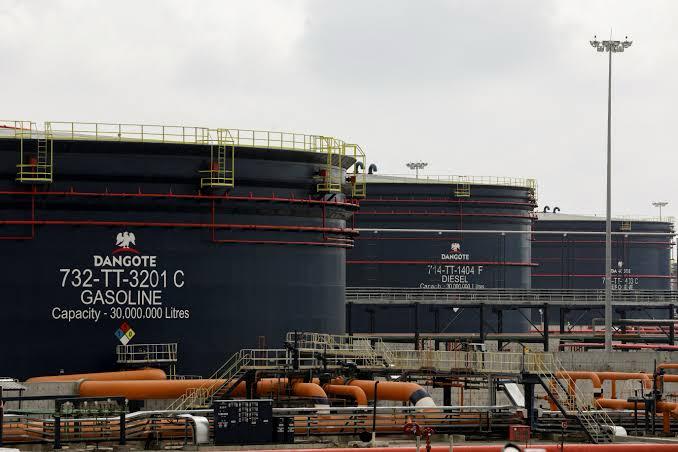
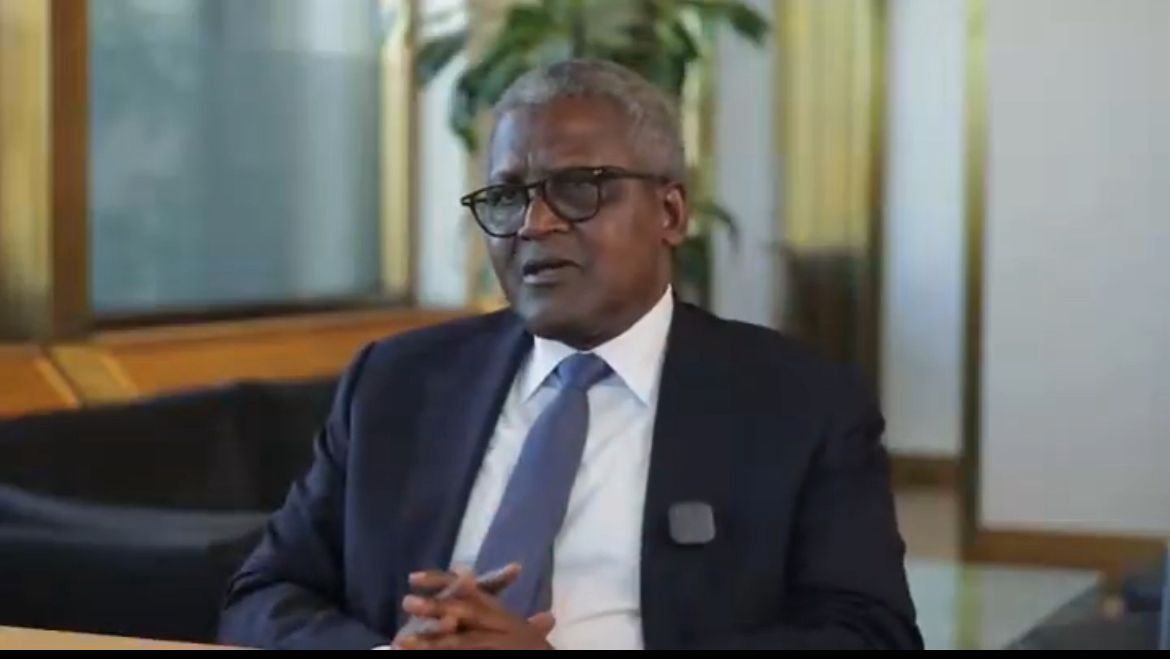
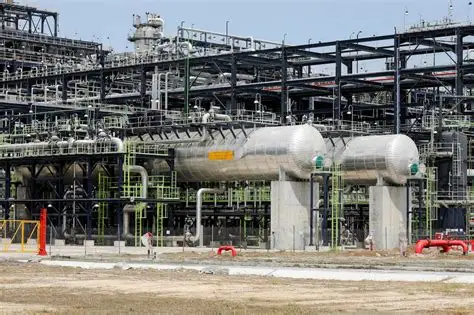
Africa’s foremost industrialist, Aliko Dangote, has revealed that he had to provide the seaport, roads, water facilities, and electricity needed for the construction of the world’s largest single-train refinery in Lekki. He noted that “oil mafias” attempted to stop him from building the 650,000-capacity refinery to ensure they continued to profit from petroleum imports.
The Infrastructure Gap and Engineering Feats
In a recent interview with Norges Bank Investment Management, the Billionaire explained that no port in Nigeria was capable of handling the heavy equipment required for the $20 billion refinery’s operations. This forced the group to build its own specialized jetty to receive modular components.
“One piece was 3,000 tonnes… the crude distillation unit weighed 2,700 tonnes, and we have over 30 of these equipments which were mostly imported in modular forms,” Dangote said. This Crude Distillation Unit (CDU) is currently the largest of its kind in the world, and its installation required specialized “self-propelled modular transporters” just to move it from the jetty to the site.
To sustain the project, Dangote also highlighted the massive scale of utility requirements. The refinery’s water department occupies over 30 hectares of land and provides over 440,000,000 liters of treated water. During its peak construction phase, the project employed 65,000 technical workers, supported by the world’s largest granite quarry and a massive on-site ready-mix concrete capacity built specifically for the project.
Sabotage and the “Oil Mafia”
Although the project was launched in 2013, land allocation disputes lingered for five years. Originally, the refinery was planned for the Olokola Free Trade Zone in Ogun State, but the shift to the current 2,635-hectare site in Lekki only happened after a prolonged regulatory deadlock. Dangote alleged that the “oil mafia” was behind these delays, trying to sabotage the project at its early stage to protect the lucrative importation business.
“One part of the land [took] three and a half years, the other one and a half years… all this was being blocked by what we call the mafia in the oil business, to make sure we don’t come and address these issues… but we were determined,” Dangote said. He noted that these entities have long benefited from the complex “swap” deals and fuel subsidies that have historically drained Nigeria’s foreign exchange.
Economic Hurdles and Financing
The project’s financial landscape shifted dramatically over the decade. At the time the project started in 2013, the Naira was 156 per dollar. However, the currency later devalued significantly, reaching 1,900 per U.S. dollar by 2024 following the foreign exchange (FX) unification by the Central Bank of Nigeria (CBN).
While the refinery was originally intended to be funded through the Dangote Group’s internally generated funds, the devaluation of the Naira forced the group to seek external support to bridge the gap and ensure the refinery could begin breaking the import monopoly.
“We had to rely on African Export-Import Bank (Afreximbank), Africa Finance Corporation, Zenith Bank, Access Bank, UBA, and a couple of local banks,” Dangote stated. For foreign support, he mentioned Standard Bank of South Africa and Standard Chartered Bank of the United Kingdom (UK).
By refining crude locally, the facility is now positioned to provide high-quality Euro-V spec fuels, significantly reducing the sulfur content in regional fuel and securing energy independence for West Africa.