•N30 trillion Central Bank overdraft system has been halted.
•Federal oil inflows hit only 19% of the 2025 target.
•Debt Servicing Cost spikes were driven by Naira depreciation and high rates.
•Capital execution hit 76% via direct project-tied loans.
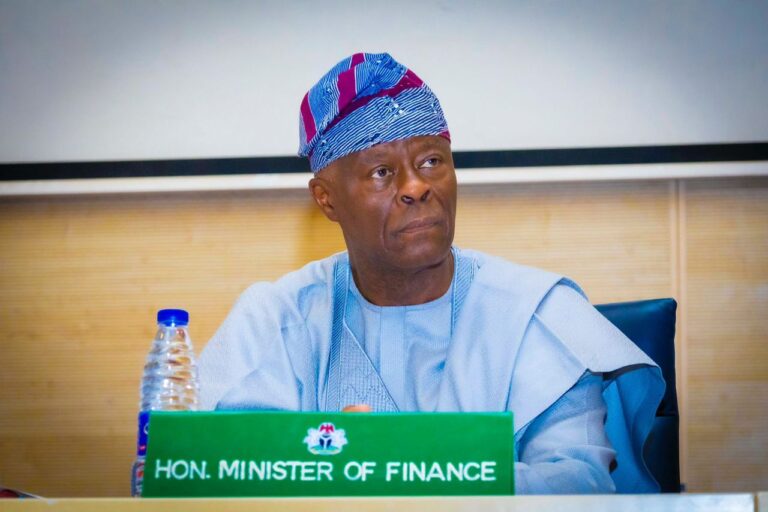
Nigeria is undergoing a “fundamental reset” of its fiscal architecture rather than an economic collapse, its finance minister said, clarifying that recent transition strains result from shifting from “hidden deficits” to a disciplined, market-based system, with inflation already easing to 15.1% as of early 2026.
According to a media brief signed by Dr. Ogho Okiti, special adviser to the Minister of Finance, the government has ended “Ways and Means” advances—Central Bank overdrafts that reached N30 trillion over the last decade. By securitizing this debt into 40-year bonds, the government has closed the “money printing” tap to curb inflation. This is reinforced by the Central Bank’s recent decision to trim the Monetary Policy Rate to 26.5%, signaling a cautious move toward growth as price levels stabilize.
The brief highlights a critical gap in revenue performance. In 2025, oil revenue hit only 19% of its N37.4 trillion target. Because the Federal Government relies more heavily on oil than states—who benefit from stable VAT collections—the federal budget faced a disproportionate liquidity squeeze. To correct this, the 2026 budget adopts a more conservative production benchmark of 1.84 mbpd.
Furthermore, a N5.45 trillion debt service “overshoot” in 2024–2025 was attributed to macroeconomic shocks rather than new borrowing. Naira depreciation spiked the cost of foreign debt, while high interest rates raised domestic costs. However, record non-oil revenue of N22 trillion provided a critical buffer, and the Nigeria Revenue Service now targets N40.7 trillion for 2026 to further reduce debt-to-revenue ratios.
Regarding infrastructure, the Ministry noted that total capital execution hit 76% in 2025 despite low agency cash releases. This was achieved through a two-tier funding model where major projects like rail and power are funded via project-tied loans paid directly to contractors by international partners.
“Nigeria is not experiencing fiscal collapse. It is undergoing fiscal correction.” The Finance ministry noted. The government maintains that this fiscal correction is effectively shielding the economy from global shocks.