
• Actual oil revenue hit only 19% of the 2025 budget target.
• Low oil inflows hit the Federal Government harder than States.
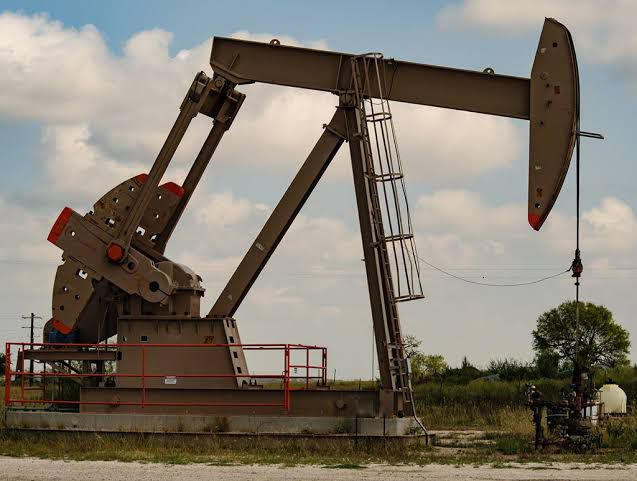
• Oil output averaged 1.5mbpd, missing the 2.06mbpd budget goal.
• Executive Order 9 stops NNPC from withholding billions in revenue.
• The 2026 budget adopts lower, more realistic oil price benchmarks.
A massive shortfall in oil and gas revenue left the Nigerian Government struggling to meet its 2025 budget targets. Despite an overall increase in total federation receipts, the specific revenue streams that the federal center relies on have underperformed by nearly 80%.
According to the latest data from the Federal Ministry of Finance, projected federation oil and gas revenue for 2025 was set at N37.4 trillion. However, actual inflows into the Federation Account reached only N7 trillion by the end of the fiscal year, a staggering performance rate of just 19%.
The Finance Ministry said in a statement that the impact of this slump was felt most acutely at the federal level due to the technical structure of Nigeria’s revenue-sharing formula. While total federation revenue remains somewhat buoyed by strong non-oil performance, the Federal Government’s specific share is heavily weighted toward oil.
“Because oil revenue allocation favors the federal government more heavily than other streams, these shortfalls hit federal finances disproportionately,” a Ministry brief explained. Under current laws, the FG receives roughly 53% to 65% of oil and gas revenues, while it receives only 20% of Value Added Tax (VAT), with the remaining 80% going to states and local governments.
The Ministry noted that if the original oil projections had been realized, the Federal Government alone would have received approximately N15 trillion in additional revenue to fund its operations and infrastructure.
The shortfall was attributed to a “perfect storm” of operational and market factors.
While the 2025 budget was built on an ambitious assumption of 2.06 million barrels per day (mbpd), actual output excluding condensates averaged between 1.38 mbpd and 1.53 mbpd. Although security in the Niger Delta has improved, aging infrastructure and maintenance delays continue to cap production.
The budget used a benchmark price of $75 per barrel, but actual market conditions for much of 2025 were less favorable, with crude occasionally trading below $65 due to global economic headwinds.
Also, significant deductions by the state-owned oil company NNPCL for “Profit Oil” management fees and frontier exploration, though recently addressed by a Presidential Executive Order, reduced the net amount available for distribution to the Federation Account for most of the year.
The 2025 experience has forced a “reality check” in the 2026 Budget Proposals currently before the National Assembly. President Bola Tinubu has adopted a cautious outlook, lowering the crude oil benchmark to 1.84 mbpd at $64.85 per barrel.
This adjustment is intended to prevent the massive fiscal deficits recorded in 2025, where the government missed its first-quarter oil revenue target by over 64%.
Furthermore, the executive has intensified the “digitization of revenue mobilization” to ensure that the shortfall in oil does not lead to a total halt in critical public services.