
France signals historic shift toward slavery reparations after Ghana summit
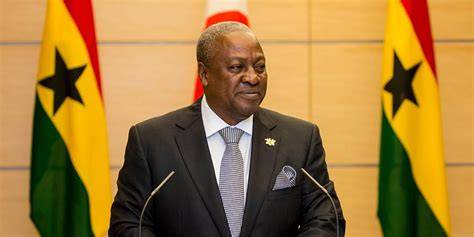
France has signaled a potential breakthrough in the long-standing debate over historical justice, expressing an openness to discuss reparations for transatlantic slavery with a coalition of nations. The development follows a high-level meeting in Paris last week between Ghanaian President John Dramani Mahama and French President Emmanuel Macron. Ghanaian officials confirmed that the talks marked a shift in France’s diplomatic posture toward the transatlantic slave trade’s enduring legacy. “France is ready to engage in an open and honest dialogue with the coalition on the issue of reparations,” Ghana’s Foreign Minister, Samuel Okudzeto Ablakwa, stated following the diplomatic mission. The coalition, a bloc of African and Caribbean nations, has intensified its push for reparatory justice following a landmark United Nations resolution on March 25, 2026. That resolution, spearheaded by Ghana, officially designated the transatlantic slave trade as the “gravest crime against humanity.” The shift is particularly significant given that France abstained from the March UN vote. At the time, French diplomats expressed concern that the resolution’s language could create a “hierarchy” of human rights violations. However, the recent meeting in Paris suggests a move toward bilateral and multilateral reconciliation. Discussions are expected to focus on three primary pillars: the restitution of looted cultural artifacts, addressing structural economic inequalities linked to colonial history, and the formalization of reparative justice frameworks. While France formally recognized slavery as a crime against humanity in 2001 via the Taubira Law, it has historically resisted calls for financial or institutional reparations. The Élysée Palace has yet to release a detailed roadmap for these discussions but has confirmed its willingness to continue talks regarding “culturally significant objects” and “shared history.” The move comes at a time of heightened geopolitical focus on the “Global South,” as African nations increasingly leverage their collective diplomatic weight to demand accountability for historical colonial-era grievances.
Moody’s revises Ghana’s outlook to positive as fiscal recovery gains momentum
LAGOS – Global ratings agency Moody’s shifted Ghana’s sovereign credit outlook from “stable” to “positive” on Friday, citing a significant turnaround in the country’s fiscal health and macroeconomic stability. The agency affirmed the long-term issuer rating at Caa1, but noted that a formal upgrade is now possible if current economic reforms continue to yield results. The decision follows Ghana’s successful return to the domestic bond market this month, a move that signals a restoration of investor confidence after the 2023 debt default. Moody’s highlighted the government’s ability to achieve a primary budget surplus of 1.5% of GDP, largely driven by strict adherence to the $3 billion IMF bailout program. Falling inflation and steady revenue from gold and oil exports have also stabilized the cedi, providing a much-needed buffer against external economic shocks. Despite the positive outlook, the agency warned that high debt levels and global commodity price volatility remain significant risks to the nation’s long-term recovery. The shift is expected to lower borrowing costs, making it easier for the government to fund essential infrastructure and social development projects moving forward.
Ghana Inflation drops to 3.2% in March, marking 15th consecutive monthly decline
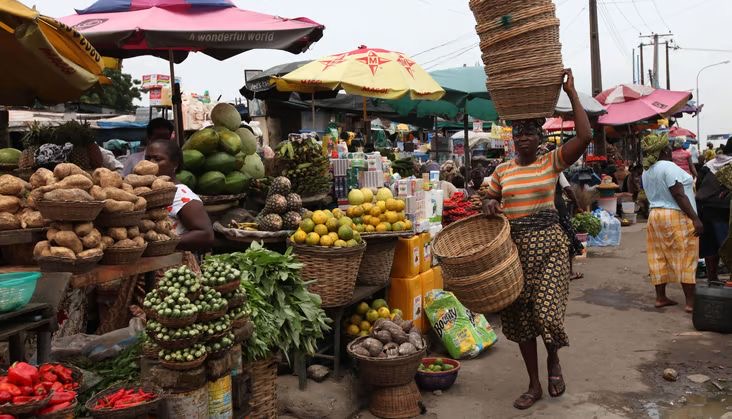
Ghana’s streak of cooling prices extended into its 15th month this March, as consumer inflation nudged lower to 3.2%, according to the latest data released by the Ghana Statistical Service (GSS) on Wednesday. The marginal decline from February’s 3.3% marks the lowest inflation level the West African nation has seen since the consumer price index was rebased in 2021. The steady descent highlights a period of remarkable price stability following the hyper-inflationary crisis of late 2022 and 2023. Government Statistician Prof. Samuel Kobina Annim noted that the continued slowdown was supported by a cooling in both food and non-food categories. Food inflation dropped to 2.3% from 2.4% in February, while non-food inflation eased to 3.9%. Notably, inflation for imported goods fell by 0.6%, credited largely to the relative stability of the Cedi against major trading currencies. However, inflation for locally produced items saw a slight uptick to 4.9%, up from 4.5% the previous month. This persistent downward trend suggests that the Bank of Ghana’s aggressive monetary tightening and the fiscal reforms under the $3 billion IMF bailout program are effectively anchoring price expectations. With inflation now sitting well below the central bank’s medium-term target band of 6–10%, market analysts are closely watching for a potential further cut to the benchmark policy rate. The central bank has already lowered rates significantly this year to stimulate growth, and the March data provides more room for further easing. While the 0.1 percentage point drop is modest, it reinforces investor confidence in Ghana’s recovery. Despite the optimistic headline, the GSS noted that month-on-month inflation rose by 0.1%, a sharp deceleration from the 0.8% monthly increase seen in February, indicating that while prices are still rising, they are doing so at a near-negligible pace.ne