
Foreign direct investment across Sub-Saharan Africa and the wider continent reached $70 billion in 2025, driven by global demand for critical minerals, energy transition infrastructure, and supply chain realignments, UNCTAD reported.
According to the United Nations Conference on Trade and Development’s World Investment Report 2026, titled “International Investment in a Turbulent Era,” this figure sits roughly one-third above the region’s long-term historical average, despite dropping 26 percent from 2024’s record peak.
While total greenfield project values contracted by nearly a third, the overall number of announced deals actually increased, signaling a pivot toward smaller, highly targeted capital commitments across strategic economic sectors.
Sub-Saharan Africa’s Least Developed Countries captured $33 billion of the total, with inflows heavily concentrated in copper, cobalt, lithium, and manganese reserves essential for global battery and electric vehicle supply chains.
Non-Western investors led the expansion, as sovereign funds and corporate groups from the Gulf Cooperation Council and East Asia aggressively backed clean energy grids, port logistics, and industrial processing hubs.
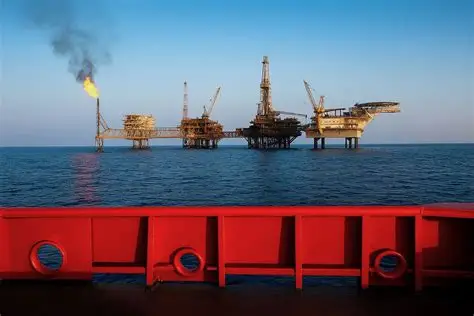
Mining countries like Guinea and Mozambique pulled significant capital into bauxite and liquefied natural gas developments, while Nigeria secured $4 billion in upstream oil, gas, and energy infrastructure project finance deals.
East African tech and logistics corridors in Kenya, Ethiopia, and Uganda also attracted steady inflows, positioning Sub-Saharan hubs inside emerging global trade networks despite broader macroeconomic headwinds and elevated borrowing costs.
UNCTAD cautioned that capital flows remain heavily concentrated in resource-rich nations, urging regional governments to implement local processing policies to convert raw mineral wealth into lasting, broad-based industrial growth.
“Investment is also concentrating. A handful of strategic sectors — semiconductors, artificial intelligence, clean energy, critical minerals — now represent almost half of all announced greenfield projects in 2025. However, least developed and lower-middle-income countries together attract barely 10 per cent of them, against more than 20 per cent in other industries.” UNCTAD stated in its report.
Breakdown of 2025 Foreign Direct Investment Inflows Across Africa
| Country / Region | 2025 FDI Inflows (USD) | Primary Key Drivers & Sectors |
| Egypt | $15.5 billion | Manufacturing processing, real estate, and structural infrastructure projects |
| Guinea | $7.8 billion | Major mining projects in bauxite and iron ore reserves |
| Mozambique | $5.7 billion | Hydrocarbons and liquefied natural gas (LNG) developments |
| Nigeria | $4.0 billion | Upstream oil & gas infrastructure project finance deals |
| Ethiopia | $3.8 billion | Renewable power grid generation and manufacturing hubs |
| Uganda | $3.4 billion | Energy transport corridors and critical mineral extraction |
| Morocco | $3.3 billion | Industrial diversification, automotive, and green technology |
| Kenya | $3.2 billion | Technology hubs, logistics corridors, and renewable energy |
| Côte d’Ivoire | $2.0 billion | Agricultural processing and energy infrastructure |
| Ghana | $1.9 billion | Mining, telecommunications, and industrial projects |
| DR Congo | $1.9 billion | Critical minerals (cobalt and copper extraction) |
| Tanzania | $1.7 billion | Natural gas, logistics, and mining ventures |
| Algeria | $1.5 billion | Hydrocarbon expansion and energy transition projects |
| Angola | $1.1 billion | Rebound in offshore oil & gas investments |
| South Africa | -$2.3 billion | Net negative flows due to corporate restructuring and asset sale |
| Other African Economies | ~$20.5 billion | Dispersed small-scale greenfield projects, agriculture, and services |
| TOTAL (Africa Continent) | $70.0 billion | Regional Total (Down from $94B in 2024) |
Source: UNCTAD World Investment Report 2026. African Least Developed Countries (LDCs) accounted for $33.0 billion of the total.