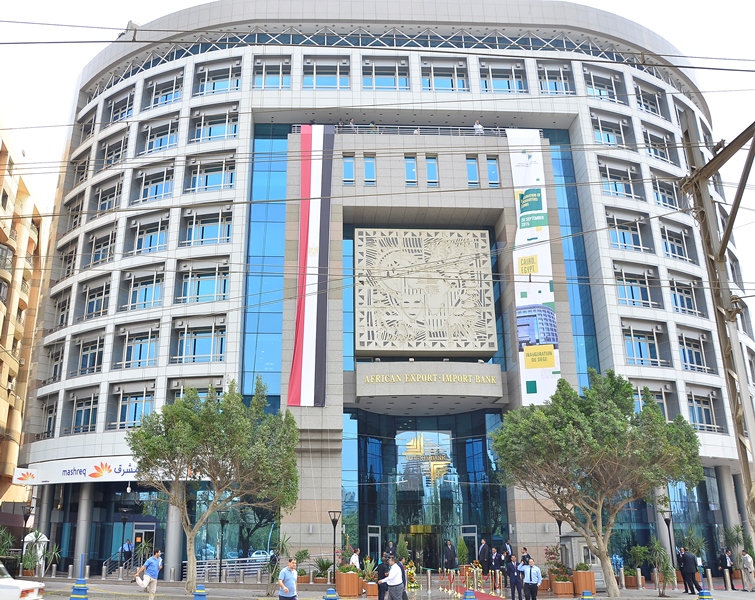
Ventures Platform Secures $84 million Funding
Capital Shift Overview
On August 2026, Abuja headquartered Ventures firm secured $84 million with an $8million commitment from the European Bank for Reconstruction and Development (EBRD). African venture funding in 2026 exhibits a sharp divergence between top-line volume and underlying deal count.
A macro analysis reveals that while aggregate funding reached an estimated $1.44 billion in H1 2026 without dilluting existing shareholders, according to Bloomberg. Capital is concentrating into fewer, highly mature ventures.
Healthcare logistics (led by Zipline’s $950m raise) and electric mobility (led by Spiro’s $270–320m funding) have captured the lion’s share of late-stage growth capital.
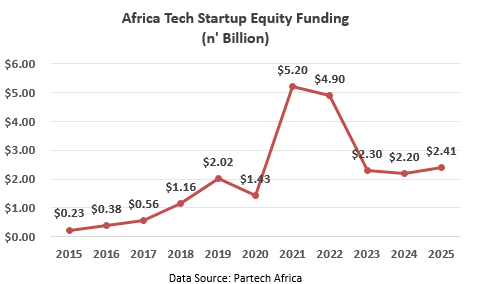
Rapid Structural Expansion (2015 to 2019): Funding increased from $233 million to $2.02 billion, 866% increment in 4 years. The funding rate doubled in 2017 to 2018 and nearly doubled from 2018 to 2019 with FinTech getting the major share of funding. Covid-19 interruption in 2020 saw funding dropped by 141% ($2.02 billion in 2019 to $1.43 billion in 2020).
By 2021 to 2022, tech startup funding in Africa exploded with a 364% increment from $1.43 billion in 2020 to $5.20 billion in 2021).
The closed economy in 2019 to 2020 made funding dropped due to global shock but seeing the way Africa solved it financial inclusion problem by lowering entry barrier into the banking and credit system while offering instant payment rail structure made financial technology in Africa become an honeypot for Global investors.
2023 to 2025 was more about recovery and stabilizing the tech industry, a 53% decline in 2022 to 2023 and a 4.8% increment from 2023 to 2025 showing a slow growth rate compared to 2018, 2019 and 2021.
The stabilization was necessary has venture debt (funding to be repaid with interest) was growing at a very rapid pace indication the industry has been bloated which could cause a drastic draw-down in value.
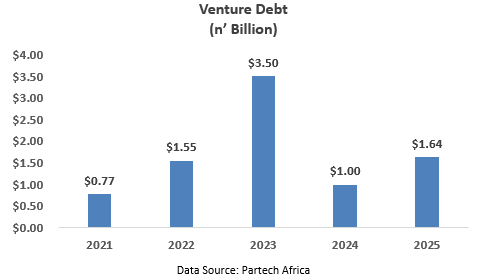
It By 2024, an equilibrium was achieved between equity ownership and debt financing in Africa tech eco system in 2024, debt increased rapidly from 2021 to 2023 ($770 million to $3.5 billion) by 454%, while equity funding declined by 55% ($5.2 billion to $2.3 billion) during 2021 to 2023, this was due to the surge in investment in the years before 2020 to 2021.
In a bid to find equilibrium between investments and debt, from 2023 to 2025 debt reduced by 53% while equity funding increased by 4.8% increment during the same duration.
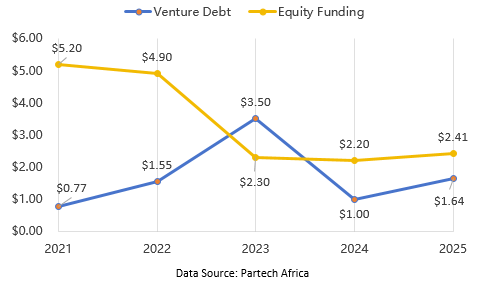
There was an inverse relation between venture debt and funding equity until 2023 to 2024 (market correction), but the analysis of the relation is the intelligence this briefs provides: “Debt is elastic while equity funding is inelastic”. Debt reacts rapidly to changes in equity funding (a little increment in equity funding causes a greater decline in venture debt and vice versa).
Sectoral Allocation: Concentration in Essential Infrastructure
Capital flows reveal a structural rotation toward essential physical and digital infrastructure. Sector breakdown indicates:
- E-Mobility & Clean Tech: Spiro’s equity rounds ($270–320m) reflect strong investor appetite for sustainable urban transport and battery-swapping networks across West and East Africa.
- Health-tech & Medical Logistics: Zipline’s massive $950m round underscores the strategic prioritization of last-mile supply chain resilience and automated distribution.
- Fin-tech & Quick-Commerce: While Fintech remains resilient (evidenced by Flutterwave maintaining the top continental Tracxn score), deal activity in quick-commerce, proptech, and agritech is shifting toward early-growth phases backed by DFIs
Geographic Rebalancing: The Rise of North and East Africa
The traditional market hierarchy experienced significant shifts in H1 2026:
| Market / Region | H1 2026 Funding | Strategic Implications |
| Egypt | $327 Million | Overtook Nigeria as Africa’s #1 venture destination; strong healthtech and logistics momentum. |
| Nigeria | $254 Million | Returned to growth; robust fintech fundamentals despite macroeconomic headwinds. |
| Big Four (Total) | 58% of Total | Egypt, Nigeria, Kenya, South Africa retain majority market share, though down from historical >75% concentration. |
| Tanzania | 5th Top Destination | Signaling geographic diversification into emerging East African secondary hubs. |
The Changing Capital Structure: DFI Leadership & Debt Expansion
Commercial venture capital remains selective, causing Development Finance Institutions (DFIs) to step into the gap as critical liquidity anchors. Key institutions including the IFC (e.g., proposed $20m check into Lightrock Africa Fund II), France’s Proparco (with active mandates across Angola, Guinea, Rwanda, Kenya, and South Africa), and Morocco’s Azur Innovation Fund represented the most active equity allocators in H1 2026.
Concurrently, debt financing expanded by 37% YoY to $614 million according to Lucidity Research team.
Founders are increasingly turning to structured debt to avoid down-rounds, while non-dilutive capital (such as the Google for Startups Accelerator South Africa for AI startups) provides targeted operational support without equity dilution.
KEY INSIGHTS
There is an inverse relationship between venture debt and funding equity. Debt is elastic while equity funding is inelastic”.
Debt reacts rapidly to changes in little changes in equity funding (a little increment in equity funding causes a greater decline in venture debt and vice versa).
- Focus on Unit Economics: Capital is available, but in the first half of 2026, it is concentrated in high-conviction scale-ups with clear paths to profitability and sustainability like highly mature ventures, Healthcare logistics and electric mobility. They have captured the lion’s share of first-stage Venture Capital investment in Africa 2026.
- Diversify Funding Structures: Incorporating Development Finance Institutions (DFIs) co-investments and venture debt is vital for Medium enterprises stage companies balancing valuation pressures.
- Look Beyond Traditional Hubs: The expansion of funding into markets like Tanzania highlights emerging regional ecosystems offering lower entry valuations and high growth potential.