
Against the backdrop of strong financial recoveries across Nigeria’s major food and agricultural producers in the first half of 2026, a high-stakes legislative battle threatens to upend the sector’s momentum.
Even as industrial giants like Dangote Sugar and BUA Foods reported robust profit rebounds in H1 2026 through disciplined cost management, a new fiscal shock looms.
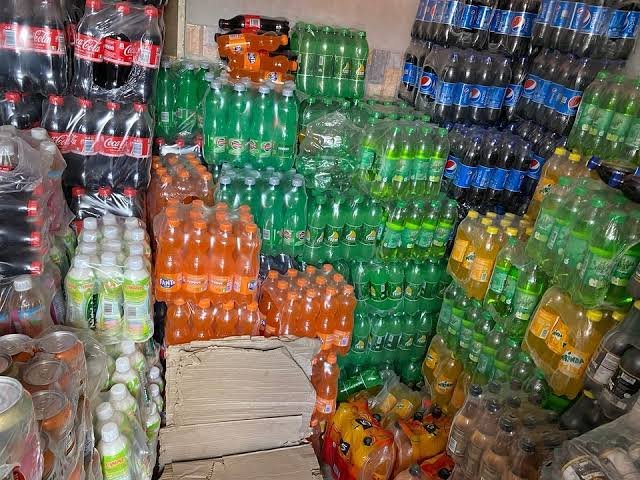
The proposed amendment to the Customs, Excise Tariff, Etc. (Consolidation) Act (CETA) which passed its Third Reading in the Senate on June 4, 2026, and is currently before the House of Representatives, seeks to replace Nigeria’s existing fixed specific excise duty of N10 per litre on sugar-sweetened beverages (SSBs) with an ad valorem tax structure.
According to Corporate Accountability and Public Participation Africa (CAPPA), this shift could skyrocket the effective tax burden to approximately N130 per litre based on prevailing retail prices.
While proponents champion the reform as a necessary step to curb sugar consumption and boost healthcare financing, a policy research report by Africa Business Convention titled “Nigeria’s CETA Bill, Fiscal Policy, and Health Outcomes.” warns that the heavy fiscal shock threatens to penalize a manufacturing ecosystem just as it begins to stabilize.
Flawed Design and Questionable Health Gains
Beyond immediate manufacturing fallout, the structural framework of the proposed tax raises serious questions regarding policy coherence and public health efficacy:
- The Reformulation Gap: Unlike South Africa’s Health Promotion Levy—which utilizes a tiered structure linked directly to sugar content to force product reformulation—Nigeria’s proposed ad valorem tax applies a flat percentage based strictly on product value. As Rwanda’s experience with a 39% ad valorem excise demonstrates, high value-based taxes raise revenue but fail to alter consumption habits or encourage healthier manufacturing choices because they treat high- and low-sugar drinks identically.
- Undermining 2026 Tax Simplification Goals: Shifting from a straightforward, volume-based excise (tracked via basic production records) to a complex ad valorem system forces businesses to navigate intricate price valuation, monitoring, and enforcement hurdles. This directly contradicts the core principles of Nigeria’s 2026 tax reforms, which prioritize administrative simplicity, predictability, and reduced compliance costs.
- The Transparency Deficit: A glaring obstacle in assessing the policy is the lack of public transparency regarding the actual revenue collected and how proceeds from the existing N10 excise have been deployed toward public healthcare infrastructure.
“SSB taxes reduce beverage purchases, but evidence of measurable reductions in obesity, diabetes, or hypertension at population level remains limited. In Nigeria, where sugar intake is already below WHO thresholds, the proposed amendment appears disproportionate to the strength of the health evidence,” ABC analyst highlighted in the report.
Severe Economic Fallout: Output, Prices, and Jobs
Layering an ad valorem jump to an effective N130 per litre on top of these structural realities introduces profound downside risks. Simulation models cited in the CAPPA and MAN submissions project severe adjustments if the policy is implemented in its current form:
- Retail Price Surges: Consumer prices for SSBs could climb by roughly 39%, depressing annual per-capita consumption by about 29%.
- Output Contraction: Annual industry output is modeled to plunge from an estimated N1.5 trillion down to N1.1 trillion by 2030.
- Production Index Plunge: The industry’s production index is projected to tumble sharply from 78 down to approximately 40.
- Employment and Value Chain Risks: With the Manufacturers Association of Nigeria (MAN) estimating that roughly 1.5 million jobs depend directly or indirectly on the sector, any major demand shock in beverages cascades directly into agriculture, logistics, and retail networks.
“The SSB sector is already adjusting to a constrained demand environment under the current tax, and further fiscal escalation would amplify existing pressures on output, employment, and investment. The proposed increase therefore represents a material downside risk to an industry that has not yet recovered to its pre-2022 performance levels.” The report notes.
A Fragile Recovery: H1 2026 Financial Realities
The timing of the proposed tax escalation intersects with a delicate period of financial adjustment for the nation’s sugar value chain. Major producers demonstrated profit recoveries in the first half of 2026 despite softer revenue volumes and moderated pricing driven by inflationary pressures:
- Dangote Sugar Refinery Plc successfully returned to profitability in H1 2026, posting a group profit after tax of N41.51 billion and reversing a loss of N24.27 billion from the same period in 2025. This turnaround was powered by a sharp 21.3% drop in the cost of sales (to N298 billion) and a 22.4% reduction in finance costs (to N50.42 billion), which effectively cushioned an 8.9% dip in revenue to N391.85 billion.
- BUA Foods Plc closed out H1 2026 with a profit after tax of N292.27 billion, marking a 12% year-on-year increase. Although revenue ticked down 16% to N765.12 billion due to deliberate price moderation to ease consumer burdens, the company expanded its gross profit margin significantly to 47.5% through rigorous cost discipline and optimized supply chain execution.
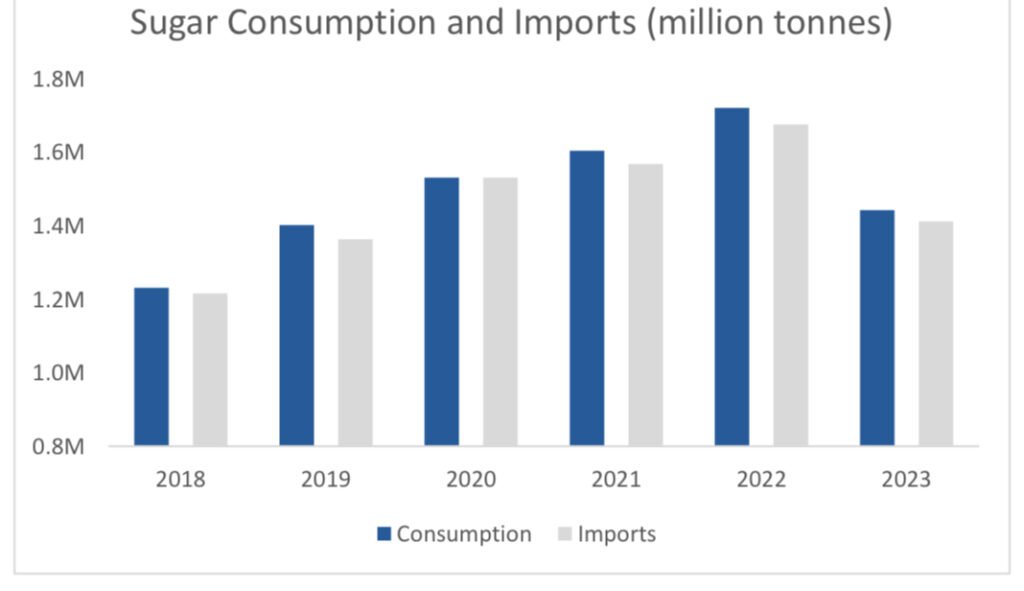
Despite these margin recoveries, historical data from the National Sugar Development Council (NSDC) underscores underlying sector vulnerability: total national sugar consumption fell 16% between 2022 and 2023, while domestic sugar production dropped 35% following initial macroeconomic pressures.
A Call for Calibrated Policy
With more than 133 million Nigerians living in multidimensional poverty and dealing with complex nutritional challenges, the expected health dividends of a blunt, heavy tax must be carefully weighed against broader socioeconomic realities.
The report points out that before pushing forward with a steep fiscal escalation, policymakers should transparently review the performance and revenue utilization of the existing levy.
If higher taxation is deemed essential, adopting a targeted, sugar-content-specific structure would offer a more balanced path protecting vulnerable households and hard-won manufacturing gains while providing genuine incentives for healthier product formulation.