
Ten African economies are carrying public debt near or above the size of their annual output. International Monetary Fund figures compiled by StatiSense for 2026 put Sudan first and South Africa tenth. The gap between them is less the ranking than what each government is doing, and what the IMF and World Bank want in return.
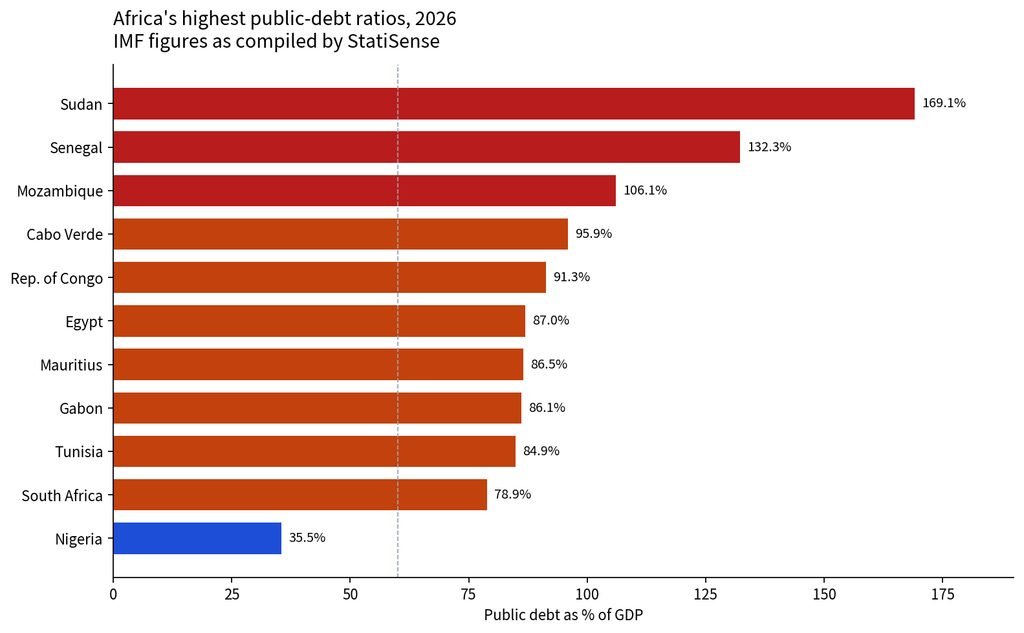
Public debt as a share of Gross Domestic Product (GDP) stands at 169.1% in Sudan, 132.3% in Senegal and 106.1% in Mozambique. Cabo Verde (95.9%), the Republic of Congo (91.3%), Egypt (87.0%), Mauritius (86.5%), Gabon (86.1%), Tunisia (84.9%) and South Africa (78.9%) complete the ten.
Nigeria, at 35.5%, is not on the list. The IMF’s June 2026 Article IV puts its debt at 35.4% of GDP in 2026 and calls it sustainable, with a moderate risk of stress. The bind is revenue: federal interest is projected at 53.7% of federal revenue. The Fund wants a neutral fiscal stance, higher non-oil revenue and protection of social spending.
Senegal is furthest into a formal workout. A 2024 audit found misreported loans, lifting debt above 130% of GDP. Central government debt was about $44 billion at end-2025. On 1 September 2026 the authorities and the IMF reached a staff-level agreement on a 36-month programme of about $2.2 billion. Approval depends on a debt sustainability analysis and creditor assurances.
Senegal has requested treatment under an enhanced G20 Common Framework and is aiming for a deal with official creditors and bondholders by December. It wants domestic CFA debt left out. The IMF treats related total-return swaps as external debt.
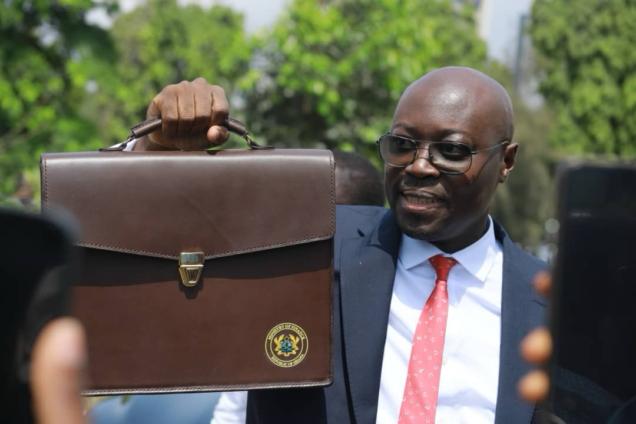
Egypt is inside an existing programme, not a restructuring. The Fund expects to finish the final review of its Extended Fund Facility in the fourth quarter of 2026, the North African country secured $1.8 billion in July after the seventh review. Also, national asset sales have been partly earmarked for debt reduction.
The IMF projects public debt below 75% of GDP by 2031 if a primary surplus of about 5% holds. It calls the debt sustainable, but not with high confidence, and has warned against short-term borrowing. Interest already takes nearly half of spending.
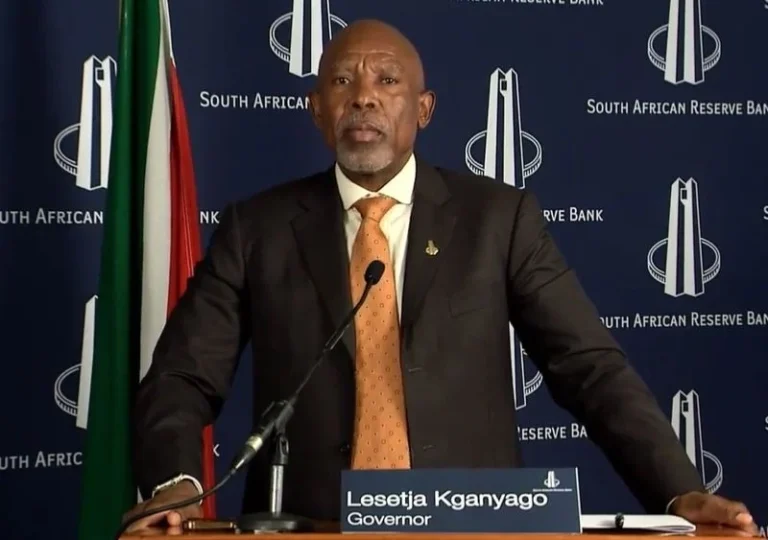
South Africa is trying to bend the ratio down without a Fund programme. The Treasury says it has run primary surpluses for three years and wants debt to stabilise in 2025/26, then fall. IMF advice is an interim target of 70% of GDP by the early 2030s, a longer-term anchor of 60%, and a legislated fiscal rule.
Mozambique is rated in debt distress. A joint IMF–World Bank assessment calls the debt path unsustainable and says a full package: fiscal adjustment, a more flexible exchange rate, tighter debt management is not yet in place. Its 2025–29 strategy aims to borrow more on concessional terms and lean on future gas revenue.
Cabo Verde is at moderate risk and has been lengthening maturities. Tunisia has refused a new IMF programme over subsidy cuts, faced a €750 million Eurobond due in July 2026, and may try to raise close to €2 billion without a Fund anchor. Gabon is still waiting on a programme as oil output weakens. Sudan remains in distress, with arrears unresolved and the war since 2023 blocking any return to debt relief.
Across the list the institutions ask for the same things: publish the full debt stock, run a primary surplus large enough for the ratio to fall, and prefer longer, cheaper debt. For Senegal and Mozambique, they want creditor treatment before new money. However, none of that closes the gap quickly.