“Farmers need to be escorted to farmlands to farm,” an Admiral representing Nigeria’s Ministry of Defence said at UN City this week. “Because of the farmer-herdsmen crisis.”
Air Vice Marshal Iyamu went further. “Water is not an aside or an add-on. It is the beginning. It is the starting point of every development we have, because it is a matter of national security and an economic survival issue that affects everything.”
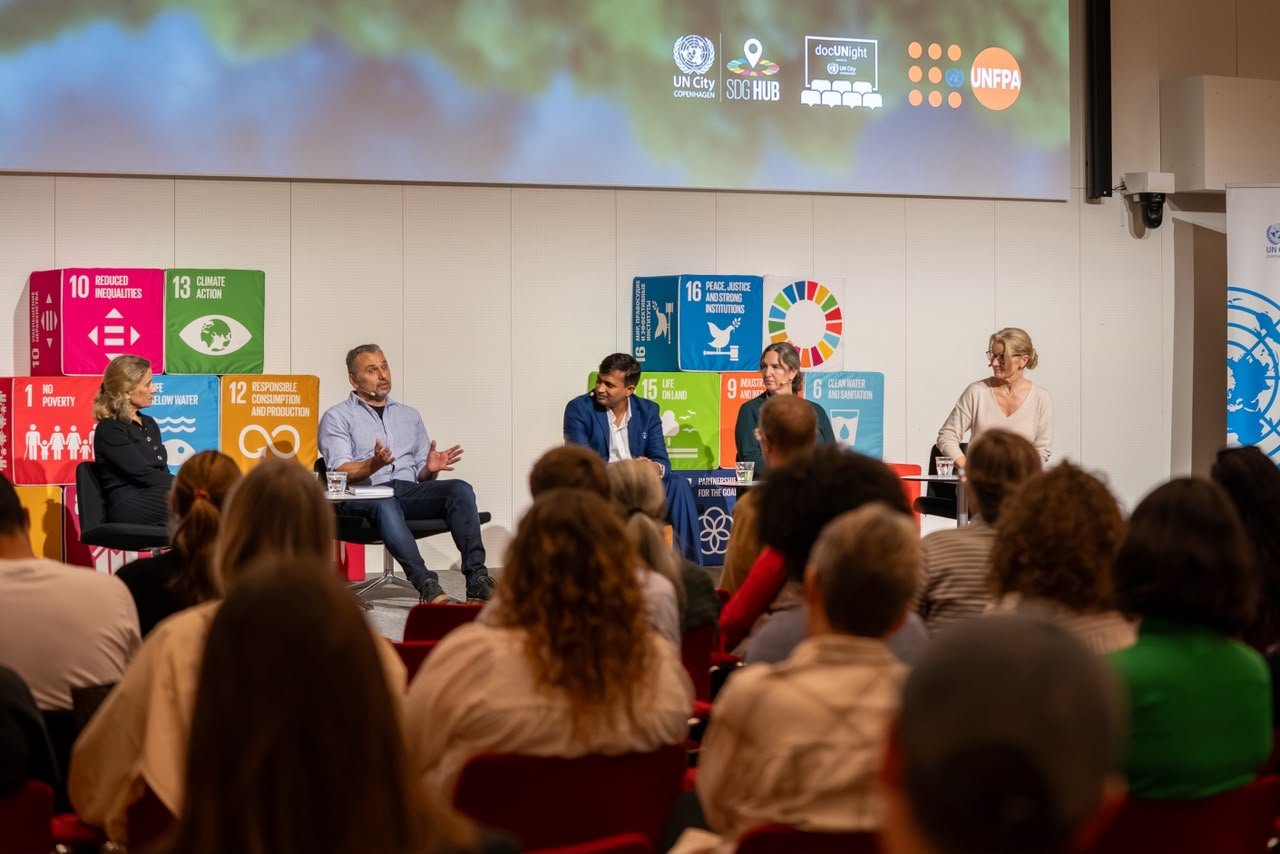
Both remarks came during Stories of a Broken Water Cycle, the exhibition and dialogue series running at UN City until 22 October.
Hosted by the UNFPA Nordic Representation Office and presented by Lokoja Dialogues, the programme has placed Nigerian community accounts of water failure in the same rooms as military representatives, ministers, development partners and private-sector voices.
Nigeria’s water situation forms the backdrop. The country has substantial freshwater resources yet ranks among the most water-stressed nations. In the north, desertification has advanced across frontline states, while in many communities daily access has fallen to levels well below basic needs.
Large areas of irrigable land remain unused. The UN has recently described the global position as “water bankrupt” rather than merely in crisis; Nigeria’s version combines abundance with severe scarcity and uneven management. Because water systems are connected, local shortfalls feed into wider problems of food production, public health, displacement and conflict, including in the Lake Chad Basin.
Founder of Lokoja Dialogue, Polly Alakija, who started the project three years ago after 37 years in Nigeria, told the opening that the work began as a test of whether art and storytelling could move anything. Communities quickly took it over. “All you have to do is listen, and the stories come,” she said.
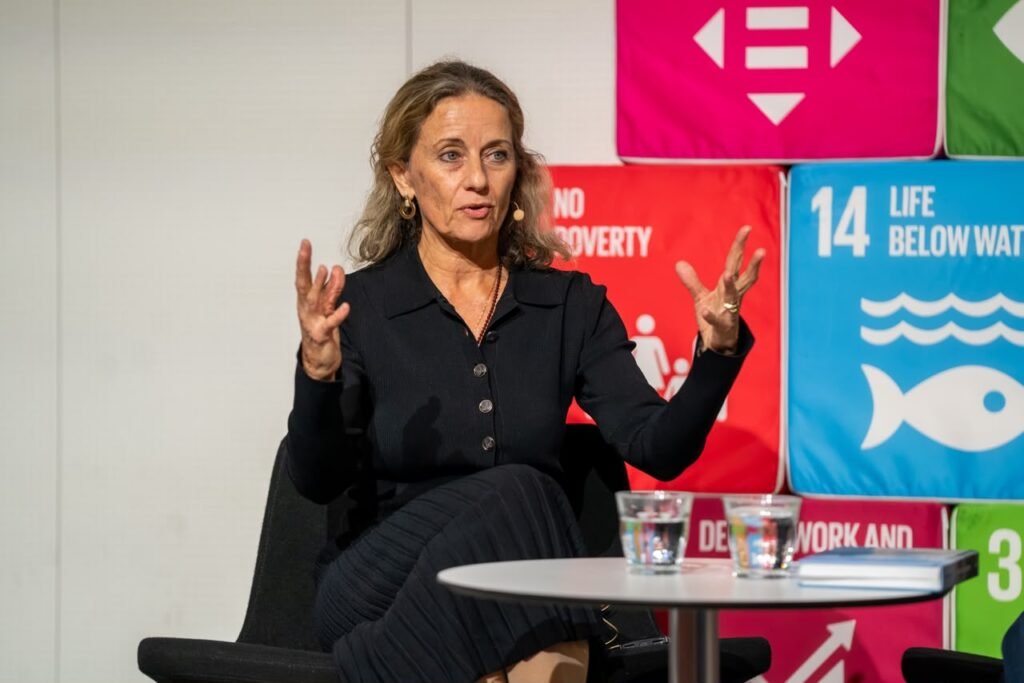
The storytelling has already drawn attention from ministers and the First Lady; Lokoja Dialogues itself launched in November 2025. Alakija pointed to the UN’s recent description of the world as “water bankrupt” and to Nigeria’s particular version of the problem: plenty of fresh water alongside severe stress.
Because systems are connected, she argued, careful management of one reserve does not protect anyone if the wider cycle is broken. The organisation’s stated aim is to move from crisis response to structured recovery and to treat water as a national strategic priority, working through the links between water, energy, food and ecosystems.
A Grundfos representative, speaking during the programme, described water as the common thread in physical, physiological and economic resilience.
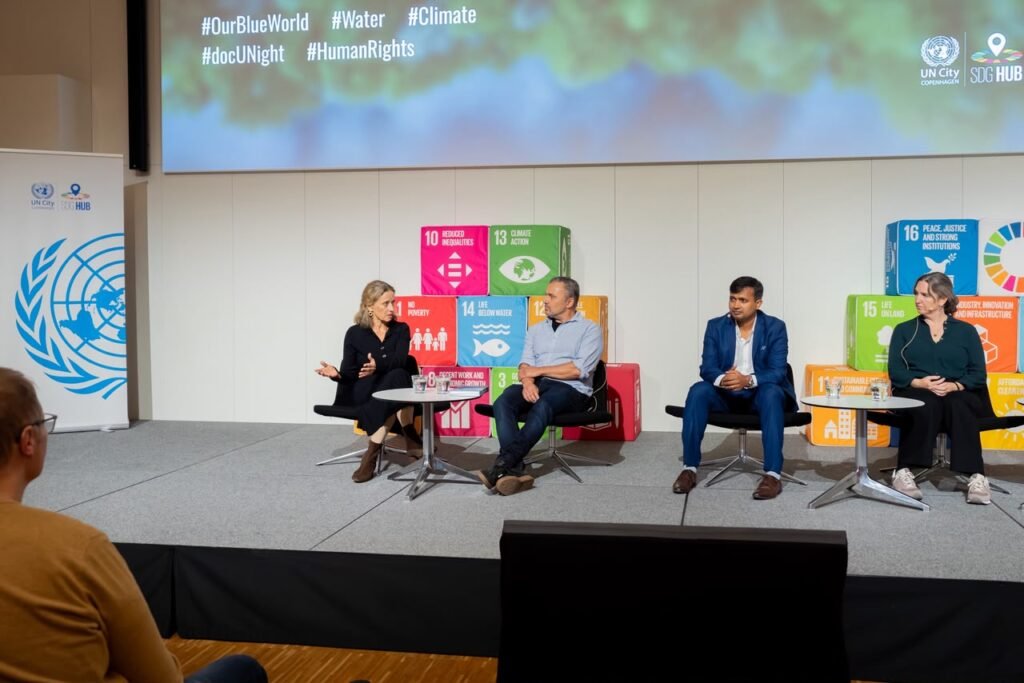
The company argued that progress requires public-sector leadership and capacity, private-sector technology and innovation, and community ownership; it said it plays all three roles. One figure given was that 35 to 40 percent of water pumped by utilities worldwide is lost before it reaches the tap, mostly through leaks.
These losses are solvable, the representative said, but not in isolation. Communities hold the know-how and the ownership; listening to them is essential. Inclusive processes that bring industry, agriculture and local people together as already tried on rivers such as the Mississippi and Colorado are the practical starting point, even if perfect solutions do not appear on day one.
The exhibition itself includes painted jerrycans, embroidered tapestries and works made from scrap, produced with communities across Nigeria. Alakija linked the UNFPA partnership to earlier work training women who had experienced trauma in embroidery and fabric skills; many of those women became reproductive-health advocates and helped make pieces now on display. This week three cohorts of reproductive-health workers are graduating in Kano State.
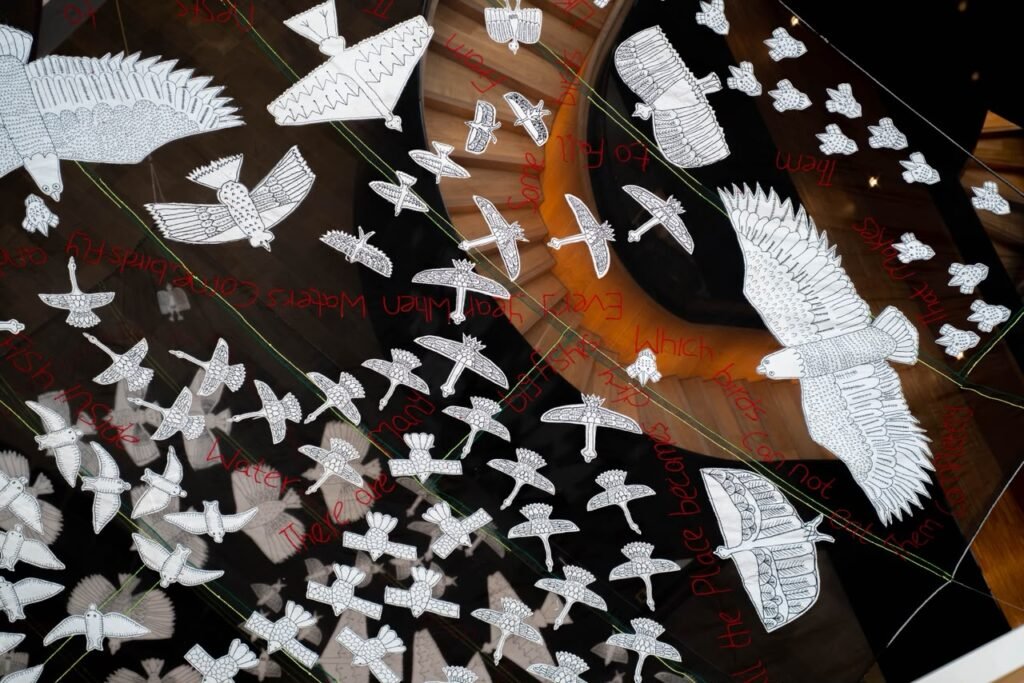
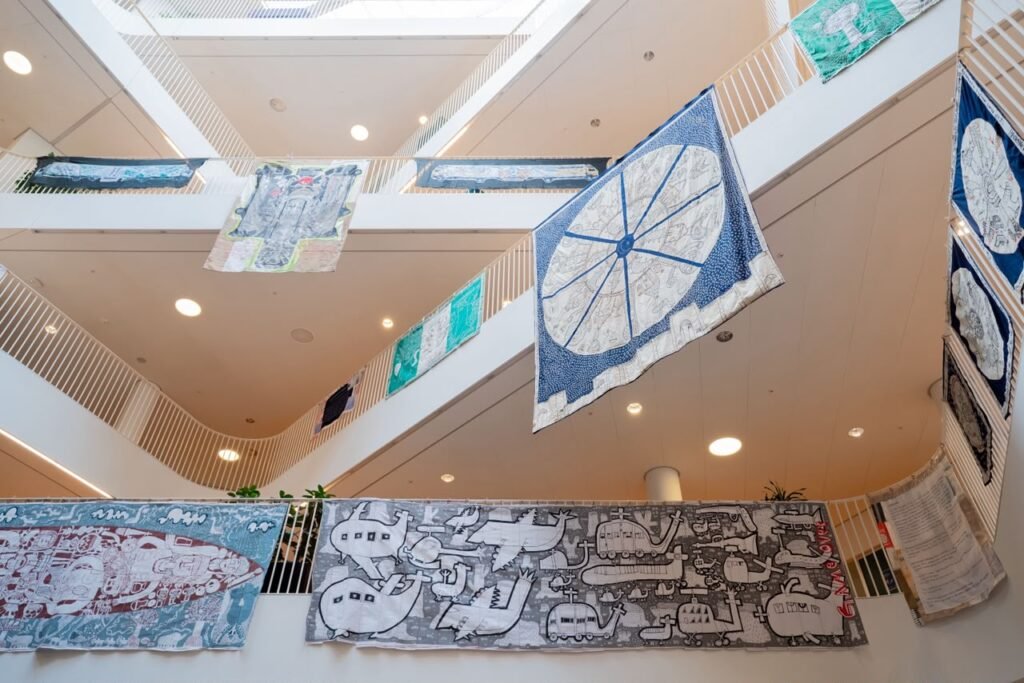
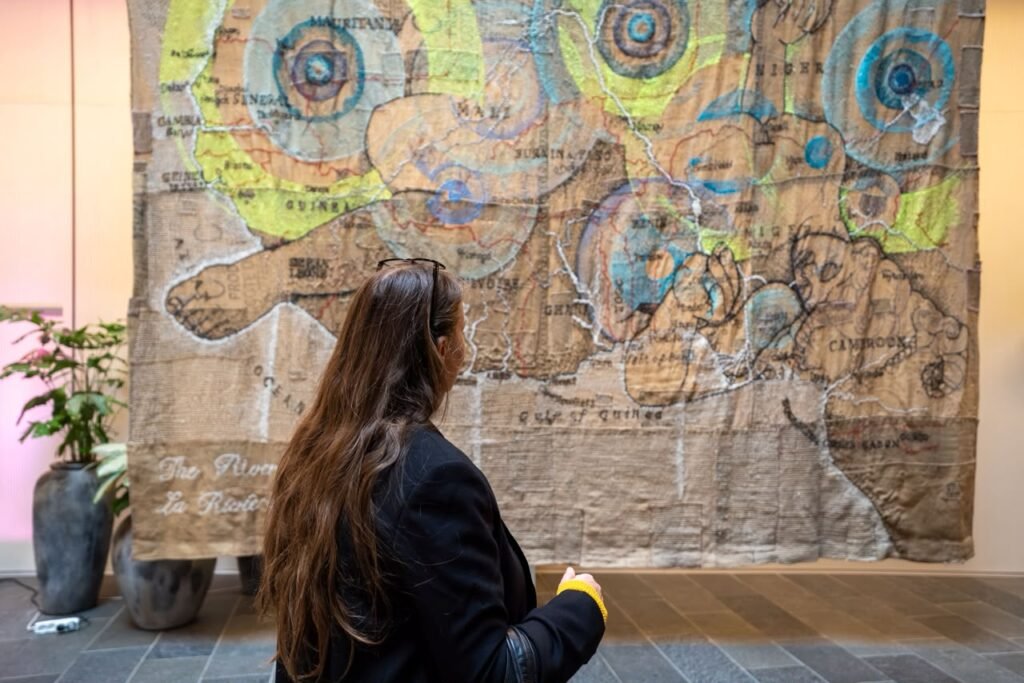
Dialogue sessions continue through 22 October at UN City, Marmorvej 51. Participants include representatives from Nigerian ministries and agencies, academic institutions and communities. The Federal Ministry of Budget and Economic Planning is listed as a collaborator; Shoreline Group is a sponsor. Access requires registration.