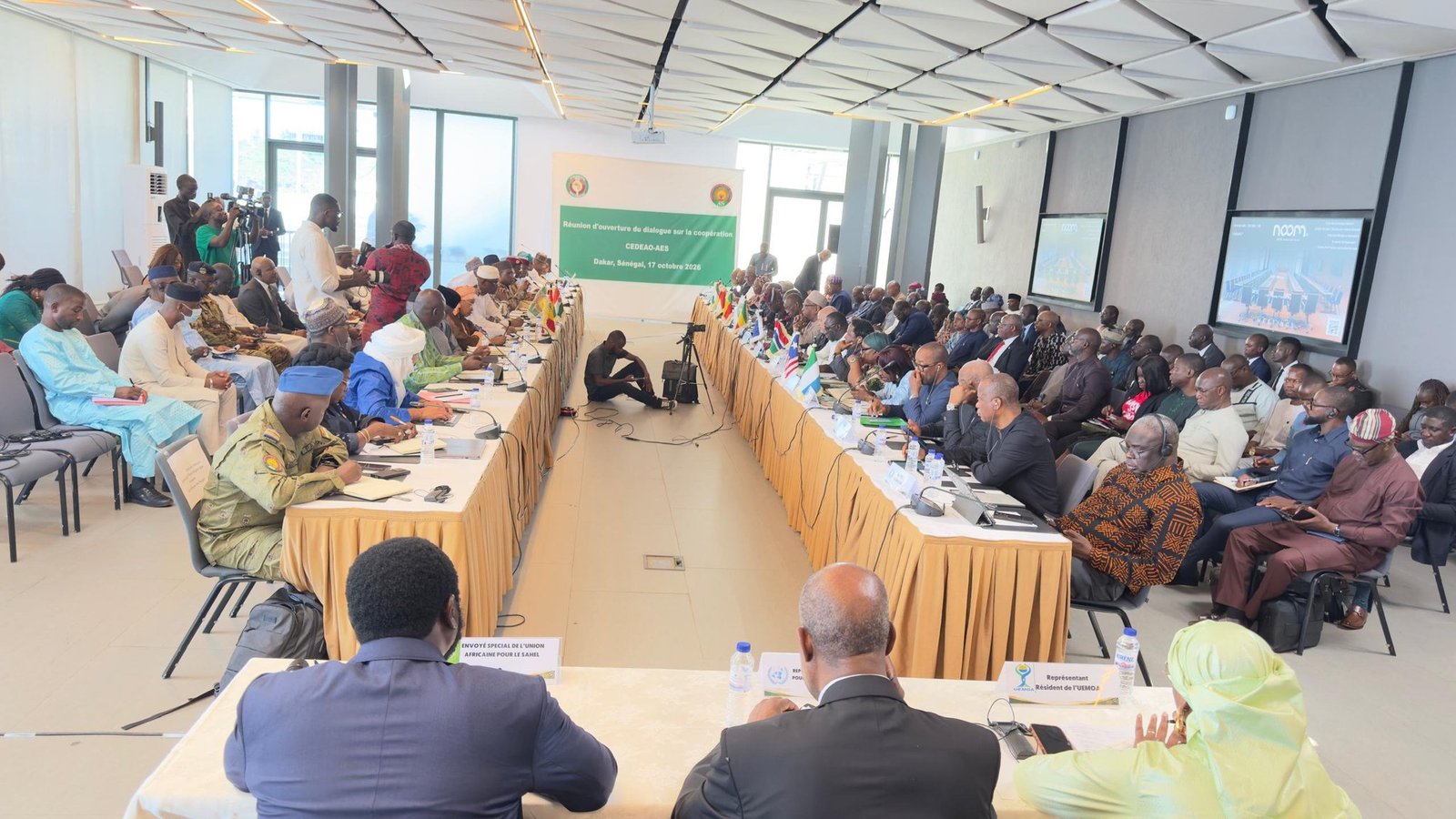
Months after Burkina Faso, Mali and Niger left ECOWAS, the two sides have opened formal talks aimed at limiting the damage to cross-border trade and security cooperation that the split has already imposed on West African communities.
The decision followed the first ministerial session of the ECOWAS-AES Dialogue on Cooperation in Dakar on 17 October 2026. Senegal’s Foreign Minister Cheikh Niang, who chairs the ECOWAS Council of Ministers, and Burkina Faso’s Foreign Minister Karamoko Jean-Marie Traoré, chair of the AES Ministerial Steering Committee, co-chaired the meeting.
In a joint communiqué, the parties said future relations should rest on “good neighbourliness, respect for sovereignty, dignity and the well-being of the populations of West Africa.” They pledged a “balanced, realistic” framework that “preserves the interests of their peoples” and tasked technical groups with preparing a formal agreement. Results will go to ministers before the next session, whose date and venue will be set through diplomatic channels.
The three AES countries left ECOWAS on 29 January 2025 after their military-led governments rejected the bloc’s sanctions and its position on their seizures of power.
The departure has raised costs and delays for traders, transporters and herders on routes linking the Sahel to coastal ports and markets. Livestock corridors, cereal trade and migrant labour flows have been among the hardest hit.
While the communiqué does not list specific topics for the working groups, earlier consultations including those in Bamako in May 2025, have highlighted free movement of people and goods, trade facilitation and related rules as priority concerns for any post-withdrawal arrangement.
Security coordination faces similar pressures. Jihadist groups operating in the Sahel routinely cross borders that also touch remaining ECOWAS members such as Benin, Côte d’Ivoire, Ghana, Senegal and Togo.
Coastal states have warned of spillover risks, while AES authorities have criticised past regional support as insufficient or conditional. The new working groups create a possible channel for talks on border management or information sharing, though the Dakar document stays focused on process.
ECOWAS, now with 12 members, continues its own integration work, including ECO currency preparations, while the AES develops its confederal structures.
Officials on both sides have described the Dakar meeting as pragmatic engagement rather than a step toward reintegration.
Whether the technical groups can deliver measures that reduce trade frictions and security gaps without forcing either side to abandon core political positions will determine the value of the process now under way.