
Africa and the New Commodity Boom
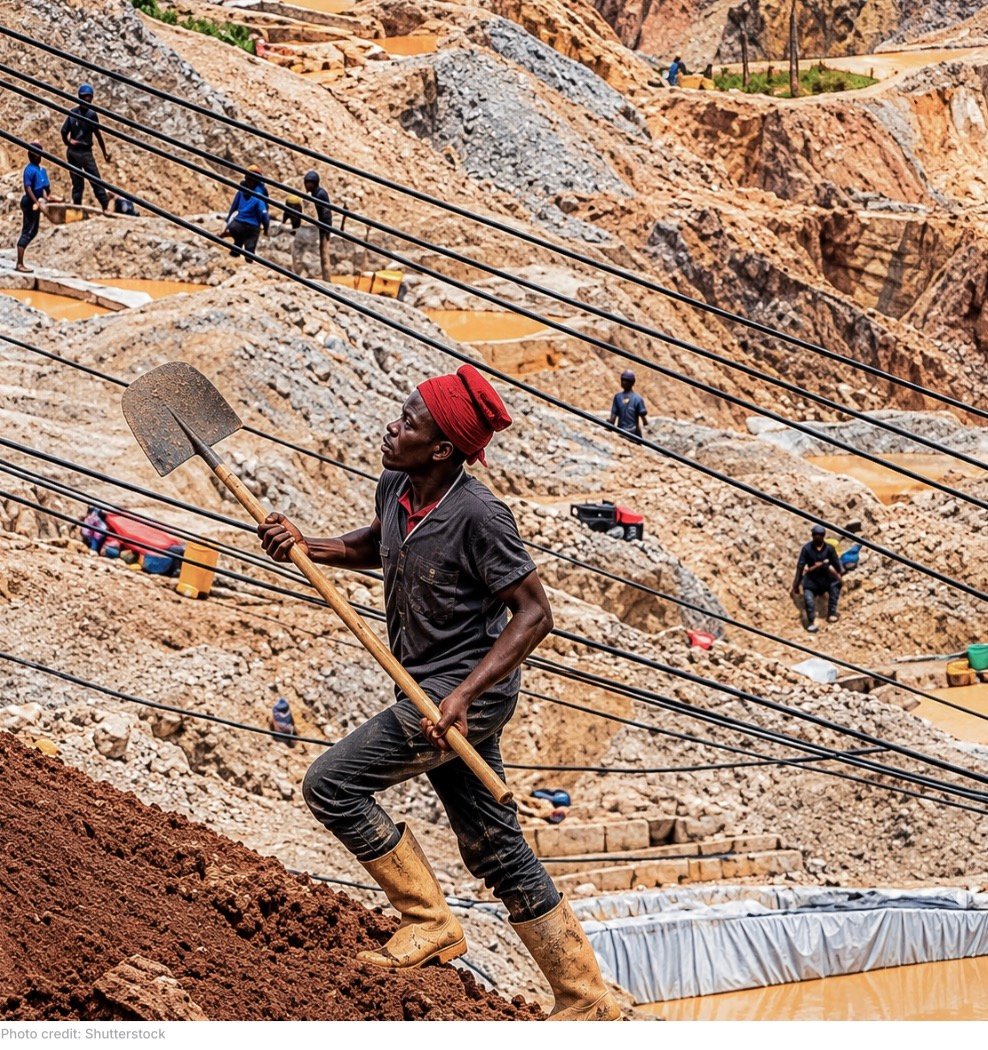
From oil and gold to copper, cocoa and critical minerals, the resurgence in global commodity prices is creating fresh opportunities for African economies. But with more than three-quarters of the continent’s merchandise exports still consisting of primary goods, the latest rally is exposing a familiar development challenge: how to convert natural-resource wealth into productive capacity, industrial competitiveness and sustainable economic growth.
Another commodity boom, another test for Africa
The global commodity market is entering another period of significant upheaval, and Africa is once again confronting a familiar economic question: how to translate its natural-resource wealth into lasting prosperity.
Oil prices have come under renewed pressure from geopolitical disruptions, gold has attracted substantial investor demand, and industrial metals are benefiting from the expansion of renewable energy, electric vehicles and digital infrastructure. Agricultural markets are also facing supply pressures from disrupted trade routes, rising production costs and increasingly unpredictable weather patterns.
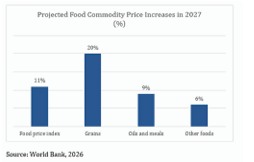
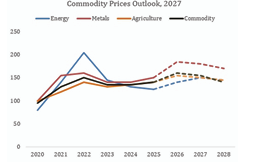
The World Bank’s October 2026 Commodity Markets Outlookprojects a 23% increase in overall commodity prices this year. Energy prices are expected to rise by 32%, metals and minerals by 25%, and precious metals by 40%. Food commodity prices are projected to increase by 10% in 2026 and another 7% in 2027. Fertiliser prices are forecast to rise by 14%.
The projections point to a broad-based market shift, although the different commodity groups are responding to different forces. The conflict in the Middle East has disrupted energy supplies and drawn down oil inventories. Investment in renewable energy, electric vehicles and data centres is increasing demand for industrial metals, while disruptions to grain shipments and the emergence of a very strong El Niño are adding pressure to food markets.
For Africa, the economic stakes are considerable. The continent possesses some of the world’s largest reserves of oil, gas, gold, copper, cobalt, bauxite and other strategic minerals. It is also a major producer of agricultural commodities, including cocoa, coffee, cotton and cashew.
The latest rally therefore presents an opportunity to strengthen export earnings, improve foreign-exchange availability, increase government revenues and attract investment into resource-producing economies. But the gains will not be evenly distributed. Higher energy, food and fertiliser prices are also increasing costs for consumers, manufacturers and import-dependent economies.
The IMF’s October 2026 outlook projects sub-Saharan African growth of 4.5% in both 2026 and 2027. However, it notes that resource-intensive economies have remained more resilient, while growth in non-resource-intensive economies is slowing. High interest burdens, low reserves in many countries and falling development assistance also leave governments with limited room to absorb further shocks.
The emerging commodity cycle is therefore not simply an opportunity for African exporters. It is a test of the continent’s ability to manage external shocks, capture resource revenues and translate them into wider economic development.
The current rally is notable for the number of commodity markets experiencing significant price movements simultaneously. It is also being driven by structural changes in the global economy.
A market being reshaped by geopolitics and industrial transformation
Energy remains central. The World Bank projects that Brent crude will average $91 per barrel in 2026, compared with $69 in 2025, before moderating to $79 in 2027. The forecast reflects the effects of the Middle East conflict on global supply, lower inventories and continuing geopolitical uncertainty. The Bank estimates that global oil supply will fall by 5.2% in 2026, the largest annual decline in more than four decades outside the 2020 pandemic recession.
The industrial metals market, however, has a longer-term structural dimension. Copper, aluminium and tin prices are benefiting from investment in electricity networks, renewable energy, electric vehicles and data centres. The World Bank expects metals and minerals prices to reach a new record in 2026, with prices rising 25% over the year.
This is particularly important for Africa because the energy transition is changing the strategic value of the continent’s mineral resources. The Democratic Republic of the Congo accounted for an estimated 73% of global mined cobalt production in 2025, according to the US Geological Survey. Cobalt is an important input in lithium-ion batteries, although battery chemistries are evolving and not all battery technologies require it.
Gold is benefiting from a different set of market dynamics. Geopolitical uncertainty and demand for safe-haven assets have supported prices, creating significant opportunities for African producers. The World Bank forecasts a 40% increase in precious metals prices in 2026, with prices expected to remain substantially above their 2015–19 average even after moderating.
Agricultural commodities add another dimension. Higher energy and fertiliser costs increase the expense of production, while climate-related supply disruptions threaten harvests in vulnerable regions. The World Bank expects food commodity prices to rise cumulatively by 18% over 2026–27.
The commodity market is thus being reshaped by a combination of geopolitical competition, energy security, industrial transformation and climate risk. For Africa, these forces are changing not only the value of its existing exports but also the strategic importance of its resource base.
The beneficiaries: oil, gold and critical minerals
The immediate beneficiaries of the rally are countries with substantial exposure to commodities experiencing the strongest price increases. But the extent of the gains depends on production volumes, export capacity, fiscal arrangements and the ability of governments to capture resource revenues.
Nigeria provides a useful example of the relationship between production and market prices. The Nigerian Upstream Petroleum Regulatory Commission reported average crude oil production of 1.51 million barrels per day in October 2026, excluding condensates. This represented 101% of the country’s OPEC crude production quota of 1.5 million barrels per day and marked the sixth consecutive month Nigeria had met its quota. Including condensates, total production averaged approximately 1.69 million barrels per day.
The improvement in production is significant because higher international prices are more valuable when accompanied by increased output. Nigeria’s oil sector has struggled for years with underinvestment, theft, pipeline disruptions and operational difficulties. The latest production performance indicates improved reliability, although October output was still 1.7% lower than September.
The IMF’s June 2026 assessment projected Nigerian crude production at 1.71 million barrels per day for the year, compared with 1.64 million in 2025. It also projected oil and gas revenues to rise from 3.1% of GDP in 2025 to 3.8% in 2026.
For Angola, the importance of oil is even more pronounced. The World Bank estimates that oil accounts for approximately 95% of exports, 60% of government tax revenues and 20% of GDP. The country’s exposure to international oil prices is therefore substantial. Yet the same dependence has contributed to volatility: despite its resource wealth, Angola’s real per capita income in 2025 remained 31% below its 2014 level.
Gold provides perhaps the clearest recent illustration of how commodity prices can transform a country’s external accounts. Ghana recorded gold export earnings of $20.98 billion in 2025, compared with $10.31 billion in 2024. The increase reflected both higher prices and greater production: export volumes rose by 35.7% to 6.17 million fine ounces, while the average realisedprice increased by 49.9% to $3,400.35 per ounce.
Gold was by far Ghana’s largest export earner in 2025. The Bank of Ghana reported total merchandise export receipts of $31.11 billion, compared with $19.16 billion in 2024. Cocoa generated $3.8 billion, while oil exports contributed $2.6 billion. Ghana’s merchandise trade surplus reached approximately $13.66 billion.
These figures demonstrate the importance of the gold sector to Ghana’s external position. They also show why the current rally matters beyond mining-company profits: increased export receipts can strengthen foreign-exchange availability, support reserve accumulation and improve the country’s capacity to meet external obligations.
The critical-minerals opportunity is more strategic. The DRC’s dominance in cobalt production and Zambia’s position as a major copper producer give both countries a significant role in supply chains associated with electrification and industrial transformation. The USGS estimates that Zambia produced approximately 823,000 tonnes of copper in 2024, combining mine concentrates and solvent-extraction output.
The opportunity, however, extends beyond extraction. The DRC and Zambia have sought to develop a regional battery and electric-vehicle value chain, including through cooperation on battery precursor production. Their challenge is to translate mineral endowments into processing, manufacturing, technology and employment.
Guinea’s bauxite and iron ore resources provide another example. The development of the Simandou iron ore project, together with associated railway and port infrastructure, is intended to establish the country as a major supplier to global steel markets. The project also raises a broader development question: whether large-scale extraction can generate the domestic infrastructure, industrial linkages and local economic activity needed to justify its scale.
The other side: higher prices and the import burden
The gains for commodity exporters are only one side of the story. For African economies that import substantial quantities of fuel, food, fertiliser and manufactured goods, higher commodity prices create additional pressures on external accounts and household budgets.
The World Bank’s projection of a 14% increase in fertiliserprices in 2026 is particularly important for African agriculture. Higher fertiliser costs can reduce farmers’ use of inputs, increase production costs and eventually feed into food prices. The projected 18% cumulative increase in food commodity prices over 2026–27 adds to these concerns.
The effects are not confined to net food importers. Even countries that produce significant quantities of agricultural commodities may experience higher domestic food prices when export opportunities, transport costs and input prices change.
The IMF’s assessment of Nigeria illustrates this tension. It expects higher global fuel, food and fertiliser prices to improve exports and fiscal revenues, but also warns that they will generate inflationary pressures, aggravating poverty and food insecurity. Its June 2026 report estimated that 63% of Nigerians were living below the national poverty line and that 27 million people faced food insecurity in 2026.
This is the paradox of the commodity boom: higher prices can improve a country’s export earnings while simultaneously worsening the cost of living for its population.
For governments, the policy challenge is to capture the additional revenue without allowing higher international prices to undermine household purchasing power, business competitiveness and macroeconomic stability.
El Niño and the growing climate risk to commodity supply
The agricultural outlook is further complicated by the current El Niño episode. Its effects are particularly important for Southern Africa, where rainfall deficits and above-average temperatures threaten crop and livestock production during the 2026–27 agricultural season.
Famine Early Warning System Network (FEWS NET’s) October 2026 assessment describes the El Niño event as strong and reports an 83% or greater probability, according to National Oceanic and Atmospheric Administration (NOAA’s) Climate Prediction Center, that a strong to very strong episode will persist through January–March 2027. It identifies high food-security concerns for parts of Southern Africa, including Zimbabwe, Mozambique, Malawi, Zambia, Angola and Madagascar.
The implications extend beyond agricultural output. Drought can reduce pasture and water availability, damage crop yields and affect hydropower generation. In countries dependent on rainfall and hydroelectricity, these effects can disrupt food supply, electricity availability and industrial production.
The risks are not uniform across the continent. Parts of the Greater Horn of Africa face increased flood risks, while West Africa’s exposure is more localised. FEWS NET’s assessment of the 2026 season identifies rainfall deficits in parts of Chad, Niger, Mali and northeastern Nigeria, rather than a uniform drought across the region.
The climate dimension reinforces the vulnerability of African commodity producers to supply shocks. It also shows why agricultural resilience, irrigation, storage and climate information systems should be treated as core economic infrastructure.
Can Africa capture the growing value of its exports for development?
The most important question raised by the current commodity rally is whether Africa is better positioned to capture the value of its resources than it was during previous periods of high prices.
The historical record is sobering. The commodity boom of 2004–14 generated substantial additional revenues for resource-rich African countries. According to a World Bank retrospective, natural-resource government revenues in these countries increased by an average of $1.1 billion compared with the 1998–2003 period, while economic growth increased by almost one percentage point.
But the wider development gains were limited. Once the contribution of the expanding resource sector was excluded, the economic performance of resource-rich countries was not significantly better than that of the rest of Africa. Many governments failed to save and invest sufficient amounts of the additional revenues. When prices declined after 2014, several resource-dependent economies experienced fiscal deterioration, slower growth and debt difficulties.
The structural problem remains visible in the continent’s trade profile.
UNCTAD’s October 2026 data show that primary goods accounted for 76.7% of Africa’s merchandise exports in 2025. Fuels alone represented 29.5 percentage points of that total. Manufactured goods accounted for only 19.5% of exports, while manufactured products represented 75% of imports. Africa’s overall merchandise trade deficit was equivalent to 14.1% of export value.
These figures reveal the imbalance in Africa’s position in global trade. The continent exports a large proportion of its natural resources and imports a substantial share of the manufactured products, machinery and industrial goods required to develop its economies.
The manufacturing data tell a similar story. The African Development Bank’s 2025 Industrialisation Index reports that manufacturing value added increased from $285 billion in 2020 to $351 billion in 2025. Yet Africa still accounted for less than 2% of global manufacturing output and just 1.4% of global manufacturing exports. Manufacturing value added per capita also remained below its pre-2014 level.
The problem, therefore, is not the absence of resources or even the absence of growth in manufacturing value added. It is the limited scale of industrial development relative to the size of the continent’s resource base and its population.
Turning the windfall into industrial transformation
The current commodity cycle offers an opportunity to address this structural imbalance, but it will require a deliberate shift in how African governments manage natural-resource revenues and industrial policy.
The first priority is fiscal management. Commodity windfalls should strengthen public finances, build reserves and reduce vulnerability to future price reversals. The IMF’s October 2026 regional outlook specifically advises governments to save temporary commodity windfalls, maintain fiscal adjustment and protect productive investment.
The second is value addition. The DRC and Zambia need to move further into mineral processing and the production of intermediate goods. Nigeria’s energy sector needs to develop stronger links between crude production, refining, petrochemicals and industrial activity. Ghana and Côte d’Ivoire need to expand cocoa processing and retain a greater share of value from the global chocolate industry.
The third is infrastructure. Reliable electricity, railways, ports, roads and logistics systems are essential to competitive manufacturing. The development of the Lobito Corridor, linking mineral-producing areas of the DRC and Zambia to Angola’s Atlantic coast, illustrates the importance of regional infrastructure to mineral supply chains.
The fourth is regional integration. The African Continental Free Trade Area provides a framework for developing larger markets and cross-border production networks. This is particularly important for industries such as mineral processing, fertiliser, agricultural manufacturing and automotive components, where national markets alone may not provide sufficient scale.
Finally, agricultural investment must become a central part of the commodity strategy. Irrigation, mechanisation, storage, improved seeds and climate-resilient farming systems are necessary to reduce exposure to weather shocks and improve the reliability of agricultural supply.
Another boom, or a turning point?
The current outlook is not without uncertainty. The World Bank projects an overall 7% decline in commodity prices in 2027, suggesting that the present rally should not automatically be interpreted as the beginning of another prolonged supercycle. Its adverse scenario, however, warns that an escalation of geopolitical tensions, further energy disruptions and a very strong El Niño could push Brent crude to an average of $105 per barrel in 2027 and food prices 12% above the baseline forecast.
For Africa, this uncertainty makes the quality of economic management more important than the price rally itself. Countries that depend heavily on a narrow range of commodity exports remain vulnerable to changes in global demand, supply and prices. Those that use favourable market conditions to strengthen productive capacity, diversify exports and develop domestic industries will be better positioned to withstand the next downturn.
The continent’s resource endowment is a considerable strategic advantage at a time when the global economy is seeking secure supplies of energy, food and critical minerals. But possessing the resources is not the same as controlling the industries, technologies and value chains built around them.
Africa has experienced commodity booms before. It has also experienced the painful reversals that followed. The new rally offers another opportunity to change that history. Whether it becomes a turning point will depend less on how far commodity prices rise than on what African countries do with the revenues, investment and strategic leverage the current market environment provides.