
Europe’s Migration Problem, Africa’s Burden
As European governments pursue agreements to transfer rejected asylum seekers and other migrants to countries outside the continent, a new debate is emerging over Africa’s sovereignty, human rights obligations and the terms on which it engages with Europe. This follows the announcement in Vienna last week by a quintet of European countries – Austria, Denmark, Germany, Greece and the Netherlands – to establish a “return hub” in Rwanda for rejected asylum seekers from their countries.
Under the new plan, the cooperation with Rwanda includes the African nation accepting single adult men whose asylum claims have been rejected and who cannot be returned to their countries of origin. As with the failed experiment by the UK in 2023, the European countries will cover the costs of transportation, housing and other associated expenses. For Rwanda, this represents an opportunity to expand foreign exchange receipts.
Implicit in this arrangement is the belief among European governments that this approach will serve as one of the strongest deterrents to present and future asylum applications. By transferring those who have exhausted their legal options but cannot be deported for a variety of reasons, Rwanda may not be an attractive destination for them for three reasons. First, they may be confined to designated accommodation. Second, they may not have the opportunity to work. Third, they will be separated from the proximity and support of family members.
Looking ahead, the prospect of being transported to Rwanda, or having their applications processed in Africa, introduces a greater degree of uncertainty for prospective asylum seekers. This, too, is intended to deter future applicants.
Refugee and Asylum Numbers are Falling
In its latest report of June 2026, the European Union Agency for Asylum (EUAA) says the number of applications for international protection in EU+ countries decreased to 0.8 million, following progress towards peace in countries such as Syria and the region’s cooperation with partner countries. The report also highlighted that the region continues to provide temporary protection to an estimated 4.5 million displaced persons from Ukraine.
The plan thus comes at a time when asylum applications in Europe are declining, although migration remains a very serious political issue.
European Politics and the Rule of Law
Over the past 15 years, immigration has become one of the major forces reshaping elections, coalition negotiations and government formation. For instance, there have been changes in government in Poland (2015), Austria (2016–17), Belgium (2018), Sweden (2022), Italy (2022), Finland (2023), the Netherlands (2023) and Germany (2025), against the backdrop of intense immigration debates during their respective elections and political transitions.
Europe is also motivated to send asylum seekers to Africa because it is often extremely difficult to return them to their home countries, even after their applications have been rejected. Returns are affected by both legal and non-legal developments, including irregular or unavailable travel documents, a lack of cooperation from countries of origin and, perhaps, a collapse of incentives for migrants to return home.
Then there is the economics. The average cost of maintaining an asylum seeker in Europe is about $14,000 a year, including reception costs, public service costs and integration costs. These vary according to the country, the duration of stay, the demographic profile and sex of the asylum seeker, among other factors.
Rwanda and Africa’s Dilemma
While African migration is perhaps the most scrutinised and politically contested, including on the continent, it is not the highest. According to Eurostat, the top five countries of origin of asylum seekers in Europe in 2025 were Venezuela (13.4%), Afghanistan (9.5%), Syria (6%), Bangladesh (5.3%) and Türkiye (3.6%). There were approximately 669,400 first-time asylum applicants, with Venezuela overtaking Syria and ending the latter’s position at the top since 2013.
Also last year, Eurostat recorded 508,130 negative first-instance decisions, representing 60.9% of all first-instance decisions. For those ordered to leave – the broader category most relevant to understanding the group of people the five European countries are considering for the Rwanda arrangement – 491,950 people were issued orders to leave, while 27.5% were returned to a non-EU country. This percentage does not necessarily mean that the final decisions on all those returned were reached in 2025. The leading countries of origin of people ordered to leave were Algeria, Morocco, Türkiye, Syria and India.
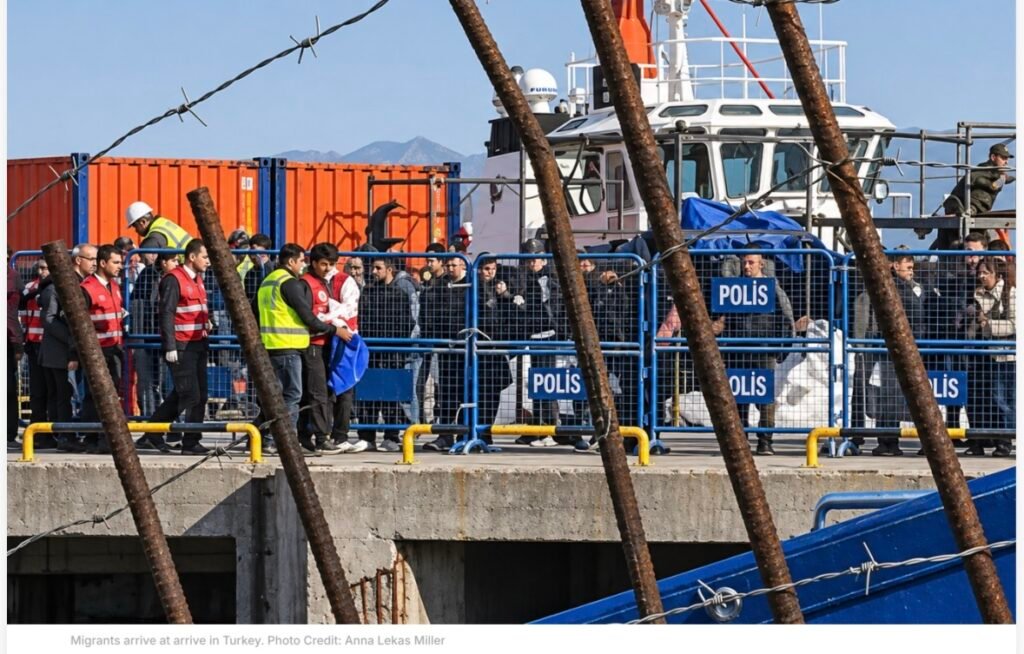
The scale and scope of those potentially being considered for transfer to Rwanda are therefore not clear. First, only these five countries have indicated that they have reached a partnership arrangement with Rwanda, not the whole of Europe or even the wider EU+ region. Second, the number of people ordered to leave in 2025 is not necessarily the number of people who can legally or practically be deported. Third, under the proposed arrangement, the initial plan is to transfer single adult men.
For centuries, Europe exercised considerable influence over African political and economic systems, including the movement of people, labour and resources. Today, African governments are being asked to assume greater responsibility for managing a migration challenge generated by a complex combination of European labour-market demands, conflicts, global inequality, instability and migration pressures.
While this arrangement raises many questions around sovereignty, human rights, negotiating power and capacity, perhaps the most important concerns the uncertain future social dynamics of such an arrangement. What will the future of thousands of young people from different cultural backgrounds look like in Rwanda? What will their lives be like without jobs and meaningful engagement? Is this arrangement not tantamount to a prison sentence?
While migration is currently a major political problem for Europe, it would be simplistic for Rwanda, or any other African country interested in such an arrangement to enhance its foreign exchange receipts, to assume that this does not carry the seeds of future social, economic and security instability. At what point does migration cooperation become the transfer of Europe’s domestic political and humanitarian responsibilities to African countries?