
NGX’s Nairobi Bet and the Race to Connect Africa’s Capital Markets
Despite years of regional integration efforts, Africa’s stock exchanges remain divided by currencies, regulations and settlement systems. NGX Group’s acquisition of a 10 per cent stake in the Nairobi Securities Exchange signals a shift from policy-driven cooperation to direct commercial investment in the integration of African capital markets.
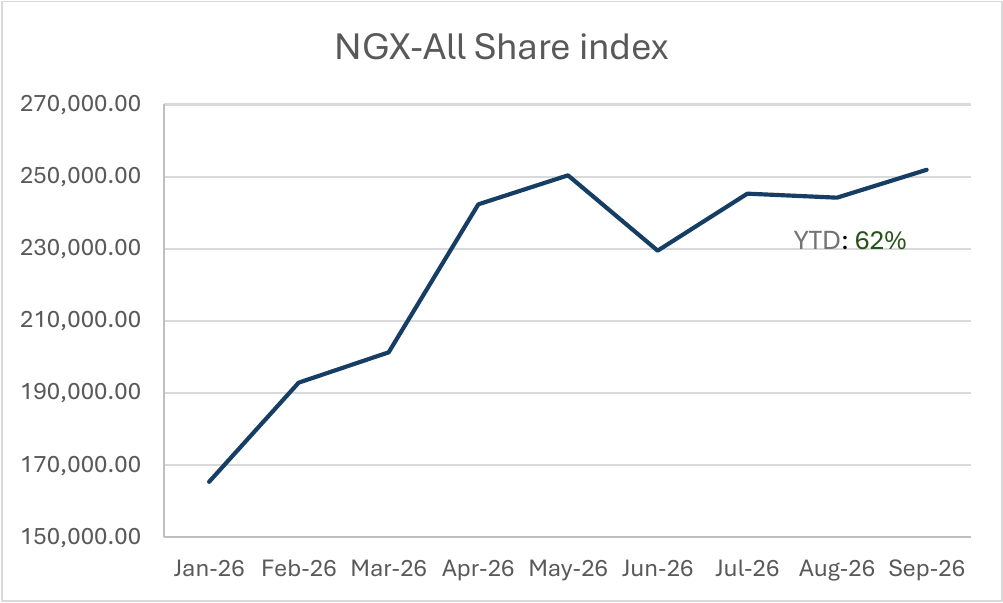
The investment comes as NGX records strong growth at home, with revenue rising 79.8 per cent to ₦27.3 billion in the first nine months of 2026. Following its earlier investment in Ethiopia, the Nairobi deal strengthens NGX’s regional ambitions and creates a strategic partnership between two of Africa’s established capital markets. With Nigeria’s equity market roughly five times the size of Kenya’s, the partnership brings together different market scales, investor bases and regional strengths, creating opportunities for deeper commercial and institutional ties.
Comparison of African Stock Exchanges, Finance & Operational metrics
| Metric | Nigerian Exchange (NGX) | Nairobi Securities Exchange (NSE) |
| Year established | 1960 | 1954 |
| Equity market capitalisation (30 June) | $106.44bn | $29.05bn |
| Equity turnover (H1 2026) | $6.96bn | $2.49bn |
| Exchange operator profit after tax (H1 2026) | $7.51m | $5.69m |
| NGX stake in NSE | 10.09% | — |
The Strategy: Why NGX Is Looking Beyond Lagos
NGX Group’s regional expansion comes as its domestic market records strong growth, driven largely by local investors. In the first five months of 2026, equity transactions in Nigeria surged by 131 per cent to ₦7.89 trillion, with domestic investors accounting for 87.7 per cent of activity, up from 70.8 per cent a year earlier. Pension funds, institutions and retail investors are playing a growing role in sustaining market activity, while foreign participation remains relatively subdued.
NGX’s financial performance has grown alongside this activity. Revenue increased by 79.8 per cent in the first nine months of 2026, while profit before tax rose by 83.3 per cent. Yet transaction fees accounted for approximately 76 per cent of revenue, leaving the group closely tied to trading activity in its domestic market. Ten listed companies also account for 73.3 per cent of Nigeria’s total equity market capitalisation, reflecting the concentration of value among a relatively small group of firms. Expanding into other markets offers NGX an opportunity.
Following its 2024 investment in the Ethiopian Securities Exchange, the Nairobi acquisition extends NGX’s presence into an established East African financial hub. The partnership creates opportunities for both exchanges to share technology, attract cross-border listings and connect investors to new pools of capital.
As NGX Chairman Umaru Kwairanga puts it, the ambition is to move “from aspiration to architecture.”The commercial test will be whether this investment delivers new listings, stronger market links and sustained cross-border trading.
Why Nairobi, and Why Now?
For NGX, the Nairobi investment offers more than entry into another African exchange. It provides a foothold in East Africa and an opportunity to build commercial links with a market whose investor base, listed companies and regional reach complement Nigeria’s.
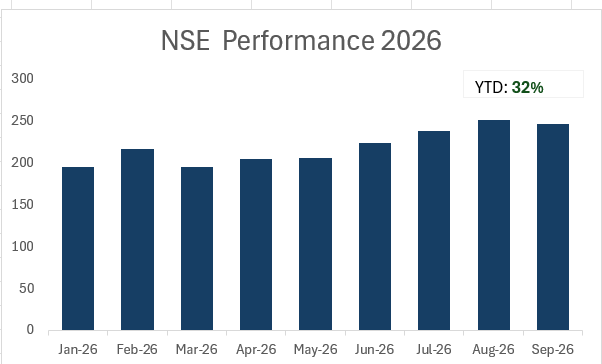
Kenya’s equity market has staged a strong recovery. Turnover on the Nairobi Securities Exchange (NSE) reached $2.48 billion in the first half of 2026, compared with $431 million a year earlier. However, a $1.57 billion Safaricom block trade accounted for much of the increase. Excluding the transaction, turnover still grew by 111 per cent. The Central Bank of Kenya reported a turnover-to-market-capitalisation ratio of 3.1 per cent excluding Safaricom, while five stocks accounted for 87.6 per cent of equity trading.
Recent activity in the primary market, including the Kenya Pipeline Company IPO and Quickmart’s oversubscribed November offering, points to renewed investor interest. The African Exchanges Linkage Project also allows brokers to route orders across participating markets, providing an existing framework for cross-border trading. NGX’s investment adds a commercial partnership to these efforts and could strengthen links between the two exchanges.
NGX’s investment comes at a time when these initiatives are gaining momentum. Its commercial value will depend on whether the two exchanges can convert existing connections into more cross-border listings, investor participation and trading activity. A 10 per cent stake establishes the relationship; delivering deeper market integration is the bigger challenge.
The Roadblocks to a Connected African Market
Currency remains a major obstacle to cross-border investment. Nigerian investors buying Kenyan equities must navigate naira-to-shilling conversion, foreign-exchange availability and the repatriation of proceeds. Kenyan investors face similar challenges in Nigeria. While the Pan-African Payment and Settlement System (PAPSS) could ease eligible cross-border payments, it does not provide shared securities trading and settlement infrastructure.
The two markets also operate separate post-trade systems. Nigeria’s Central Securities Clearing System (CSCS) and Kenya’s Central Depository and Settlement Corporation (CDSC) have distinct arrangements for securities custody, clearing and settlement. Closer coordination will be necessary to make cross-border transactions more seamless.
Regulatory differences in listing requirements, disclosure, taxation and investor protection add to the complexity. Addressing these gaps will require cooperation between regulators, not just the exchanges.
Over the next two to three years, the partnership’s progress should be reflected in higher cross-border trading volumes, new listings and stronger participation by institutional investors across both markets.