
Africa Air Connection are Growing, but still Costly
| African airlines added 108 new intra-African routes within three years, while AFRAA’s regional connectivity score increased by 58.6 per cent by 2025. The growth has continued into 2026, with intra-African seat capacity rising by 10.5 per cent year-on-year in August. Yet, the cost of flying across the continent remains high. According to the International Air Transport Association (IATA), African airlines face fuel costs estimated to be 17 per cent above the global average, while taxes and charges are 12-15 per cent higher. While Europe and Southeast Asia have used more integrated aviation markets to encourage competition, lower fares and strengthen regional connections, Africa is yet to achieve the same level of integration. Fragmented regulations and limited competition continue to hold the market back. The task now is to turn the growth in routes and passenger capacity into more affordable travel, making it easier for people and businesses to move across the continent and take part in its growing trade and tourism markets. |
A Decade of Growth, But Still Too Expensive
Africa’s aviation sector has expanded over the past decade, with airlines increasing capacity and responding to rising demand. AFRAA reported that total seat capacity rose by 8.8 per cent year-on-year in August 2026, while intra-African capacity grew by 10.5 per cent. Meanwhile, IATA recorded 7.8 per cent traffic growth among African carriers in 2025 and projected a further 6.0 per cent increase in 2026, above the global average of 4.9 per cent.
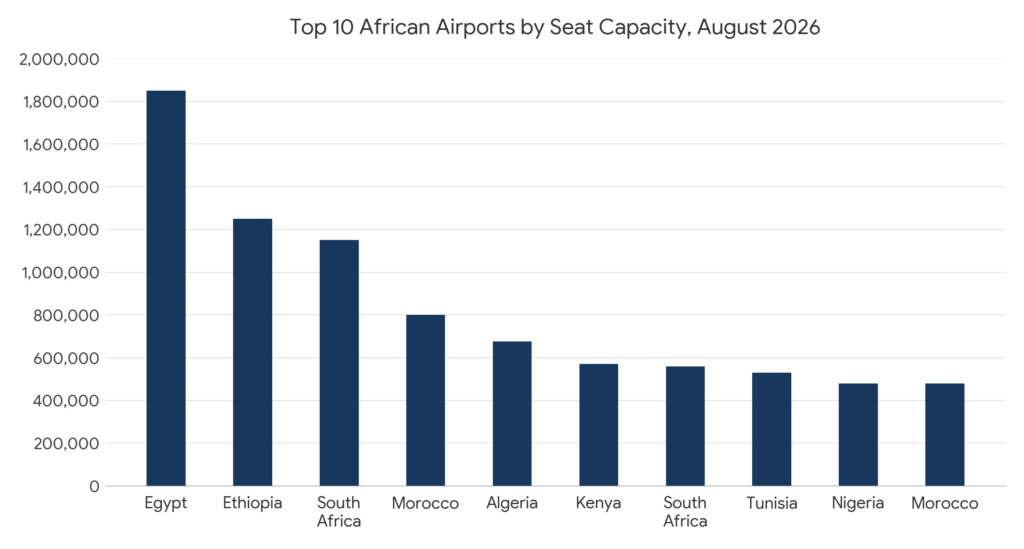
Data Source: OAG, African Aviation report
Despite this growth, more flights have not necessarily translated into cheaper tickets. Operating in Africa remains expensive. IATA estimates that fuel costs for African airlines are 17 per cent above the global average, while taxes and charges are 12-15 per cent higher. Air navigation, maintenance, insurance and aircraft financing costs add further pressure.
Low passenger volumes on some regional routes also make it difficult for airlines to spread operating costs, while limited competition leaves travellers with fewer affordable choices. These pressures help explain why expanding route networks have yet to make regional air travel more accessible.
Missing Connections Mean Missing Business
High fares are only half the obstacle; many African cities still lack nonstop links altogether. IATA estimates that just 19 per cent of intra-African routes offer direct flights, while 81% are indirect routes. For businesses, detours through distant hubs inflate travel budgets and slow cross-border deals.
Tourism also faces constraints. Africa welcomed 73.9 million international tourist arrivals in 2024, generating US$42.6 billion in receipts, according to UN Tourism. However, visitors hoping to explore several African countries may encounter limited flight options, lengthy connections and visa requirements. More direct routes could make multi-country travel easier and allow tourism spending to reach more hotels, restaurants, tour operators and local businesses.
Policy Bottlenecks Keep the Skies Divided
Regulation remains a major obstacle to stronger regional connectivity. In 2018, the African Union launched the Single African Air Transport Market (SAATM) under Agenda 2063 to liberalise air transport, improve market access and encourage competition among African airlines.
Implementation has been slow. By 2025, only eight of the 38 signatory countries had implemented concrete measures, according to AFRAA. Restrictive bilateral agreements, differences in national regulations and concerns about competition continue to limit progress. Governments also face the challenge of balancing the interests of national carriers with the need to open their markets to other airlines.
Visa restrictions add another layer of difficulty. The African Union’s 2024 Visa Openness Index found that 28 per cent of intra-African travel scenarios were visa-free, while 25 per cent allowed visas on arrival. The remaining 47 per cent required travellers to obtain visas before departure.
There have also been efforts to reduce the cost of flying. ECOWAS directed member states to abolish air transport taxes and reduce selected passenger and security charges by 25 per cent from 1 January 2026. Whether passengers benefit will depend on how consistently the directive is implemented and whether airlines pass the savings on through lower fares.
Lessons from Europe and Southeast Asia
Europe’s Single Aviation Market allows eligible airlines to operate across EU member states with fewer restrictions on market access. This has created room for low-cost carriers such as Ryanair and easyJet to expand their networks and compete on price.
Southeast Asia has also made progress in liberalising regional air travel. Airlines such as AirAsia and Scoot have expanded connections between major cities, giving travellers more options across the region.
Both regions demonstrate how greater market access and competition can support regional air travel. Africa has taken steps in the same direction through SAATM, but the slow pace of implementation continues to limit the benefits.
Africa’s aviation network will also shape how easily businesses can take advantage of the African Continental Free Trade Area (AfCFTA). As countries work to increase trade across borders, businesses need reliable and affordable connections to reach new markets, meet partners and build commercial relationships. Without better air links, the movement of people that supports trade and investment will remain difficult.
Making Connectivity an Economic Priority
For Africa, the value of a new flight route goes beyond the number of passengers it carries. It can determine whether a business can reach a new market, whether a tourist can visit more than one country and whether companies can build commercial relationships across borders.
The continent has made progress in expanding its aviation network. The next step is to make those connections work for more people and businesses. Africa may be adding more routes, but its economic integration will depend on whether people can afford to use them.