

By: ThinkBusiness Africa
Nigeria’s headline inflation rate continued its downward trajectory, easing to 14.45% on a year-on-year (YoY) basis in November 2025, extending its eighth consecutive month of decline. According to the latest report released by the National Bureau of Statistics (NBS) on Monday.
The figure marks a 1.60% decrease from the 16.05% recorded in October 2025, officially extending the nation’s disinflationary trend. On an annual comparison, the November 2025 rate is a significant drop from the 34.60% reported in November 2024.
While the annual rate slowed, the report highlighted a crucial acceleration in price increases on a month-on-month (MoM) basis. The Headline inflation rate for November 2025 rose to 1.22%, an increase of 0.29% compared to the 0.93% recorded in October 2025. This indicates that the average price level increased at a higher rate in November than it did in October.
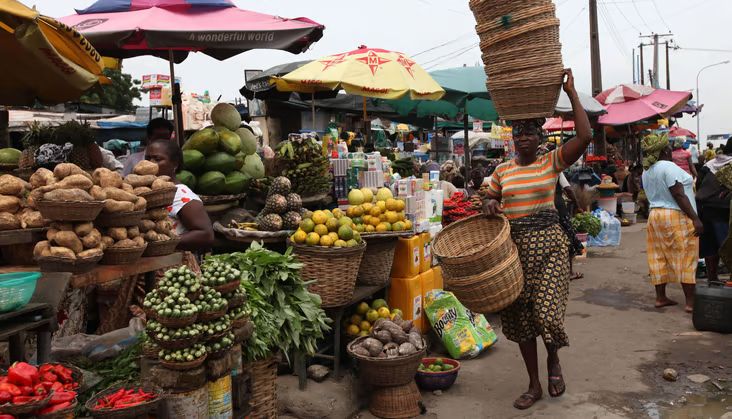
The food inflation rate on a year-on-year basis stood at 11.08% in November 2025. This figure is 28.85% significantly lower than the 39.93% recorded in November 2024.
Month-on-month food inflation surged to 1.13% in November 2025, sharply reversing the negative rate of -0.37% recorded in October 2025. This MoM acceleration was primarily driven by increases in the average prices of several staple food items, including Tomatoes (Dried), Cassava Tuber, Periwinkle (Shelled), Grounded Pepper, Eggs, Crayfish, Melon (Egusi) Unshelled, Oxtail, and Onions (Fresh).
The “All items less farm produces and energy” index, or Core inflation, which excludes the prices of volatile agricultural products and energy, was 18.04% on a year-on-year basis in November 2025. This represents a decline of 10.71% from the 28.75% recorded in November 2024.
Unlike the Headline and Food MoM rates, the Core inflation rate saw a slight deceleration month-on-month, easing to 1.28% in November 2025 from 1.42% in October 2025.
The year-on-year Urban inflation rate was recorded at 13.61%, while the year-on-year rural inflation rate was higher at 15.15%; Indicating more inflationary pressure in villages and towns compared to cities.
The decline in the annual headline rate to 14.45% provides positive momentum, especially the deflationary trend in the food index, providing space for further monetary policy rate cuts.
Olayemi Cardoso, governor of the central bank of Nigeria (CBN) , highlighted that the bank targets single digit inflation by the first quarter of next year.
The apex bank monetary committee for the first time in over 5 years had cut its monetary policy rate by 50 basis points in its September, from 27.5% to 27% – citing months of “disinflation” and the need to ease rates to allow more consumer spending.