By: ThinkBusiness Africa
The Government of Ghana has successfully wiped out $1.47 billion in crippling energy sector debt within the 2025 fiscal year, marking a significant milestone in the nation’s economic recovery, its finance ministry said in a statement on Monday.
The Ministry of Finance announced that these strategic payments have effectively restored the World Bank Partial Risk Guarantee (PRG) and resolved years of accumulated arrears that had pushed the energy sector to the brink of collapse.
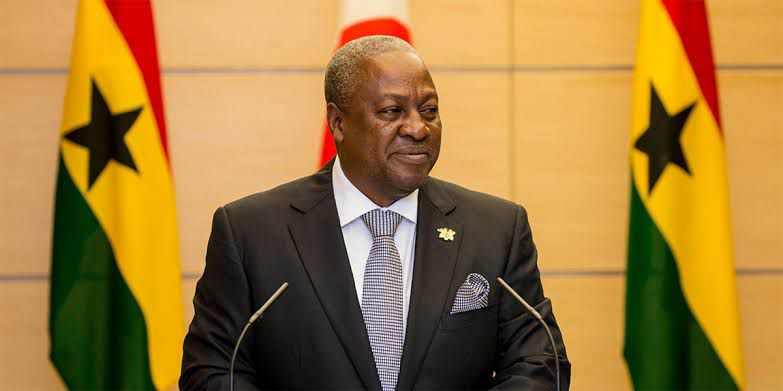
“President John Dramani Mahama, has decisively resolved the crippling energy sector debt that posed one of the gravest risks to Ghana’s financial stability”. The Ministry of finance noted.
Upon taking office in January 2025, the current administration, led by President John Dramani Mahama, inherited an energy sector burdened by non-payment for gas and a depleted World Bank guarantee.
“The exhaustion of the Partial Risk Guarantee was a serious governance failure that undermined Ghana’s international credibility,” the Ministry stated. “By clearing these debts, we have reaffirmed Ghana’s standing as a reliable partner on the global stage.” It noted.
The government’s comprehensive $1.47 billion debt clearance strategy focused on three primary areas. The largest single allocation was $597.15 million, which was used to fully repay the balance and interest drawn on the World Bank Partial Risk Guarantee (PRG), effectively restoring the facility to its full $500 million capacity.
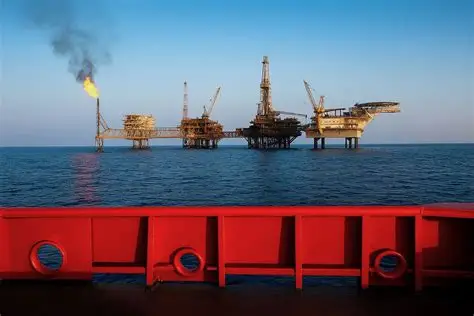
To ensure a steady supply of fuel for power generation, the Ministry also settled $480 million in outstanding gas supply invoices owed to ENI and Vitol for resources from the Offshore Cape Three Points (OCTP) field.
Additionally, a significant portion of the funds, totaling $393 million, was dedicated to clearing legacy arrears owed to several Independent Power Producers (IPPs).
The restoration of the World Bank Partial Risk Guarantee is viewed as the most critical achievement of this fiscal exercise.
Originally established in 2015, the PRG was a safeguard that unlocked nearly US$8 billion in private investment. Its depletion under the previous administration had caused significant friction with international lenders.
With the facility now fully reinstated, the government aims to attract new investments to expand gas-to-power infrastructure, as outlined in the 2026 “Big Push” Programme.
Ghana’s electricity sector has been growing steadily. Last November, Ghana’s Finance Minister, Dr. Cassiel Ato Forson, said the Electricity Company of Ghana (ECG) increased its monthly revenue by almost 90%, rising from 900 million Ghanaian Cedis to 1.7 billion Cedis.
With the energy sector’s “grave risk” neutralized, the government is now shifting focus toward the 2026 “Big Push” Programme, which includes the construction of a new 1,200-megawatt state-owned thermal plant and the expansion of renewable energy to 15% of the national mix by 2030.