
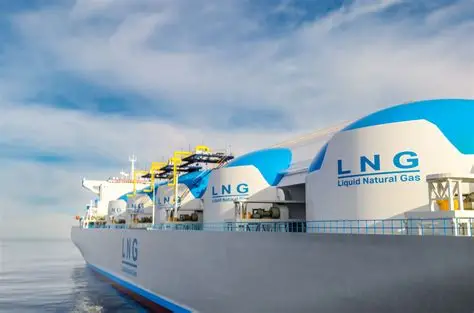
Global demand for Liquefied Natural Gas (LNG) is forecast to rise 65% to nearly 700 million tonnes annually by 2050 as countries transition away from coal, according to Shell’s LNG Outlook 2026.
The report, released on Tuesday, notes that long-term environmental targets will drive massive energy transitions despite severe short-term geopolitical volatility currently capping global trade volumes.
Meanwhile, Shell said global LNG trade is projected to stall through 2026 because a shipping crisis in the Strait of Hormuz has choked off roughly one-fifth of the world’s monthly supply.
Ongoing Middle East hostilities have halted immediate growth, keeping 2026 volumes flat against the 422 million tonnes traded last year, with an expansion trajectory delayed until 2027.
The immediate supply shock is being partially minimized by expanding North American liquefaction facilities, stronger plant operations elsewhere, and temporarily slower Asian import requirements.
However, African exporters are simultaneously capturing vital global market share, capitalizing on these Middle Eastern supply disruptions to boost the continent’s total LNG shipments by 27% in early 2026.
Nigeria has anchored this regional expansion, serving as Africa’s top exporter by ramping up production at its Bonny Island facility alongside advanced construction on the multi-billion dollar Train 7 expansion.
Additional regional supply security is being bolstered by emerging Atlantic Basin producers, including Mauritania and Senegal via the Greater Tortue Ahmeyim project, alongside fast-tracked floating LNG operations in the Republic of the Congo.
About 180 million tonnes of annual new supply is forecast to enter the market by 2030, improving the availability and affordability of gas and opening up demand in new markets.
Market pricing has reflected the strain, with Asian spot LNG prices spiking past $20 per illion British Thermal Units (MMBtu) before long-term contract buffers helped stabilize broader import costs.
“The conflict created a system-wide shock with disruption cascading across all segments of the economy, but the LNG industry has proved resilient,” said Cederic Cremers, Shell’s Integrated Gas President.
Long-term expansion will be spearheaded by South and Southeast Asia, which are projected to capture 40% of global imports by mid-century to displace higher-emitting coal power. Realizing this growth depends heavily on infrastructure, requiring major investments in regional regasification capacities and an additional 200 million tonnes of annual liquefaction capacity globally.