
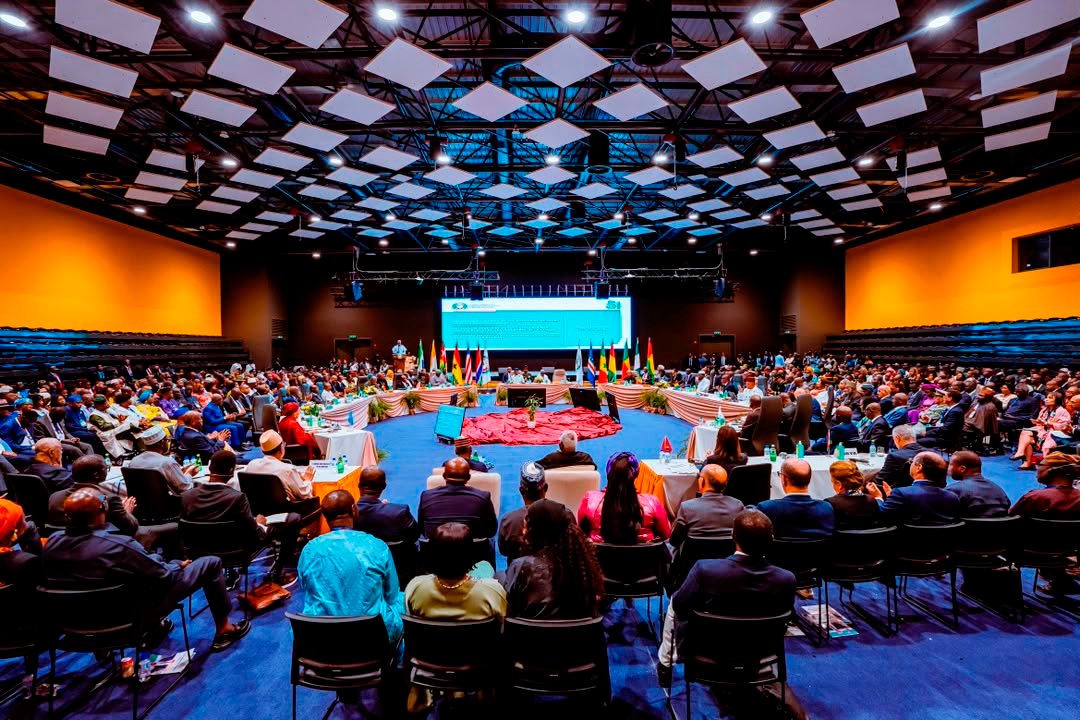
Member states of the Economic Community of West African States (ECOWAS) signed a major intergovernmental agreement on Sunday in Freetown, backing the $25 billion Nigeria-Morocco African Atlantic Gas Pipeline (AAGP).
The multilateral signing, formalized during the mid-year ECOWAS summit in Sierra Leone, transitions the massive energy infrastructure project from a bilateral initiative into a fully endorsed regional energy corridor.
“We have already signed the West Africa-Morocco gas pipeline,” announced ECOWAS Chair Julius Maada Bio following the text execution. “Don’t be surprised when the gas comes your way.”
According to a joint statement by the Nigerian National Petroleum Company (NNPC) Limited and Morocco’s ONHYM, the agreement establishes the legal framework to advance toward a final investment decision.
The massive 6,800-kilometer hybrid pipeline is designed to stretch along Africa’s Atlantic coast, crossing 13 nations to link Nigeria’s vast gas reserves directly to Morocco and European networks.
The infrastructure will feature an annual capacity of 30 billion cubic meters, split equally to supply domestic West African industrial markets and to export to Europe via the Maghreb-Europe pipeline.
Institutionally, the framework establishes a Project Company to be headquartered in Casablanca, Morocco, alongside a governing Pipeline Higher Authority that will be based in Abuja, Nigeria.
Non-ECOWAS nations along the pipeline’s route, specifically Morocco and Mauritania, are scheduled to sign the agreement at a separate upcoming ceremony attended by Nigerian President Bola Tinubu.
This regional backing comes as European nations actively seek diversified, long-term fossil fuel alternatives, positioning West Africa as a key strategic partner for international energy security.
With key technical and environmental engineering studies already completed, officials anticipate that construction will commence by 2027, targeting first gas deliveries early in the next decade.