
Canada’s flag carrier targets a 2027 launch as diaspora demand and airport upgrades align.
For more than a decade, roughly 170,000 passengers a year have travelled between Canada and Nigeria by connecting through London, Frankfurt, Amsterdam or other hubs. The extra hours, cost and complications have become a familiar part of trips for family visits, study, business and trade. That is now set to change.
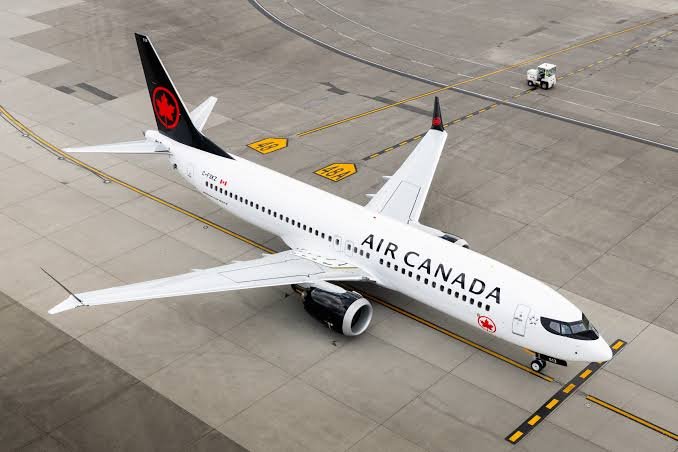
On 6 August 2026, Canada and Nigeria announced an expanded air transport agreement that, for the first time, allows direct scheduled passenger and cargo flights. The earlier deal, negotiated in 2014 as a codeshare-only arrangement and signed in March 2025, had kept services limited to connections. Air Canada responded the same day, saying it intends to start scheduled flights to Lagos in 2027 and has begun the approval process. The route would be the airline’s first into sub-Saharan Africa.
Transport Canada ranks Nigeria as its 38th-largest international air market in 2025 and its third-largest in Africa, behind only Morocco and Algeria. Traffic between the two countries has more than doubled over the past decade. Industry estimates put the Toronto–Lagos corridor at about 115,000 annual round-trip passengers, with another 55,000 travelling from other Canadian cities. More than 25,000 Nigerians held Canadian study permits as of 31 March 2026.
Under the new agreement, each side can designate multiple airlines for up to 14 weekly passenger flights and 10 weekly all-cargo flights, with fifth-freedom rights for cargo. Air Canada is the Canadian passenger airline that has publicly committed; Cargojet has been mentioned for cargo. On the Nigerian side, Air Peace and United Nigeria have been flagged as likely participants. Exact frequencies, aircraft and a firm start date still depend on final approvals and operational readiness in Lagos. In an interview with BusinessDay, Carlos Rojas-Arbulú, Canada’s then outgoing Deputy High Commissioner and Senior Trade Commissioner in Nigeria, said commercial flights could begin in the second quarter of 2027. Separately, network planner Behramjee Ghadially, cited by Aviation A2Z, has suggested starting with three weekly flights on a Boeing 787-9, with scope to add more during the peak winter period if demand holds.
Cutting the European Connection
A nonstop Toronto–Lagos flight is expected to take about ten hours. Current itineraries usually run much longer once connections and ground time are factored in. For many travellers the shift would remove the need for transit visas through Europe, cut the risk of missed connections and simplify baggage handling. Passengers starting outside Toronto would still connect domestically in most cases, but the long-haul leg itself would be far simpler. Existing codeshares, including Air Canada’s presence on certain Lufthansa Frankfurt–Lagos flights, would continue, yet a nonstop option changes the journey in a basic way.
Air Canada is not new to Africa. It has flown Montreal–Casablanca since 2016, using Airbus A330-300 aircraft on a multi-weekly basis and serving both the Moroccan community in Quebec and wider demand. Seasonal Montreal–Algiers flights were dropped and have not returned. A Lagos service from Toronto would push the carrier into West Africa while sitting alongside its established North African route.
Demand Driven by People and Trade
The traffic rests on a sizable and growing Nigerian community in Canada. Estimates run from roughly 110,000 (UN migrant stock data) to 124,000 residents cited by Nigeria’s Acting High Commissioner, plus a substantial student population. Permanent-resident admissions from Nigeria have climbed sharply, from the mid-single-digit thousands a year in the mid-2010s to peaks above 17,000–20,000 in some recent years, reflecting Canada’s skills-based system and conditions at home. This visiting-friends-and-relatives flow, together with education and business travel, has kept the market going even without nonstop flights. Bilateral merchandise trade is around $3 billion, making Nigeria one of Canada’s larger commercial partners in Africa.
At the same time, Murtala Muhammed International Airport in Lagos is in the middle of major rehabilitation. Terminal 1, nearly fifty years old, is being overhauled; Terminal 2 is being expanded to handle more wide-body aircraft; and a linking overhead bridge is aimed at the December 2026 peak season. Wider work on aprons, access roads, security and passenger facilities is meant to raise capacity. Nigeria handled about 18.8 million total passengers in 2025, placing it among the larger aviation markets on the continent. Better infrastructure in Lagos strengthens the practical case for new long-haul services.
Risks and Remaining Steps
The regulatory door is open, but the service is not yet locked in. Air Canada still needs final government approvals in both countries, slots and ground-handling arrangements in Lagos, and its own commercial and operational preparations. Yields on a long-haul route into a new market will have to support the economics, especially if Nigerian carriers also launch and add capacity. Peaks around Christmas, Easter and school holidays look strong; the quieter periods will be the real test.
If the 2027 timeline holds, the route would improve connectivity between Canada and one of Africa’s largest economies in a concrete way. Travellers who have long accepted multi-stop journeys through Europe would gain a simpler option that matches the scale of existing people-to-people and commercial ties. Schedule and fare details are expected closer to launch. For now, the expanded agreement and Air Canada’s stated plan have made clear both the opportunity and the work still required.