

The office of the Vice President of Nigeria, Kashim Shettima, has announced the National Economic Council (NEC) of Nigeria’s approval of the refinancing of Nigeria’s flagship oil-backed financing facility of US $4.5 billion. The announcement is more than another government borrowing. It is a repeat of the government playbook of borrowing against the country’s balance sheet that could shape liquidity, foreign exchange stability, investor confidence and the operating environment for businesses. Here’s what business leaders need to know.
The National Economic Council’s approval of the refinancing of the US$3.3 billion Project Gazelle Pre-Export Finance Facility through a new US$4.5 billion financing arrangement – Project Gazelle 2 – is a conclusion of a near one year process aimed at improving the terms of Gazelle 1.
Indeed, at the core of Gazelle 2 is a refinancing transaction designed to improve the terms of an existing facility while unlocking additional liquidity for the Federation. If executed as intended, it represents an exercise in liability management rather than simply an increase in borrowing.
For businesses, investors and financial markets, the question is therefore not whether Nigeria is raising another facility. The more important question is whether this transaction strengthens the country’s financial position and creates a more stable environment for investment and economic activity.
What Has Changed?
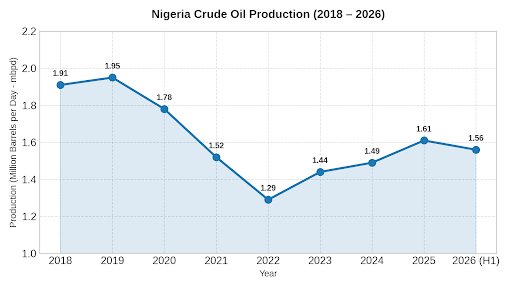
Project Gazelle was originally arranged in 2023 as a pre-export financing facility backed by future crude oil exports. Under the original structure, approximately 90,000 barrels of crude oil per day were pledged to support the financing.
According to the Minister of Finance, Taiwo Oyedele, the new arrangement refinances the outstanding balance of about US$1.5 billion under the original facility while unlocking an additional US$3 billion in liquidity. More importantly, it does so on improved commercial terms. One of the most significant improvements is the reduction in pledged crude oil volumes from 90,000 barrels per day to approximately 78,750 barrels per day, a reduction of 12.5 percent.
Source: NNPCL
In practical terms, this means that around 11,250 barrels of oil per day will be released from the existing pledge, an equivalent of US $910,000 – $921,000 at today’s average crude oil price of US $80.50 – $81.90 per barrel, providing greater flexibility for the Federation while reducing the volume committed under the financing structure.
Why Refinancing Can Be Good Business
Refinancing is a common financial strategy used by governments and companies alike. Businesses routinely replace expensive debt with cheaper financing, extend repayment periods or improve loan conditions in order to strengthen cash flow and free up capital for growth.
Governments pursue similar objectives.
Rather than viewing every refinancing exercise as “new borrowing,” it is often more accurate to see it as balance sheet optimisation. The goal is to reduce financing costs, improve liquidity and create greater financial flexibility.
Project Gazelle 2 appears to follow this logic.
By replacing an existing facility with one carrying more favourable terms while simultaneously accessing additional liquidity, Nigeria is attempting to improve the efficiency of its financing structure rather than simply increasing indebtedness.
Why Businesses Should Pay Attention
Although the transaction is between the government, NNPC Limited and its financiers, its implications extend well beyond public finance.
1. Stronger External Liquidity
The additional financing has the potential to strengthen Nigeria’s external reserves, at $51.92 billion at the end of July.
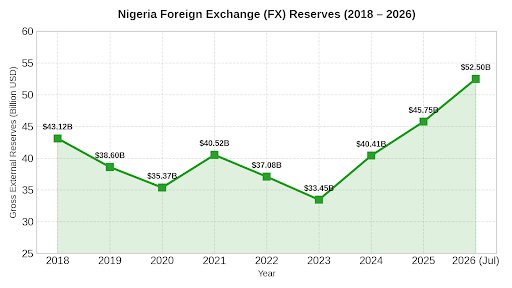
Source: Central Bank of Nigeria
A stronger reserve position generally improves the country’s ability to manage external obligations and can contribute to greater confidence in the foreign exchange market. While no single transaction determines exchange rate outcomes, stronger external buffers tend to support macroeconomic stability.
For businesses that depend on imported inputs, machinery or raw materials, a more stable foreign exchange environment reduces uncertainty and improves planning. The deal is therefore poised to strengthen Nigeria’s external position and exchange rate that has appreciated by about 10% – 11% in the last year, from N1,530 – N1,560 in mid 2025 to N1,368 in August 2026.
2. Better Debt Management
Perhaps the most significant feature of the transaction is not its size but its structure.
Refinancing outstanding obligations on improved terms signals a more active approach to public debt management. Investors generally respond positively when governments demonstrate the ability to reduce financing costs, optimise liabilities and improve the quality of their debt portfolio.
This matters because sovereign financing conditions influence the broader cost of capital across the economy.
3. Greater Fiscal Flexibility
Unlocking additional liquidity while reducing financing costs could provide the government with greater room to fund strategic priorities, including infrastructure, capital projects and other development initiatives.
If deployed effectively, this could support economic activity in sectors ranging from construction and manufacturing to logistics and professional services.
Indeed, the Vice President was quoted to have “called for a responsive, scalable, and data driven social protection policy to tackle multidimensional poverty in Nigeria” but it is not clear if there is a link to this new deal.
4. Improved Investor Confidence
Financial markets pay close attention not only to how much governments borrow but also to how effectively they manage existing obligations.
A refinancing exercise that lowers pledged collateral, improves financing terms and strengthens liquidity sends a signal of proactive financial management.
For domestic and international investors, this can reinforce confidence in Nigeria’s fiscal strategy, provided implementation remains disciplined and transparent.
The Questions That Still Matter
While the transaction presents several potential benefits, businesses should also watch a number of important developments over the coming months.
Among the key questions are:
- What are the final pricing and maturity terms of the new facility?
- How will the additional liquidity be deployed?
- Will the refinancing contribute to stronger external reserves?
- Will reduced pledged crude volumes provide greater operational flexibility for NNPC Limited?
- How will the transaction affect Nigeria’s broader debt profile over time?
The answers to these questions will ultimately determine whether Project Gazelle 2 delivers lasting economic value.
What Business Leaders Should Watch Next
Business leaders should monitor four indicators in the months ahead:
- Trends in Nigeria’s external reserves.
- Foreign exchange market stability.
- Progress in public infrastructure spending.
- Changes in sovereign borrowing costs and investor sentiment.
Together, these indicators will provide a clearer picture of whether the refinancing is translating into improved macroeconomic conditions.
The Bottom Line
Project Gazelle 2 should not be viewed simply as another government financing announcement. It is better understood as a strategic debt management exercise aimed at replacing an existing facility with one that offers improved terms, lower pledged crude volumes and additional liquidity.
Whether this proves to be a meaningful step forward will depend less on the headline US$4.5 billion figure and more on what follows. If the transaction strengthens external buffers, improves fiscal flexibility and supports macroeconomic stability, businesses could benefit from a more predictable operating environment. If those gains fail to materialise, however, the refinancing risks being remembered as a financial transaction rather than an economic turning point.
For business leaders, the message is clear: the story is not the loan itself. The story is what the refinancing enables — and whether it ultimately creates a stronger foundation for investment, growth and long-term economic resilience.