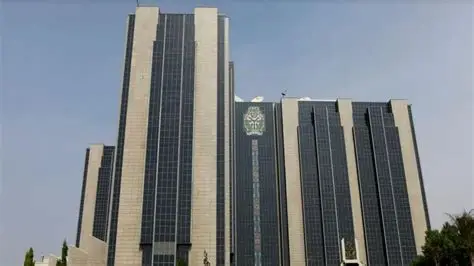
A completed specialist institute in Benin City, built largely with philanthropic money, now sits largely closed to the public. Wider campus construction has stopped, and the public opening has been postponed indefinitely. The dispute over the Museum of West African Art (MOWAA), over land title, name and governance is creating the kind of uncertainty that freezes further capital and signals risk to other donors weighing long-term cultural projects in Nigeria.
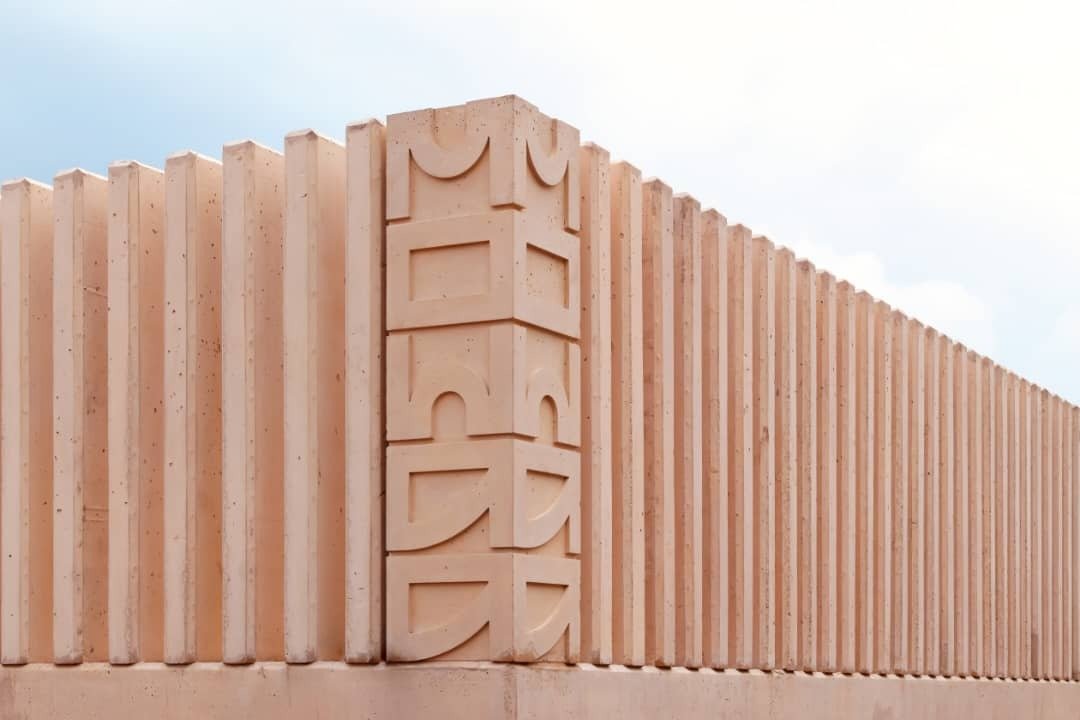
According to MOWAA’s Ernst & Young-audited 2025 financial statements, the organisation holds total assets of N22.611 billion, including N19.887 billion in property and equipment. The first completed building, the 4,500-square-metre MOWAA Institute, cost N22.26 billion to build and equip. It houses conservation and materials-science laboratories, climate-controlled collections storage, exhibition spaces, teaching rooms and a 100-seat auditorium. Revenue in 2025 reached N14.011 billion, with donations and grants making up roughly 99% of that figure. Programme spending that year was N2.533 billion. From its inception to the end of 2025, MOWAA had raised about N38 billion for the full campus and its institutional work.
Edo State’s cash contribution was N3.95 billion — N3.8 billion for the Institute’s civil and mechanical works and an earlier N150 million for pre-construction work on the wider campus. That is about 10.4% of the total funds raised. The state also provided the land and other enabling support. MOWAA is set up as an independent Nigerian company limited by guarantee: it has no share capital and no shareholders, and is governed by its own Board and Trustees. Land allocation and cash donations from the state are enabling contributions, not equity that confers ownership or control. Funders have included the Mellon Foundation, the German government and GIZ, French and other European partners, the British Museum, the A.G. LeventisFoundation, Ford Foundation, Getty Foundation, and Nigerian companies and individuals. The institution has repeatedly stated that it neither holds nor claims any returned Benin Bronzes.Attributing ownership to the Oba of Benin, His Royal Majesty Omo N’Oba N’Edo Uku Akpolokpolo, Oba Ewuare II, as the rightful custodian of the Benin Bronzes and of the culture and traditions of the Benin Kingdom.
The freeze began after protests disrupted a partner preview in November 2025. Governor Monday Okpebholo then revoked the Certificate of Occupancy on the land, which had formerly been the site of the Benin Central Hospital. An Oshiomhole-led state panel later recommended renaming the facility “Benin Royal Museum of Africa Art” and placing it under the Oba of Benin’s management, while advising against demolition. The Edo House of Assembly has recommended a state takeover. A presidential committee chaired by Minister Hannatu Musawa with representatives of the state government, the Palace, MOWAA, federal agencies and German and French partners; was set up in November 2025 to develop a permanent framework. No public resolution has been announced. MOWAA has paused further campus construction pending that outcome, while continuing research, conservation and education work at the Institute.
Land-title risk and the chance of mid-project changes to name, governance or mandate create the classic conditions for stalled investment. Philanthropic capital is patient, but it is sensitive to governance stability. Multi-year grants are usually tied to agreed institutional arrangements. Material changes can trigger reviews, pause disbursements or raise the risk premium on future commitments. Similar dynamics have appeared elsewhere. In Florida in 2025, a proposal to transfer control of the John and Mable Ringling Museum of Art from Florida State University to another institution (New College of Florida) was never enacted, yet multiple donors pulled or reconsidered planned gifts totaling more than $750,000 solely because of the prospect of a governance shift. When land titles can be revoked and multi-year projects become proxies for political transitions or traditional-authority disputes, the perceived cost of capital for cultural projects rises. Future donors ask harder questions about political-transition risk and the durability of independent professional governance.
Nigeria therefore risks both the specific asset already built and the broader ability to mobilise similar capital. The Institute represents permanent professional infrastructure and trained capacity, and international technical partnerships have already been established. A resolution that keeps the completed infrastructure and the independent non-profit model in place, while respecting the Palace’s cultural authority over the Bronzes would show that Nigeria can combine traditional legitimacy, public accountability and stable governance. Failure to do so risks turning a rare mobilisation of mixed Nigerian-international philanthropic capital into a cautionary case that deters the next round of cultural infrastructure investment.