
Africa Trade Logistics: What Are We Getting Right?
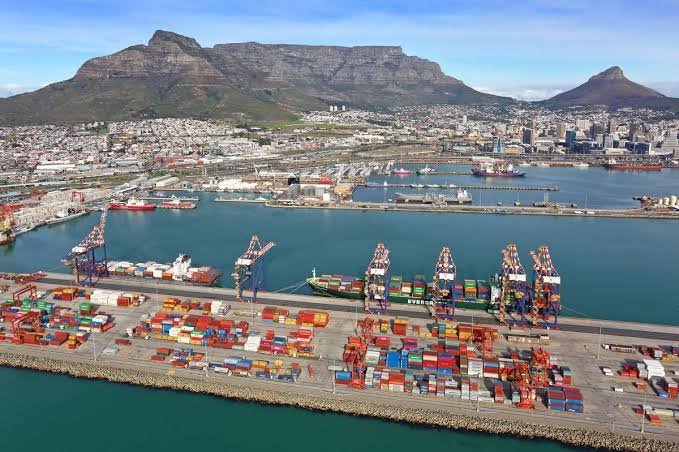
Trade corridors are the economic arteries of Africa, channeling goods between coastal gateways and interior markets across ten Trans-African Highways (TAHs) spanning 61,870 kilometers. Between 2004 and 2022, the African Development Bank (AfDB) invested over USD$13.5 billion across 25 strategic corridors, upgrading 18,022 kilometers of climate-resilient highways that serve 307 million people. However, physical distance is rarely the primary obstacle to African trade; rather, severe chokepoints at international borders, un-bridged river crossings, dilapidated missing links, and fragmented customs procedures repeatedly stall cargo movement and multiply transit times.
| Key Corridor Transformation Metrics (2004–2025) • Over USD$13.5 billion invested by the AfDB across 25 strategic corridors, upgrading 18,022 km of climate-resilient highways. • 27 One-Stop Border Posts (OSBPs) financed, cutting clearance delays by up to 99% (e.g., 14 days to 1 hour at Kazungula). • Total transit durations compressed by 50% to 75% across sub-regions, propelling intra-African trade to a record USD$213 billion in 2025. |
One Border, One Continent
Historically, border crossings functioned as paralyzing bottlenecks where trucks waited days or weeks for duplicate inspections. At the Kazungula crossing between Zambia and Botswana along the North-South Corridor, freight vehicles previously endured customs clearance delays averaging 14 days (336 hours).
Similarly, trucks traversing the Lomé–Ouagadougou, Brazzaville–Libreville, and Yaoundé–Brazzaville corridors faced 48-hour border halts, while crossings at Moyale (Kenya–Ethiopia), Namanga (Kenya–Tanzania), and the Mali–Côte d’Ivoire frontier routinely consumed 24 hours. To eliminate these non-tariff barriers, the AfDB has financed 27 One-Stop Border Posts (OSBPs), including landmark facilities at Namanga, Cinkansé, Hillacondji, Ekok/Mfum, and Kazungula, that consolidate immigration and customs agencies under a single roof, slashing clearance times from 14 days to one hour at Kazungula and from 24 hours to two hours at Namanga and Burkina Faso–Niger.
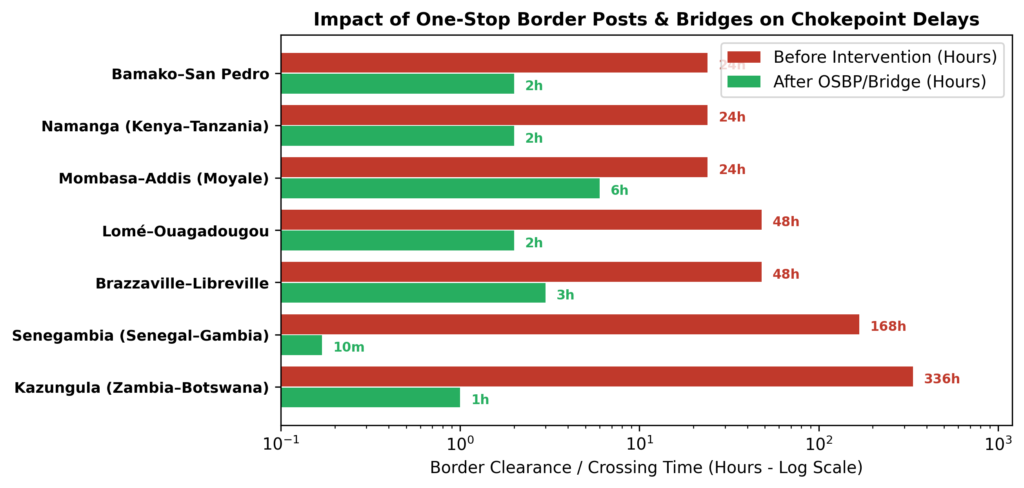
Figure 1: Border clearance and river crossing time reductions following OSBP and bridge completions (Source: AfDB Report).
Natural geographical barriers, particularly major rivers, have posed equally stubborn chokepoints. Prior to 2019, commercial vehicles traveling along the Dakar–Lagos corridor (TAH 7) had to queue up to one week for ferry crossings over the River Gambia or undertake a costly 400-kilometer detour.
The inauguration of the 942-meter Senegambia Bridge and two OSBPs compressed border crossing time to just 10 minutes. Comparable river bottlenecks are being eliminated through the 1.46-kilometer Rosso Bridge replacing flood-prone ferries between Senegal and Mauritania (cutting crossing times from one hour to 10 minutes), the Farié Bridge over the River Niger, the Logone River Bridge linking Cameroon and Chad, and the Cross River Bridge connecting Nigeria and Cameroon.
Paving the Way to Africa’s Growth
Seasonality and missing pavement links further compound corridor chokepoints. Along the Cameroon–Nigeria corridor, rainy seasons previously severed western Cameroon from Douala and Yaoundé, stretching the Mamfe–Kumba trip to eight hours before paving cut it to two hours year-round. In Central Africa, upgrading the unpaved Ndendé–Doussala–Dolisie link reduced truck journey times between Ndendé and Dolisie from three days to 4.5 hours, while paving the Mbuji-Mayi–Kananga section in the DRC slashed heavy vehicle transit from 72 hours to 12 hours. By systematically removing both physical missing links and administrative border bottlenecks, these corridor interventions compress total transit durations by 50 to 75 percent across every African sub-region, boosting intra-African trade figures to a record USD$213 billion in 2025.
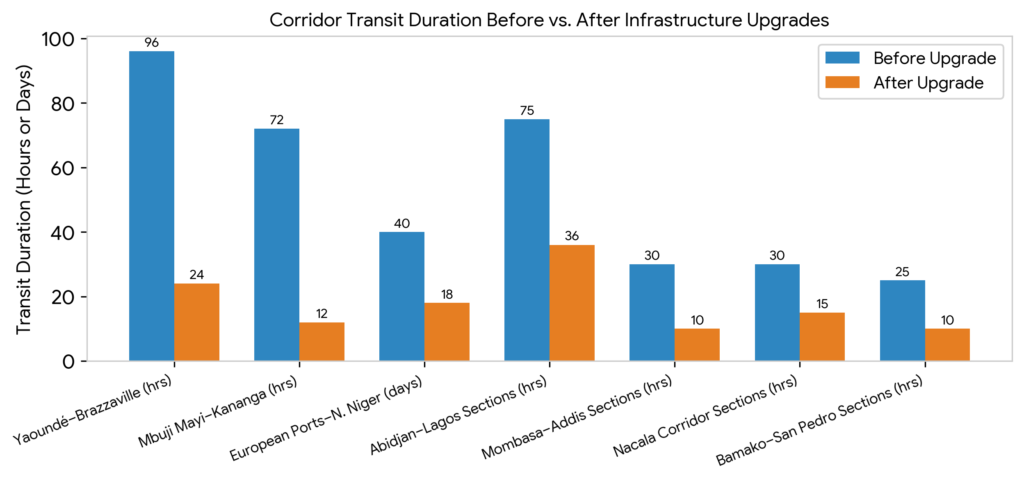
Figure 2: Corridor transit duration reductions before and after AfDB infrastructure upgrades (Source: AfDB Report).
Empirical evidence from the AfDB Cross-Border Road Corridors report demonstrates how targeted infrastructure rehabilitation dramatically compresses vehicle operating costs (VOC) per kilometer. Along the Bamako–San Pedro corridor linking landlocked Mali to Côte d’Ivoire’s agricultural heartland and seaport, truck operating costs plummeted by 53 percent, falling from USD$1.70 per kilometer in 2014 to USD$0.80 per kilometer in 2020.
Lower Transit Time Leads to Lower Operating Costs
On the North-South Corridor connecting Burundi and Rwanda, VOCs dropped by 58 percent from USD$0.84 to USD$0.35 per vehicle-kilometer, matching a 58 percent reduction on the Northern Corridor (from USD$0.38 to USD$0.16 per kilometer between 2018 and 2022). Comparable savings were achieved in Madagascar (down 46 percent from USD$0.65 to USD$0.35/km), the DRC–Angola corridor (down 34 percent from USD$0.47 to USD$0.31/km), and the Kenya–South Sudan route (projected down 29 percent from USD$0.70 to USD$0.50/km).
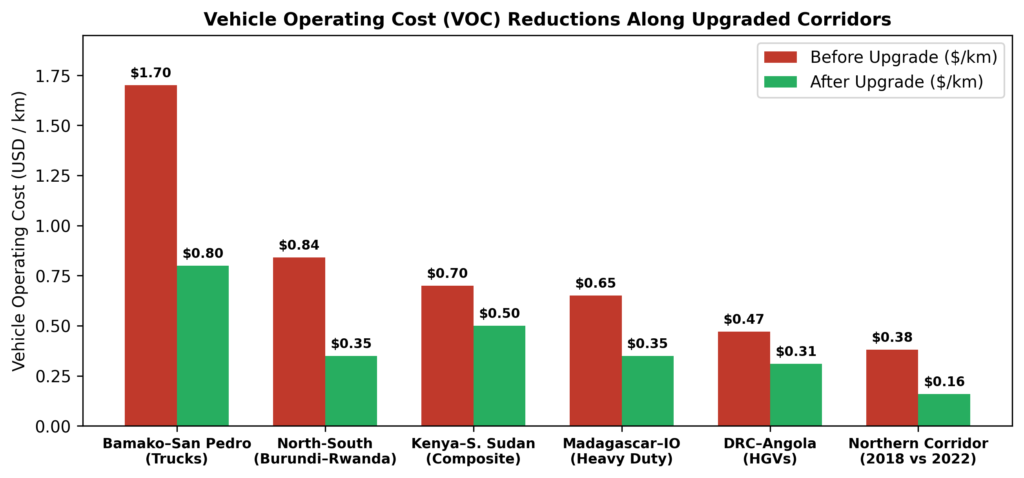
Figure 3: Vehicle Operating Cost (VOC) reductions in USD/km across six African trade corridors (Source: AfDB Report).
These per-kilometer savings translate into massive reductions in aggregate freight rates and passenger fares. Along East Africa’s Central Corridor, road upgrades and transit facilitation measures slashed average transportation costs by 65 percent. On the Nacala Corridor linking Zambia and Malawi to Mozambique’s deepwater port, overall transport costs declined by 15 to 25 percent while vehicle operating costs fell by 36 percent in Mozambique and 20 percent in Malawi.
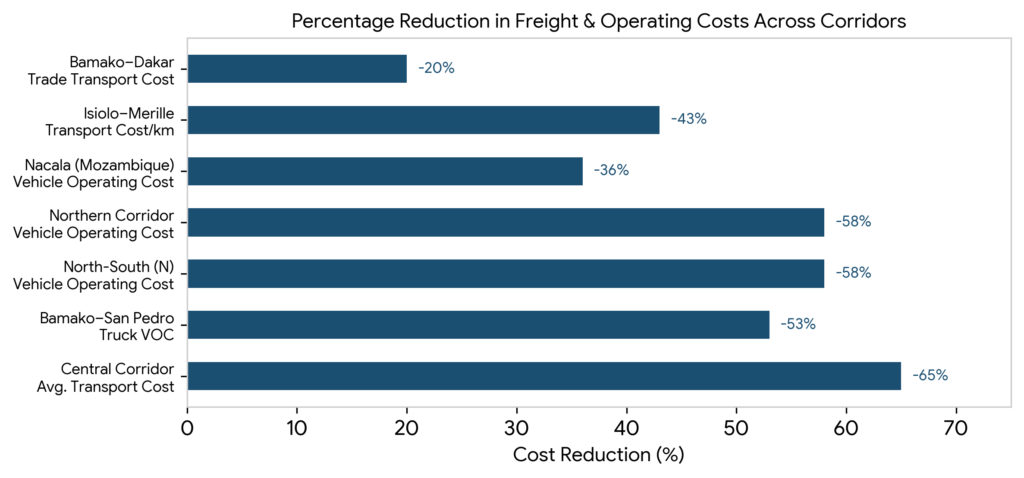
Figure 4: Percentage reductions in overall transport and vehicle operating costs across upgraded corridors (Source: AfDB).
Along the Bamako–Dakar corridor, diversifying Mali’s maritime access cut import and export transport costs by over 20 percent. In northern Kenya, upgrading the Isiolo–Merille section reduced average transport charges from 0.49 to 0.28 cents per kilometer and lowered passenger bus fares by 40 percent, from KSH 2,500 to KSH 1,500.
What Are the Key Players Getting from These Changes?
Lower logistics costs directly enhance consumer welfare and producer incomes. When agricultural regions in southern Mali, northern Côte d’Ivoire, southern Madagascar, or Zambia’s Serenje–Mpika belt gain reliable paved links to urban markets, post-harvest spoilage drops and retail food prices stabilize. Along the Central Corridor, reduced transport expenses contributed to a 20 percent rise in household incomes within the project zone, while Senegal’s Nouakchott–Dakar corridor upgrades boosted rice paddy output to 1.8 million tons. By stripping away wasteful transport margins, efficient logistics lowers consumer living costs while expanding profit margins for local farmers and manufacturers.