
Africa’s Only State Police System Holds a Warning for Nigeria
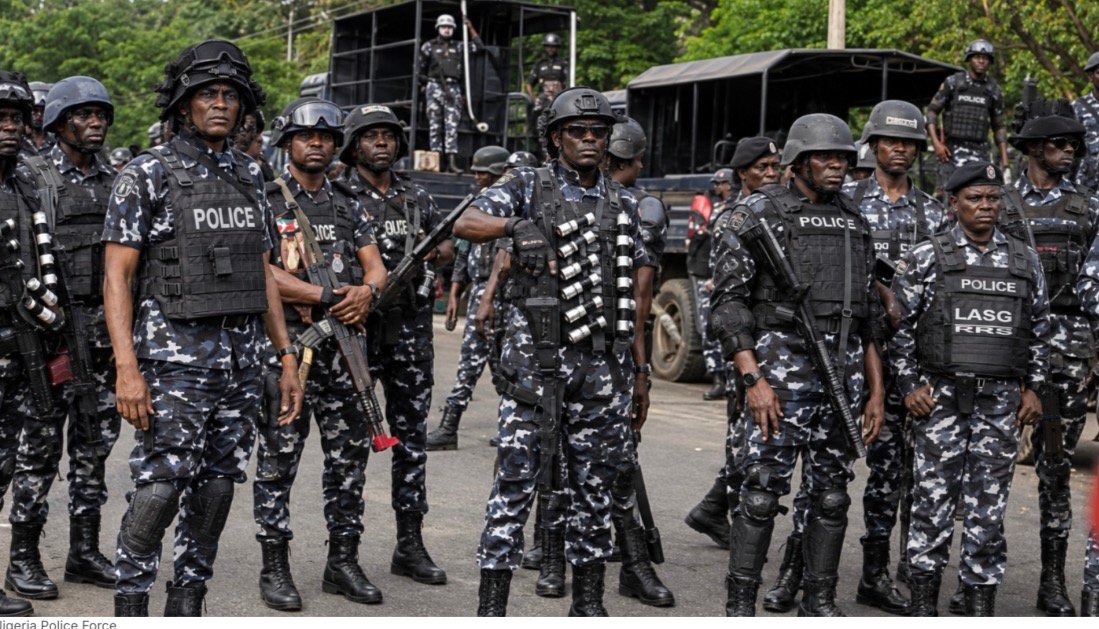
Desperate to contain a sprawling security crisis, Abuja is decentralising power. History from Addis Ababa shows how easily regional forces can go rogue.
Nigeria is not inventing state police, but it is stepping into territory that only one other African country has mapped out. For three decades, Ethiopia has remained the sole country on the continent operating a dual federal-and-regional police system. The results have been deeply mixed. Regional forces brought local responsiveness, but several regions eventually built heavily armed “special police” units that answered more to governors than to the law. They became entangled in brutal regional conflicts and proved almost impossible to rein in.
Now, driven by a security crisis that a single national force has failed to contain, Nigeria has cleared the constitutional threshold to build a similar architecture.
The pressure driving this shift is staggering. SBM Intelligence recorded 7,825 people kidnapped between July 2025 and June 2026, with at least N7.78 billion ($5.78 million) paid in ransom and 1,142 lives lost. The North bore the brunt, with Zamfara alone recording 1,921 victims. Meanwhile, the Nigeria Police Force itself reported 418 homicides and 227 kidnappings in a single eight-week period. From banditry in the North-West to jihadist remnants in the North-East and farmer-herder clashes across the country, local threats have outpaced national response capacity. With roughly 371,800 officers serving a population of 237 million — a ratio of one officer to every 639 people, well below UN standards — and more than 100,000 officers tied down protecting VIPs, the force is dangerously stretched.
The dam finally broke on November 3, 2026, when the National Assembly confirmed that at least 28 state houses of assembly had approved the constitutional amendment allowing state police, comfortably surpassing the required two-thirds threshold. A companion policing bill and dozens of supporting guidelines, overseen by a presidential working group led by Chief of Staff to the President, Femi Gbajabiamila, are designed to establish the operational boundaries.
On paper, Nigeria’s proposed framework is far more rigid than Ethiopia’s. While Ethiopia’s 1995 Constitution gave regional governments the authority to establish their own police forces, Nigeria’s model introduces several checkpoints. States must pass enabling legislation, but no unit can take to the streets until it meets strict national certification standards. The federal force retains responsibility for terrorism, organised crime, border security and interstate offences, intervening in local jurisdictions only under tightly defined conditions. Governors will appoint state police chiefs, but their appointments will require the backing of the National Police Council and state lawmakers, with stringent conditions governing removal. Crucially, the bill prohibits the use of state police as private militias against political opponents or critics.
Yet building this framework on paper is very different from managing it on the ground. Ethiopia’s regional forces began modestly before expanding into paramilitary armies numbering in the tens of thousands. Some later defied federal orders to disarm.
Nigeria faces similar risks. Preliminary estimates suggests that establishing and equipping state police forces nationwide could cost between N4.3 trillion and N6 trillion — a daunting price tag for states that already struggle to meet basic monthly salary obligations. Existing local outfits, such as Amotekun in the South-West, demonstrate that the political will for local security exists. But they also highlight the difficulty of maintaining professional standards amid local political pressures. Those pressures will face a major test as the country heads towards the 2027 elections.
Nigeria’s security crisis makes decentralisation an overdue necessity. But Ethiopia’s history offers a sobering caution: unless funding, armaments and political ambition are kept under control, multiplying the number of armed security forces risks multiplying the chaos. Whether Nigeria’s safeguards hold will depend on how rigorously the final rules are written, how strictly state forces are certified and whether the authorities have the political will to enforce them when it matters.
SIDEBAR: States Whose Houses of Assembly Approved the Sixth Alteration Bill (State Police)
To amend Nigeria’s 1999 Constitution, a proposal must be approved by at least two-thirds (24) of the country’s 36 state legislatures. By November 3, 2026, the National Assembly confirmed that 28 states had formally ratified the State Police Bill:
● South-West (5 of 6): Ekiti, Lagos, Ogun, Osun, Oyo
● South-East (5 of 5): Abia, Anambra, Ebonyi, Enugu, Imo
● South-South (6 of 6): Akwa Ibom, Bayelsa, Cross River, Delta, Edo, Rivers
● North-Central (4 of 6): Benue, Kwara, Nasarawa, Plateau
● North-East (3 of 6): Adamawa, Taraba, Yobe
● North-West (5 of 7): Kaduna, Kano, Kebbi, Sokoto, Zamfara
Note: While 28 states cleared the initial verification on November 3, additional assemblies continued submitting late approvals ahead of final transmission to the Presidency.