
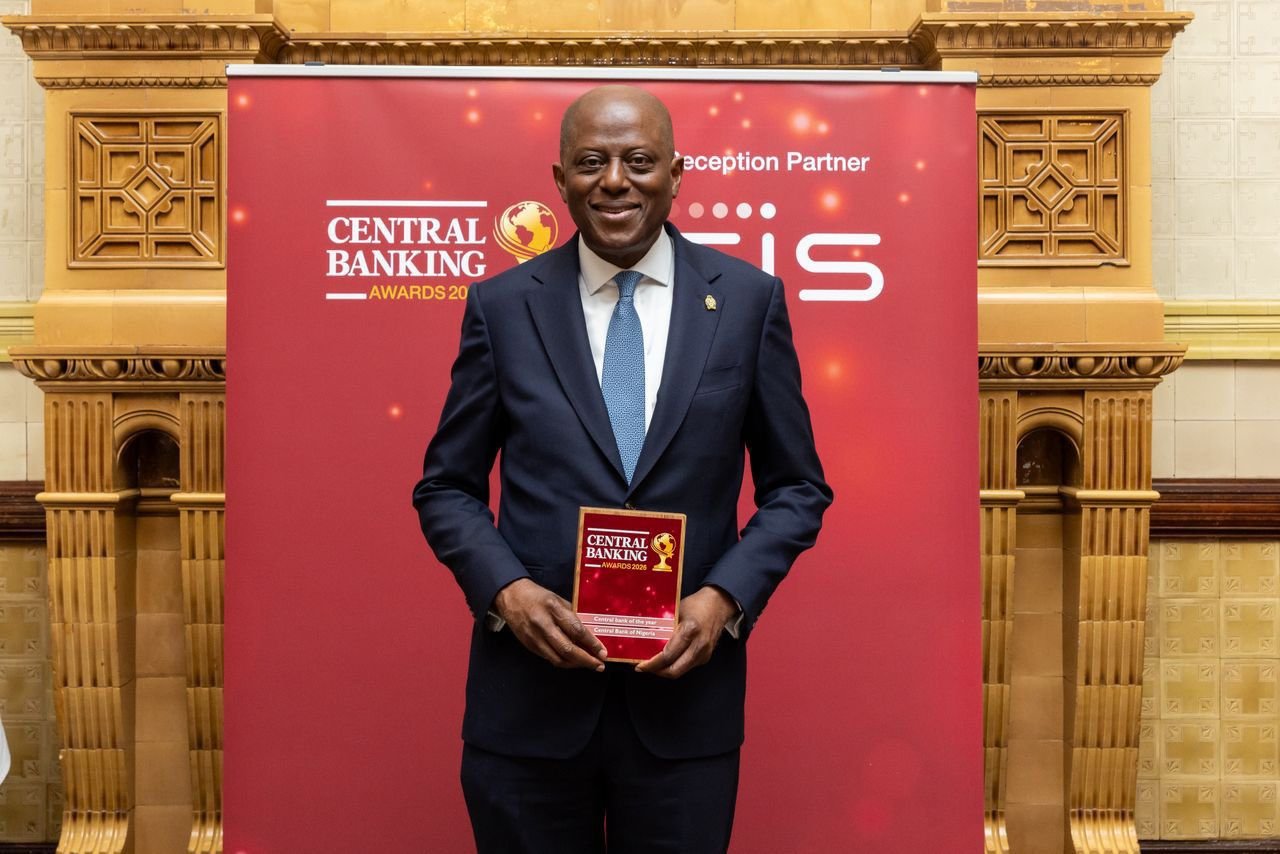
LAGOS — Central Bank of Nigeria (CBN) Governor Olayemi Cardoso formally received the prestigious 2026 Central Banking Central Bank of the Year Award here on Wednesday, signaling strong international approval of Nigeria’s aggressive monetary reforms.
The award committee recognized the CBN’s swift return to orthodox monetary policy, decisive inflation-targeting measures, and foreign exchange market liberalization since Cardoso assumed office in late 2023.
Accepting the honour, Cardoso framed the award as validation for institutional resilience, calling it an encouragement to sustain painful but necessary macroeconomic adjustments rather than a final destination for the apex bank.
“According to the Governor, the Bank’s reform agenda has been guided by a clear objective: restoring confidence, strengthening institutional resilience and policy credibility, and laying a solid foundation for sustainable economic growth.” CBN stated in a post on X.
The global recognition comes as Nigeria’s external reserves recently hit a ten-year high of $50 billion, providing a critical buffer for the volatile local currency amid ongoing monetary tightening.
Foreign investors have lauded the bank’s structural transparency tools, including the Electronic Foreign Exchange Matching System, which effectively compressed the parallel market premium from over 60% to under 2%.
Furthermore, investor sentiment improved dramatically after the CBN successfully cleared years of trapped foreign exchange forward obligations and secured Nigeria’s strategic exit from the Financial Action Task Force grey list.
Crucially, the award closely follows the smooth conclusion of the CBN’s rigorous 24-month banking sector recapitalization program in March, which successfully shored up the capital bases of 33 commercial banks.
Analysts note that this international endorsement gives the regulatory bank significant leverage as it continues to raise interest rates to curb sticky core inflation and stabilize domestic commodity prices.
The London ceremony was attended by global financial policymakers, institutional investors, and central bank governors, highlighting Nigeria’s re-integration into the mainstream global financial ecosystem after years of unconventional interventions.